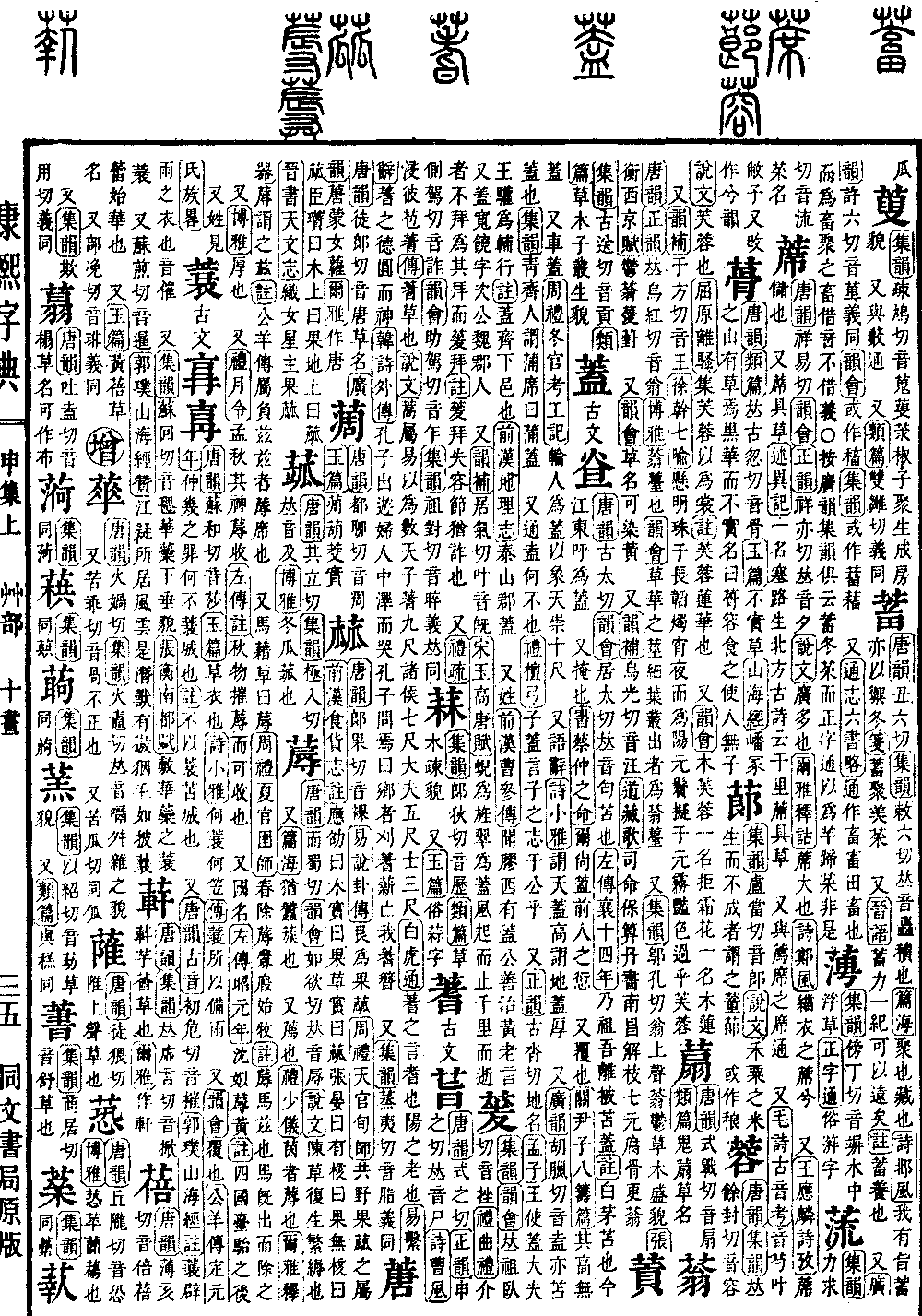
Shen Collection, Upper Volume
Radical: Grass (cǎo)
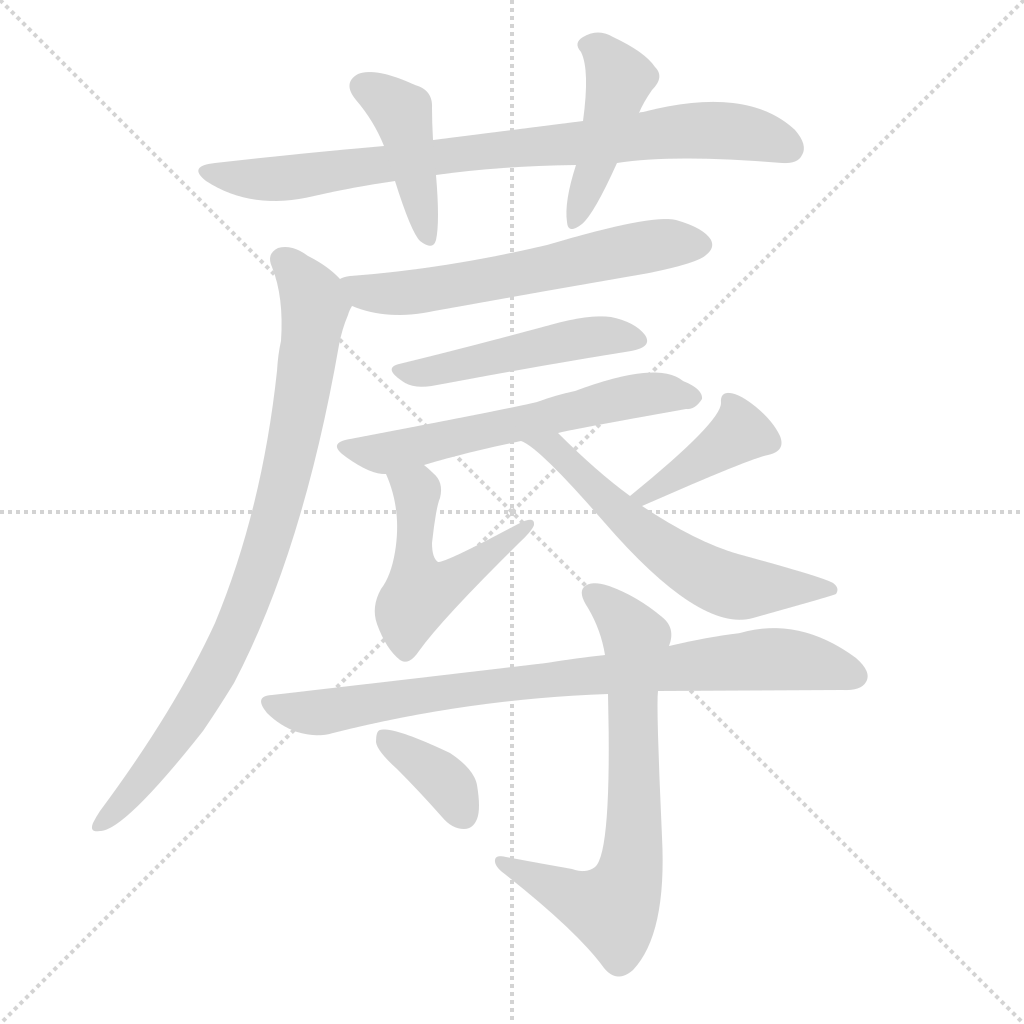
Ru; Kangxi strokes: 16; Page 1051, Entry 22
Pronounced ru.
In the Shuowen Jiezi, it refers to old grass growing again in abundance. Also, according to the Pianhai, it is like a silkworm bed. It also means a mat or cushion. In the Book of Rites (Liji), the commentary states that a yin (cushion) is a ru. In the Erya, it is said that a ru is called a zi. The commentary notes the Gongyang Zhuan refers to it as fu zi. Zi is a mat for resting.
It also refers to using grass as bedding for horses. In the Rites of Zhou (Zhouli), under the Ministry of Summer, the Equerry, it says that in spring, one clears away the bedding and sanctifies the stables to begin grazing. The commentary notes that ru is bedding for horses. When the horses are let out, it is cleared away.
It also means thick.
In the Book of Rites (Liji), under the Monthly Ordinances, it mentions that in the first month of autumn, the presiding deity is Rushou. The Zuo Zhuan commentary states that in autumn, things wither and grow thick and can be harvested.
It is also the name of a state. In the Zuo Zhuan, under the first year of Duke Zhao, it lists Shen, Si, Ru, and Huang. The commentary notes these four states are descendants of Taidai.
It is also a surname. See the Outline of Clan Names (Shizulue).
Textual research: In the Book of Rites (Liji), the passage for the minor rituals, it originally read yin zhe ru ye. According to the original text, the character for commentary has been added, and the character zhe has been corrected to zhuo.