Zi Collection, Page Position: Lower
Radical: Again (yòu)
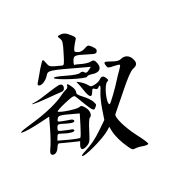
叡
Kangxi Stroke Count: 16
Page 167, Entry 04
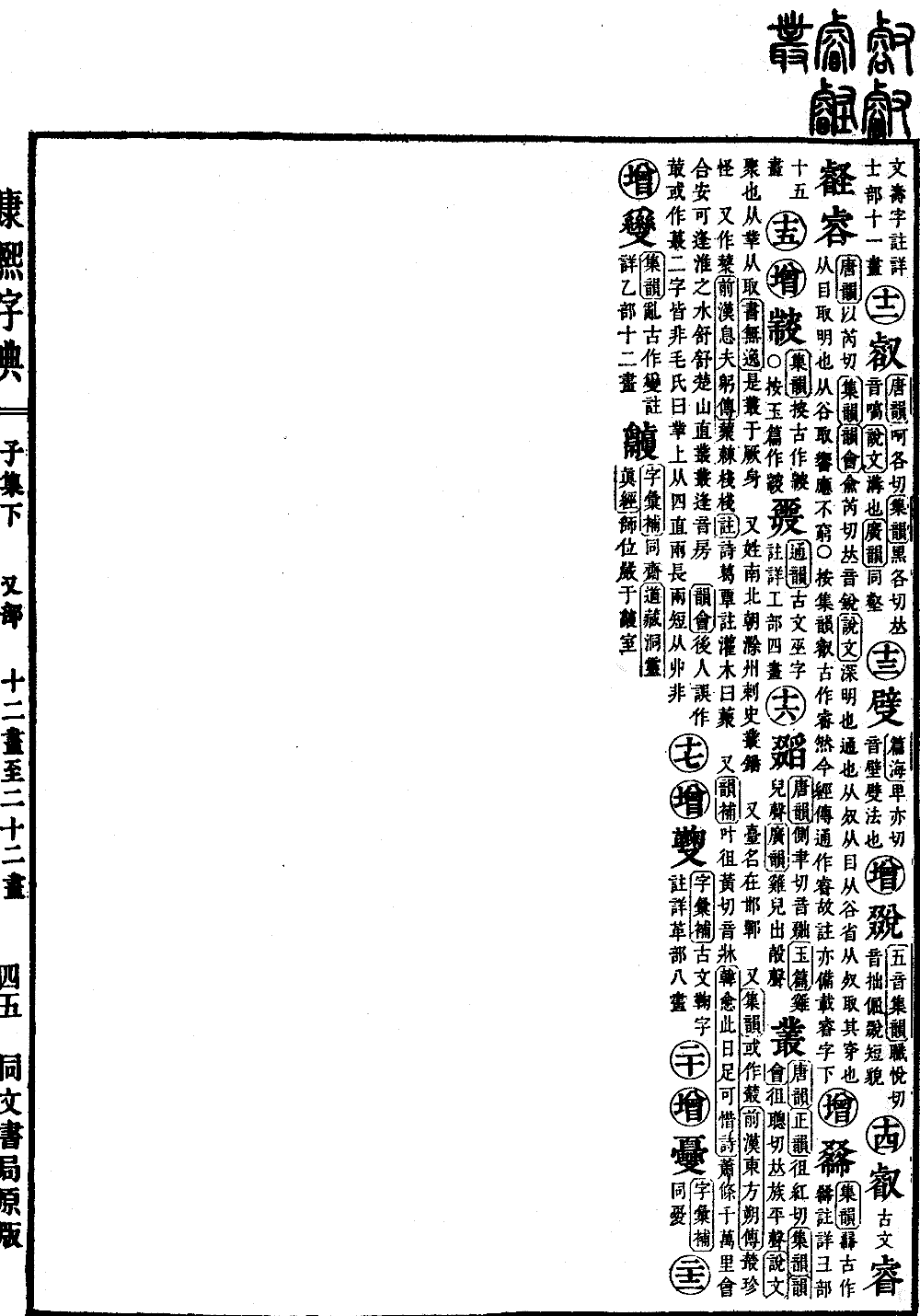
Ancient forms include睿 and 壡.
Tang Dynasty Rhymes (Tangyun): Pronounced rui (falling tone).
Collected Rhymes (Jiyun) and Rhyme Anthology (Yunhui): Pronounced rui (falling tone).
According to Explaining Graphs and Analyzing Characters (Shuowen): Deep understanding and penetration. It is composed of the radical for eye and a simplified form of valley. The radical for eye is used to signify clarity, and the valley is used to signify an inexhaustible response.
Note: According to the Collected Rhymes (Jiyun), the ancient form of this character is rui. However, in contemporary classical texts, it is commonly written as rui, and therefore, these entries are also fully recorded under the character rui.