You Collection, Upper Volume
Radical: Speech (yán)
12 strokes
Page 1155, Entry 01
Pronounced qu.
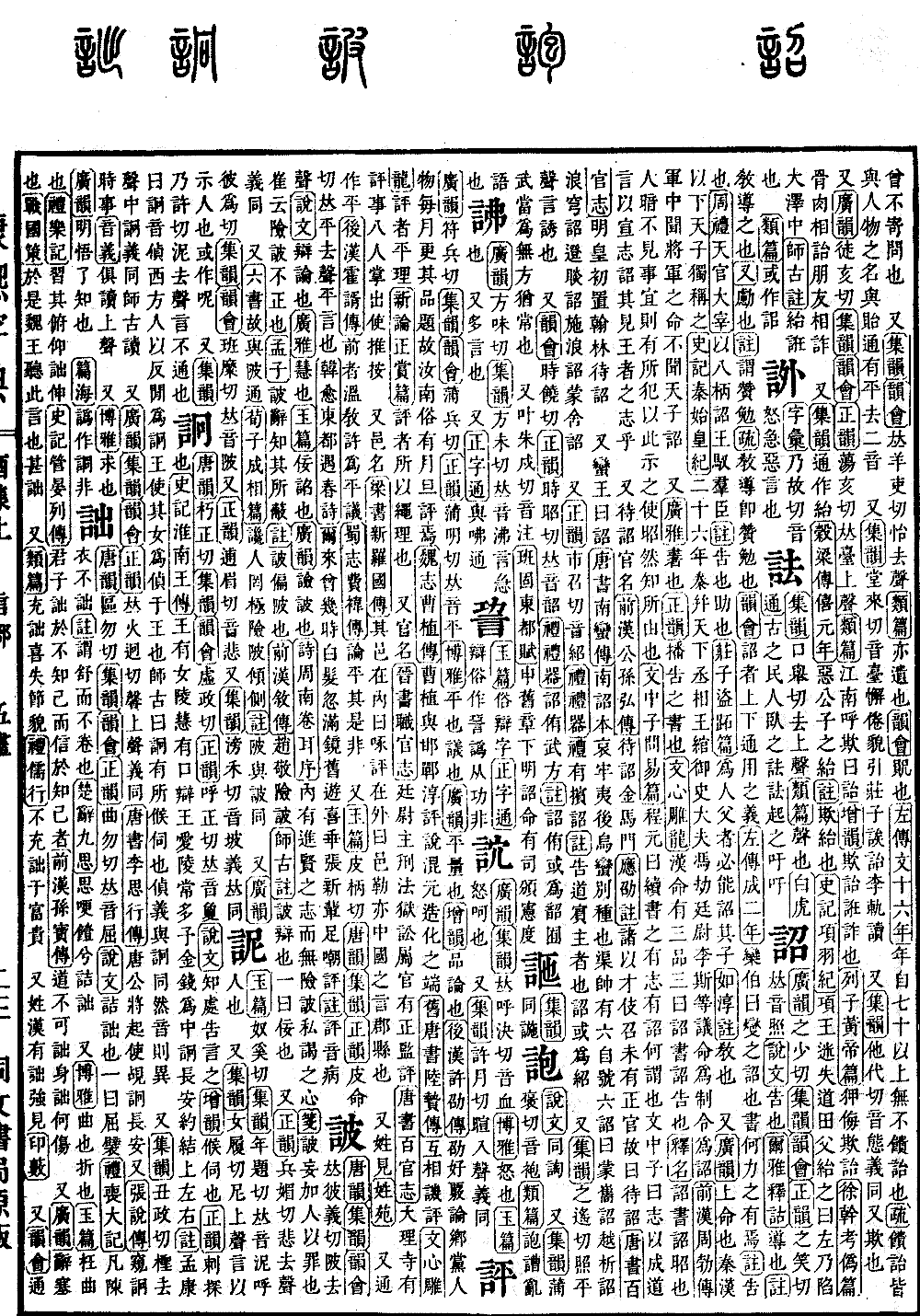
Shuowen Jiezi (Shuowen): To interrogate and bend. Another definition: to fold or pleat.
Book of Rites (Liji), Record of Funeral Rites: In general, clothing should not be creased. Commentary: Meaning smoothed out and not rolled.
Songs of the South (Chuci), Nine Longings (Jiusi): Thoughts are choked and stuck, interrogating and bending.
Also: Broad Encyclopedia (Boya): To bend, to break.
Jade Chapter (Yupian): To be crooked or bent.
Book of Rites (Liji), Record of Music: Practicing the bowing, crouching, and stretching.
Records of the Grand Historian (Shiji), Biographies of Guan Zhong and Yan Ying: A gentleman may be humbled by those who do not understand him, yet finds faith in those who do.
History of the Former Han Dynasty (Qianhanshu), Biography of Sun Bao: Principles cannot be compromised; what harm is there if the body is humbled?
Also: Broad Rhymes (Guangyun): For a defense or argument to be obstructed.
Strategies of the Warring States (Zhanguoce): Upon hearing these words, the King of Wei felt very much at a loss.
Also: Classified Chapters (Leipian): To be arrogant or self-satisfied, an appearance of losing one's decorum through joy.
Book of Rites (Liji), Conduct of Scholars (Ruxing): Not to be self-satisfied through wealth and status.
Also: A surname. There was a Qiang of the Qu family in the Han dynasty. See Collection of Seals (Yinsou).
Also: Rhyme Anthology (Yunhui): Often used interchangeably with the character for bend (qu).
Xunzi, Encouraging Learning: Like lifting a fur garment by the collar, bending the five fingers and pulling it. Commentary: Interrogating is the same as bending.
Also: Collected Rhymes (Jiyun), Proper Rhymes (Zhengyun): Pronounced jue. Same meaning as arrogant or self-satisfied.
Also: The appearance of ceasing abruptly.
Book of Rites (Liji), Meaning of the Presentation of Gifts (Pinyi): Striking it, the sound is clear and lingering, and at its end, it stops joyfully.
Also: Proper Rhymes (Zhengyun): To exhaust.
History of the Former Han Dynasty (Qianhanshu), Biography of Sima Xiangru: Receiving the exhausted. Commentary: Refers to beasts that have exhausted their strength being captured and possessed.
Also: Collected Rhymes (Jiyun): Pronounced chu. Same as to dismiss (chu).
Strategies of the Warring States (Zhanguoce): That Gongzhong, the power of Qin can humble him. Commentary: To humble or demote.
Also: Collected Rhymes (Jiyun): Often written as the variant form (chu).
Book of Rites (Liji), Meaning of Archery (Sheyi): Presenting the wine vessel and retiring from the ground. Commentary: In the Inner Rules chapter it is written as (chu), in the Hall of Distinction chapter it is written as (qu).
Also: Collected Rhymes (Jiyun): Sometimes written as (chu).
Zuo Commentary (Zuozhuan), Thirtieth Year of Duke Xiang: Harmonious and joyful.
Rites of Zhou (Zhouli), Autumn Official: The Zheng commentary quotes it as (ququ). Liu Changzong pronounces it (chu). Originally also written as (chu).
Also: Collected Rhymes (Jiyun): Pronounced ne, entering tone. Same as inarticulate (ne). See the entry for inarticulate (ne).
Also: Shuowen Jiezi (Shuowen): Sometimes written as (qu).
Long Annotations (Changjian): Written as (qu).