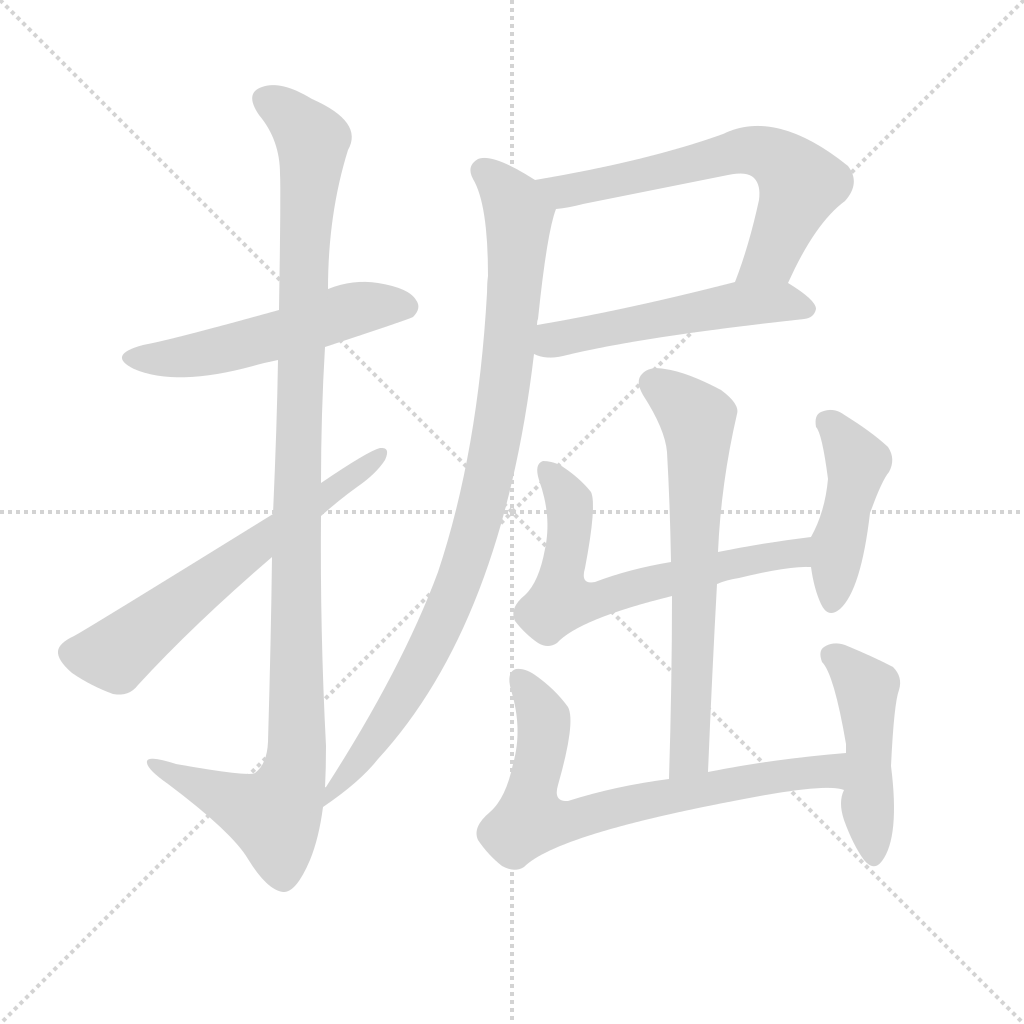
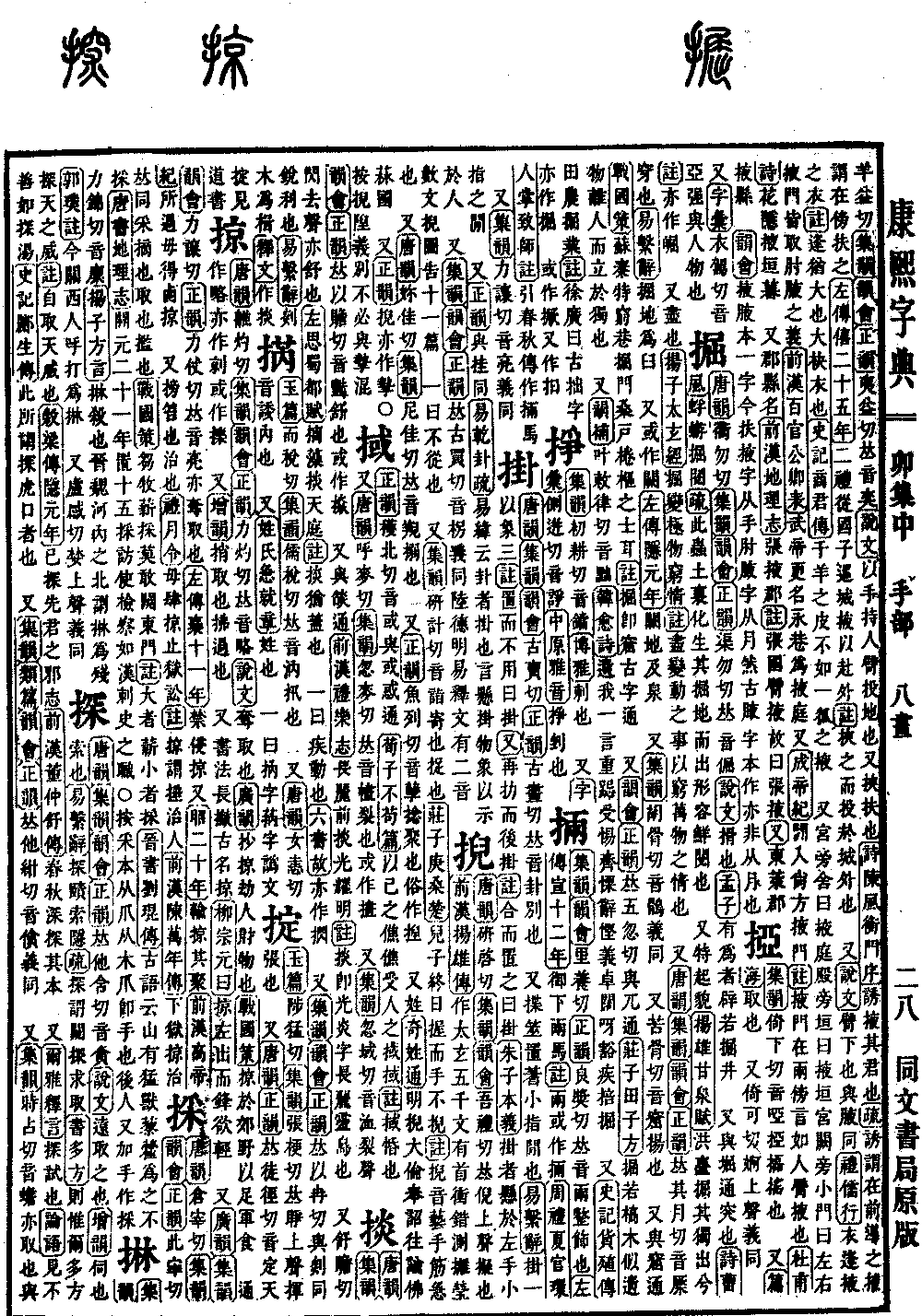
Mao Collection, Middle Volume
Radical: Hand (shǒu)
Kangxi stroke count: 12
Page 438, Entry 02
Pronounced jue.
As defined in the Explanation of Writing (Shuowen Jiezi), it means to dig.
Mencius says: One who engages in purposeful action is like someone digging a well.
Also used interchangeably with the character for cave (ku). It means to protrude.
Book of Odes (Shijing), Cao Wind: The ephemera digs and emerges.
Commentary: This insect is born in the soil; it digs and emerges from the earth, and its appearance is fresh and clear.
Also refers to standing out alone.
Yang Xiong, Rhapsody on Sweet Spring (Ganquan Fu): The grand terrace rises abruptly and stands alone.
Commentary: Also written as the character for rising (jue).
Also means to exhaust.
Yangzi, Great Mystery (Taixuan Jing): To exhaust transformations and reach the limits of all things.
Commentary: To exhaust the nature of all changes and reach the limits of the circumstances of all things.
Also pronounced jue.
To pierce or dig.
Book of Changes (Yijing), Appended Statements: Dig the earth to make a mortar.
Also written as the character for gap (que).
Zuo Commentary (Zuozhuan), First Year of Duke Yin: They dug the earth until they reached water.
Also pronounced hu.
Meaning is the same.
Also pronounced ku.
To raise or lift.
Also used interchangeably with the character for cave (ku).
Strategies of the Warring States (Zhanguo Ce): Su Qin was merely a scholar from a poor alley, living behind a caved-in gate, with a mulberry-wood door and a door-pivot made of a wooden loop.
Commentary: The character here is the same as the character for cave (ku). They are ancient interchangeable characters.
Also pronounced wu.
Used interchangeably with the character for high and level (wu).
Zhuangzi, Tian Zifang: Stiff like a withered tree, as if leaving behind external things and detached from people, standing in solitude.
Also pronounced chu.
Han Yu, Poems: He left me a weighty word; I knelt to receive it, trembling and solemn. The language was concise and the meaning profound and broad, gaping wide and striking to dig.
Records of the Grand Historian (Shiji), Biographies of Money-makers: Cultivating the land and engaging in the business of digging.
Commentary: Xu Guang says: The ancient character for clumsy (zhuo) was also written as this character. It is also written as the character for strike (jue), and also as another variant form.