Hai Collection, Lower Volume
Radical: Black (hēi)
Qing
Kangxi Strokes: 20
Page 1520, Entry 26
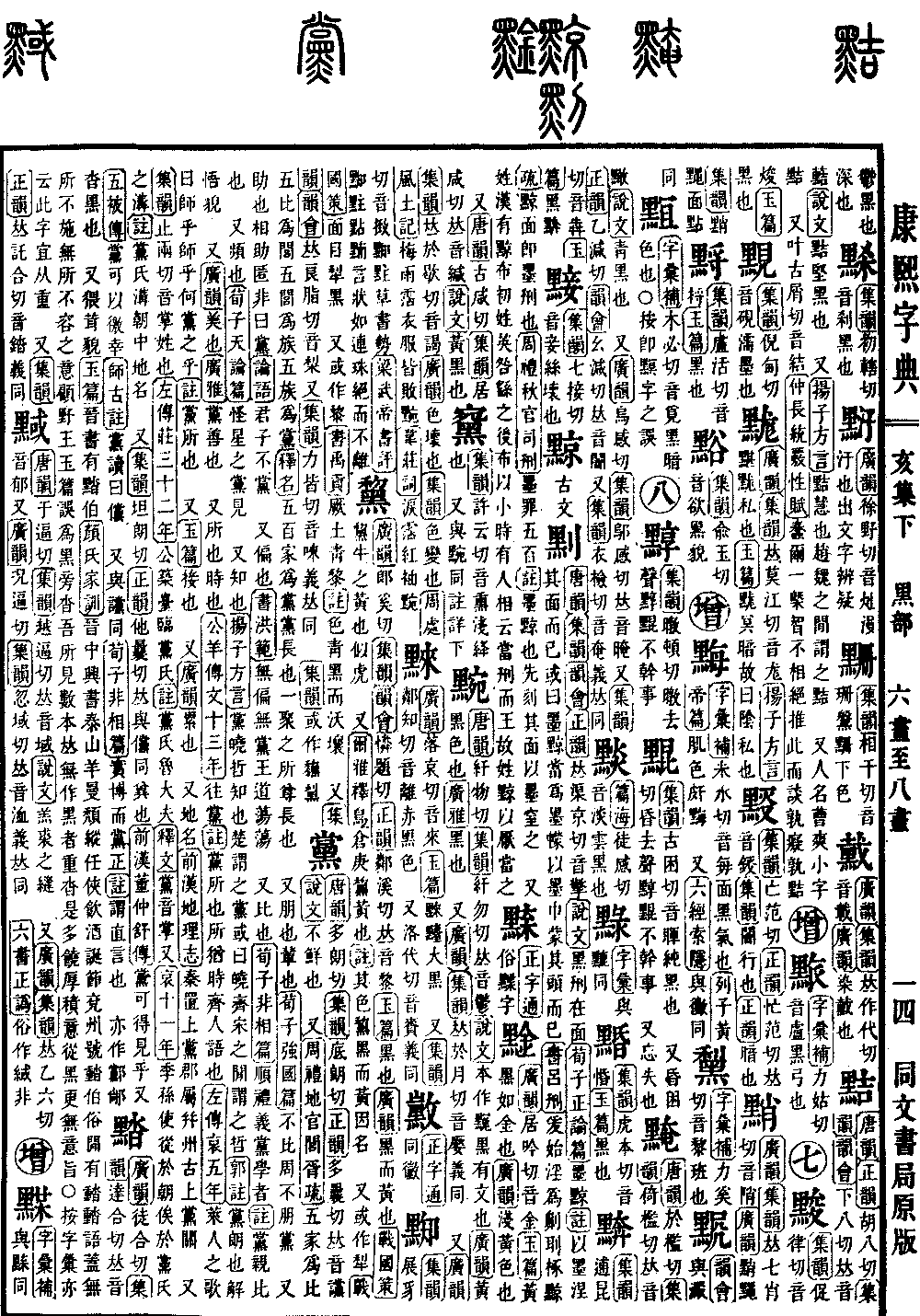
Ancient records: Pronounced jing. According to Tang Rhymes (Tangyun), Collected Rhymes (Jiyun), Rhyme Meetings (Yunhui), and Orthodox Rhymes (Zhengyun), the pronunciation is the same as qing. The Explaining Graphs and Analyzing Characters (Shuowen Jiezi) defines it as tattooing black characters on the face. The Xunzi (Xunzi), Correct Discussion chapter, mentions ink tattooing. The commentary explains this as merely dyeing the face black with ink. There is also a view suggesting that the term for ink tattooing should be interpreted as covering with a black cloth, referring to wrapping the head in a black scarf. The Book of Documents (Shangshu), Lvxing chapter, records the beginning of the excessive use of punishments such as cutting off the nose, cutting off the ears, castration, and tattooing. The sub-commentary explains that tattooing the face refers to the ink punishment. The Rites of Zhou (Zhouli), Autumn Official, Minister of Justice, records that there are five hundred types of crimes subject to the ink punishment. The commentary explains that ink refers to tattooing. It involves carving characters on the face first and then filling them with ink. There is also a surname. In the Han dynasty, there was Qing Bu, who was originally surnamed Ying and a descendant of Gaoyao. Because someone once physiognomized him in his youth and said he would suffer punishment and later become a king, he changed his surname to Qing to counteract the prophecy.