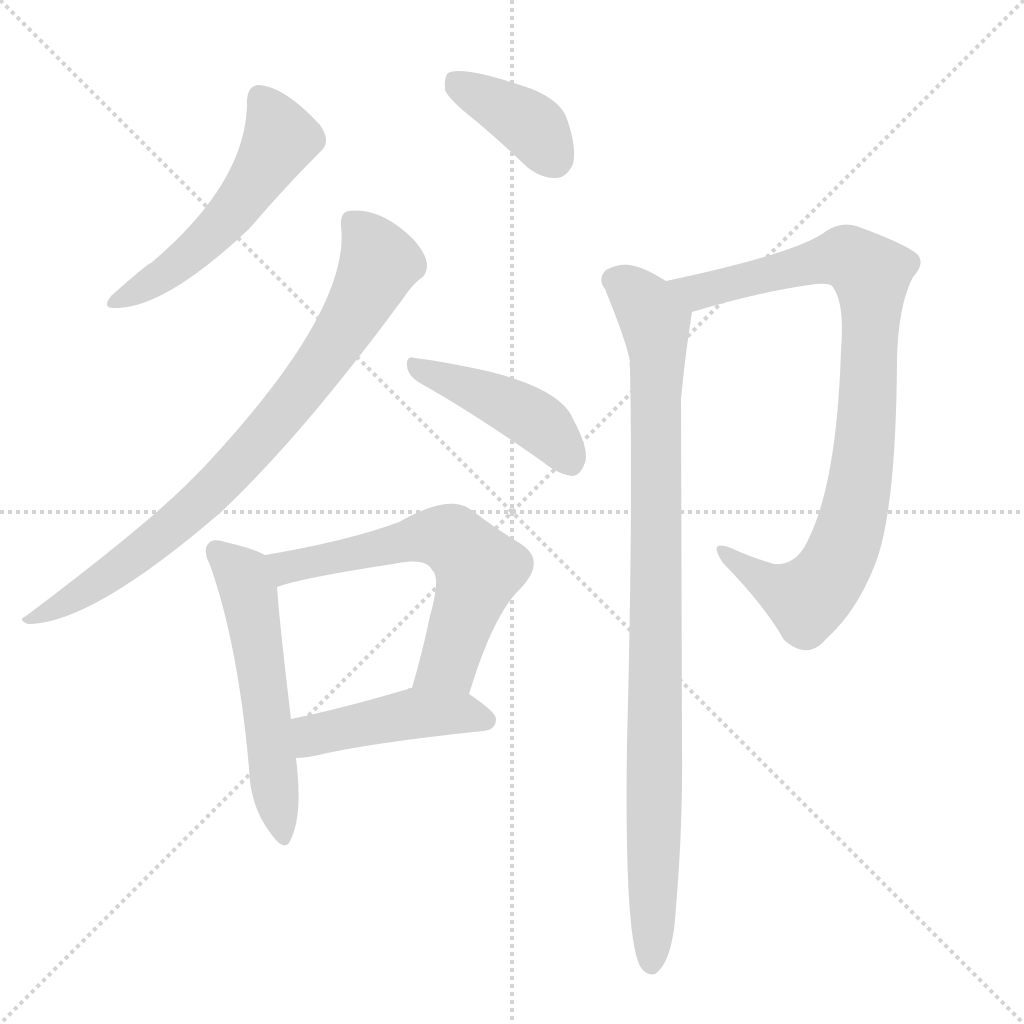
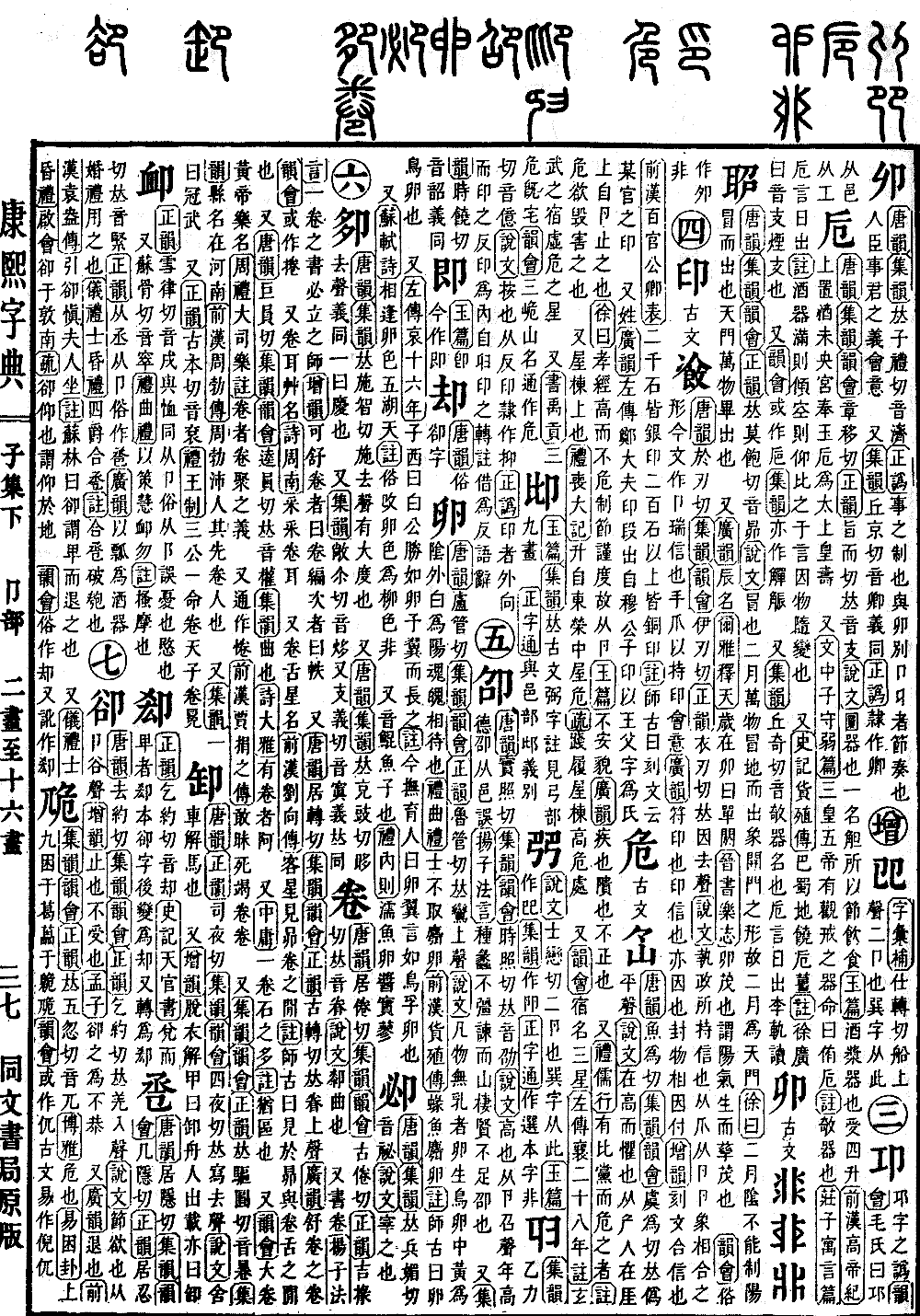
Zi Collection, Page Position: Lower
Radical: Kneeling Seal (jié)
Què; Kangxi strokes: 9; Page: 159, entry 28
Tang Rhyme (Tángyùn): qù yuē qiè. Jiyun (Jíyùn), Yunhui (Yùnhuì), Zhengyun (Zhèngyùn): qǐ yuē qiè, qiāng entering tone. Shuowen Jiezi (Shuōwén Jiězì) says: It means to control desires. From the Kneeling Seal (jié) radical, with gǔ (谷) as the phonetic component. Zengyun (Zēngyùn): It means to stop, to not accept. Mencius (Mèngzǐ): To refuse another's gift is disrespectful. Also, Guangyun (Guǎngyùn): It means to retreat, to withdraw. History of the Former Han (Qiánhàn), Biography of Yuan Ang: "He made Lady Shen retreat from her seat." Annotation: Su Lin says: "Què means to make her withdraw." Also, Book of Etiquette and Rites (Yílǐ), Rites for the Marriage of a Scholar: "Open the food box, and place the lid face up to the south of the dūn (a type of ritual food vessel)." Commentary: Què means to place face up, referring to placing it face up on the ground. Yunhui: The common form is written as "卻". Also mistakenly written as ''.