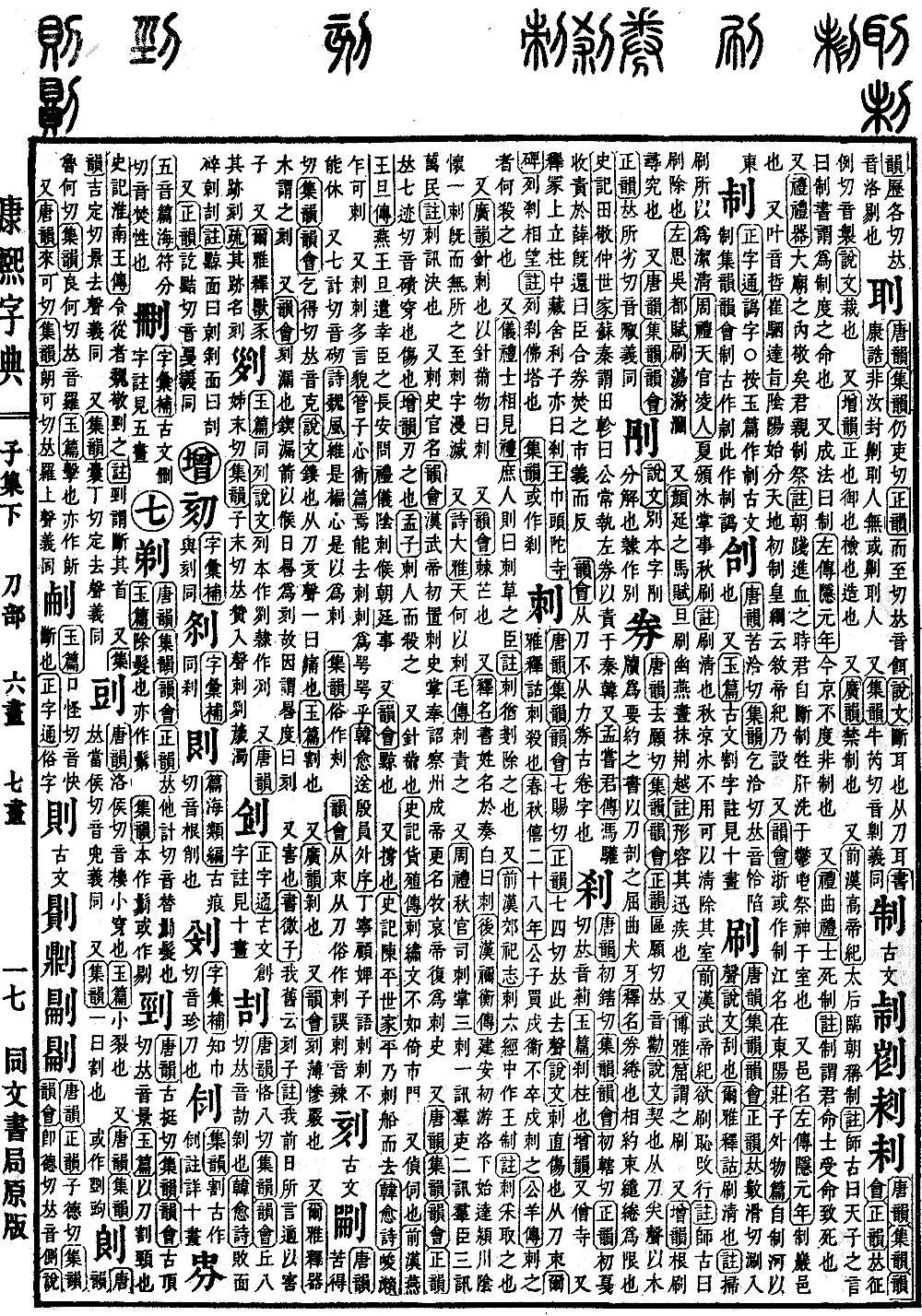
Zi Collection, Page Position: Lower. Radical: Knife (dāo). Quàn. Kangxi Dictionary strokes: 8. Page 139, entry 11.
Tang Rhymes (Tangyun) indicates the pronunciation is a combination of qù and yuàn. Collected Rhymes (Jiyun), Rhyme Assembly (Yunhui), and Correct Rhymes (Zhengyun) indicate the pronunciation is a combination of qū and yuàn, sounding the same as quàn.
Analytical Dictionary of Characters (Shuowen Jiezi) explains this as a contract or deed. The character form is derived from the radical Knife (dāo), and the phonetic portion is quàn. In ancient times, agreements were written on wooden slips and split into two halves with a knife, with the serrated edges interlocking like dog teeth.
Explaining Names (Shiming) explains it as: Quàn implies a binding constraint, where parties are tied closely together in agreement to serve as evidence.
Records of the Grand Historian (Shiji) in the Hereditary House of Tian Jingzhong records: Su Qin said to Tian Zhen: You always hold the left half of the tally, which you can use to demand fulfillment from the states of Qin and Han.
Additionally, the Biography of Lord Mengchang records: Feng Huan went to the region of Xue to collect debts. Upon his return, he said: I verified the contracts and then burned them, returning having purchased benevolence and righteousness for you.
Rhyme Assembly (Yunhui) points out: The character form is derived from the radical Knife (dāo) and not the radical Strength (lì). The character quàn was interchangeable with the character for scroll (juǎn) in ancient times.