Hai Collection, Upper Volume
Radical: Horse (mǎ)
Qian
Kangxi strokes: 20
Page 1442, Entry 17
Pronounced qian.
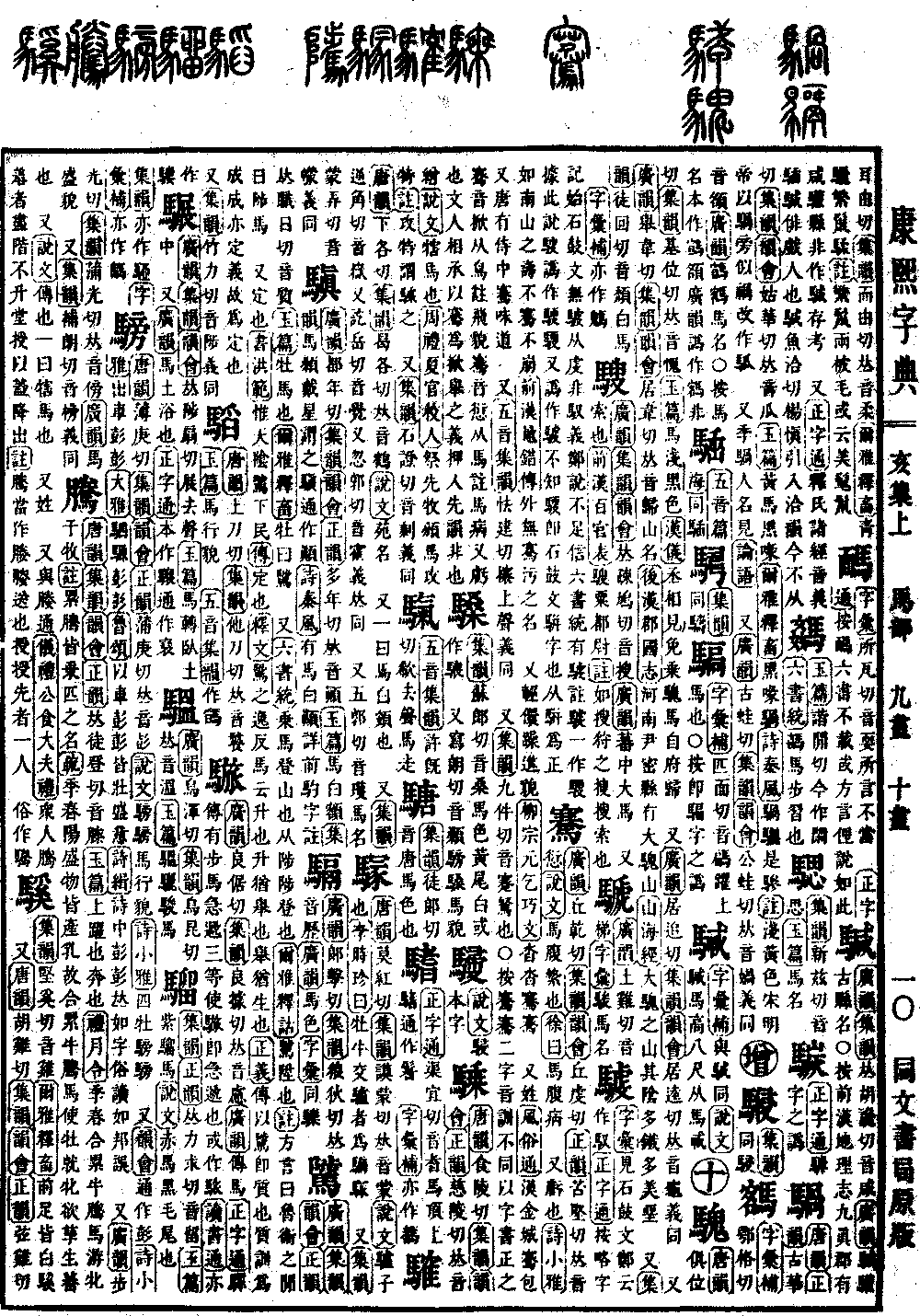
According to the Etymological Dictionary of Chinese Characters (Shuowen Jiezi), it refers to the binding of a horse's belly. Xu says it refers to a disease of the horse's belly. It also means to lack or to be deficient. In the Book of Odes (Shijing), it is written: As enduring as the southern mountains, neither lacking nor crumbling. In the Biography of Chao Cuo from the History of the Former Han (Qian Hanshu), it refers to the absence of a reputation for deficiency or defilement. It also describes a light, fickle, and impatient demeanor. In Liu Zongyuan's Essay on Begging for Skill (Qiqiao Wen), it is written: Fickle and impatient. It is also a surname. According to the Comprehensive Customs (Fengsu Tong), there was Qian Bao of Jincheng during the Han dynasty. During the Tang dynasty, there was a Chancellor named Qian Weidao. According to the Five Sounds Rhyme Collection (Wuyin Jiyun), it is also pronounced qian (departing tone), with the same meaning. According to the Collected Rhymes (Jiyun), it is also pronounced jian, meaning a worn-out horse. Note: The characters xian and qian have different pronunciations and definitions. According to character dictionaries, xian is pronounced xian, radical bird, and signifies the appearance of flying. Qian is pronounced qian, radical horse, and signifies a horse's disease or a deficiency. Scholars often mistakenly use qian to mean to lift or raise, rhyming it with the xian rhyme group, which is incorrect.