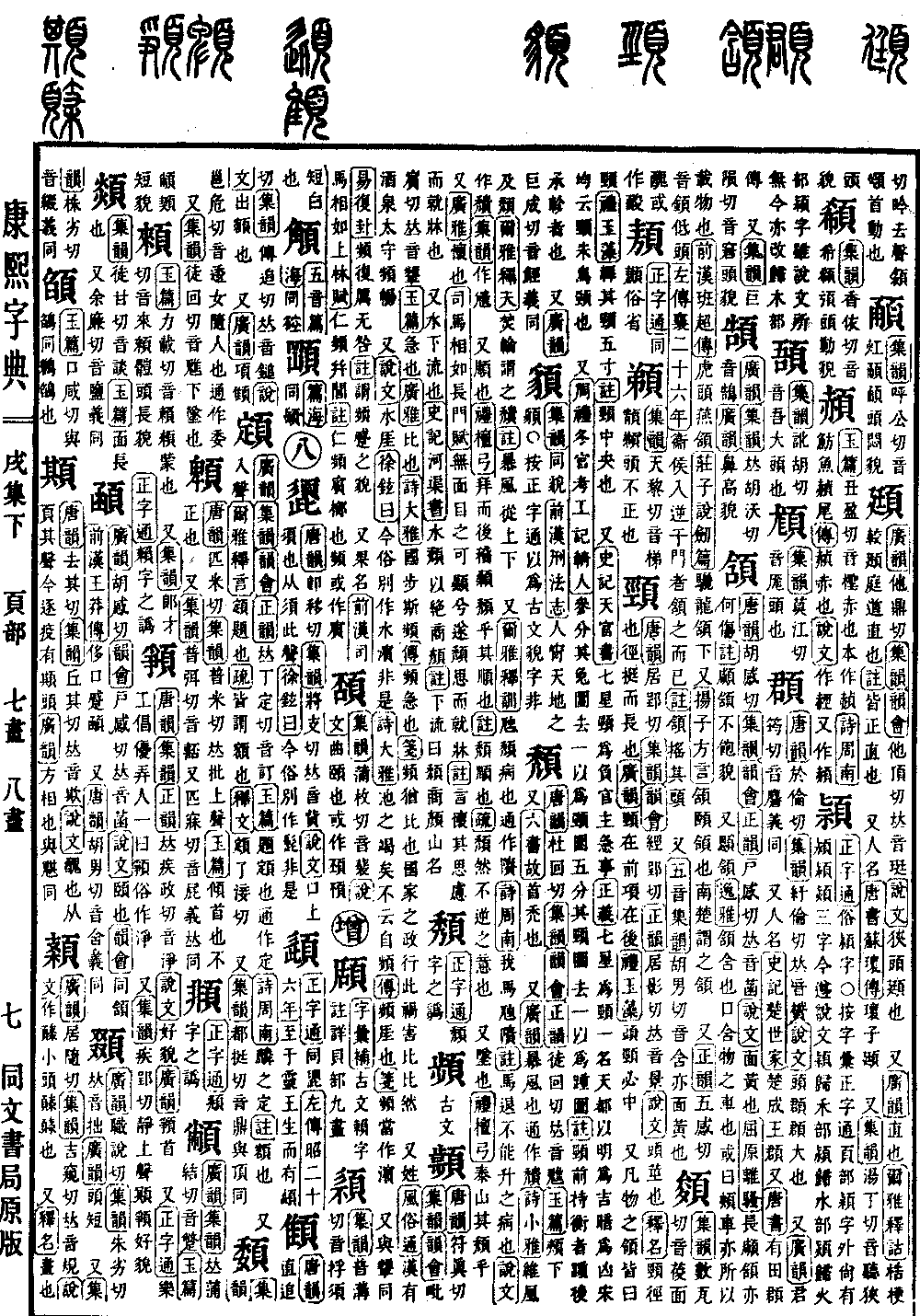
Xu Collection, Lower Volume
Radical: Leaf (yè)
Kangxi Strokes: 16
Page 1405, Entry 01
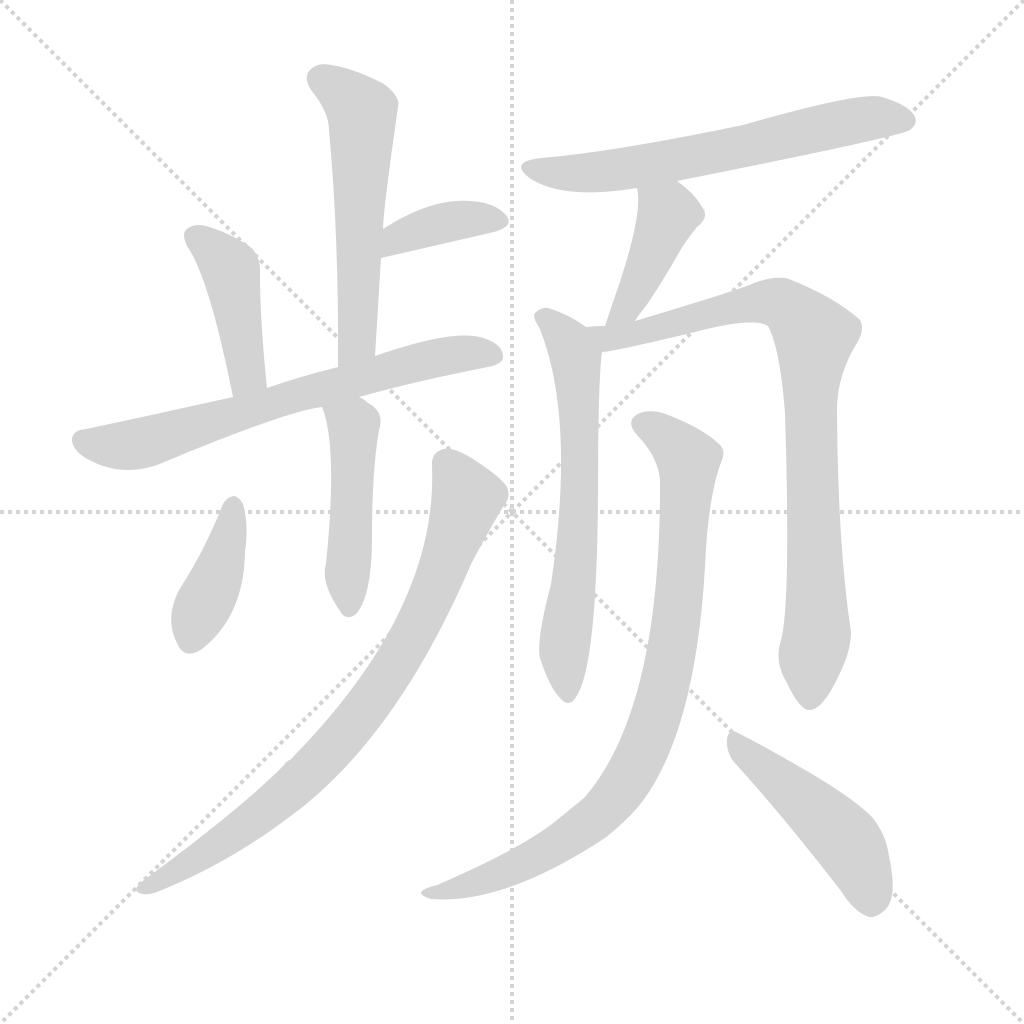
Archaic form. Pronounced pin.
Jade Chapters (Yupian): Means urgent, pressing, or hurried.
Refined Elegance (Guangya): Means continuous or frequent.
Book of Odes (Shijing): The fate of the state is so critical.
Commentary (Zhuan): The term here means urgent.
Annotation (Jian): The term here suggests a continuous succession. The state decrees, inflicting such calamities one after another.
Also used as a surname.
Customs and Traditions (Fengsutong): During the Han dynasty, there was a Governor of Jiuquan named Pin Chang.
Also, according to the Explaining Graphs and Analyzing Characters (Shuowen Jiezi), it refers to a waterside.
Xu Xuan says: Common usage now writes this as water-shore (bin), which is incorrect.
Book of Odes (Shijing): Has the pond dried up? Did it not start from the water's edge?
Commentary (Zhuan): The term here means waterside.
Annotation (Jian): The term here should be written as water-shore (bin).
Also, it is the same as the character for frowning.
Book of Changes (Yijing): Frowning while returning, although there is danger, there is no disaster.
Note: Refers to the appearance of furrowing the brow.
Also the name of a fruit.
History of the Former Han (Qianhan): Rèn pin, and binglü.
Note: Rèn pin refers to the betel nut. It is also sometimes written with the character bin.
Textual Research: In the Book of Odes (Shijing) citation, the original text says "land" (di), but the corrected text uses "pond" (chi).