Shen Collection, Upper Volume
Radical: Grass (cǎo)
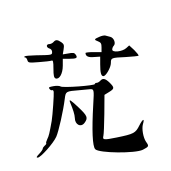
Peng
Kangxi strokes: 9
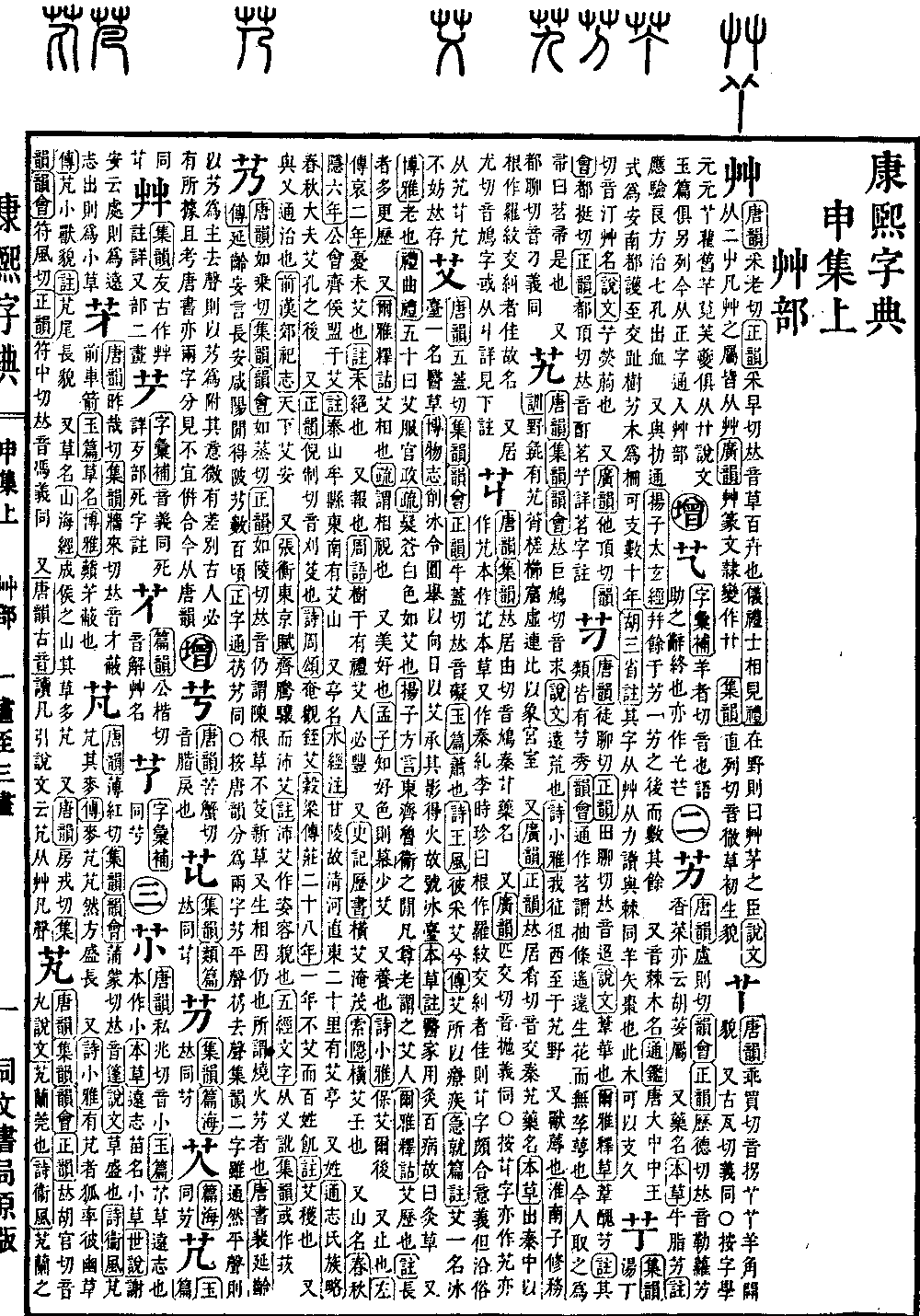
Page 1017, Entry 22
Pronounced peng.
According to the Explaining Graphs and Analyzing Characters (Shuowen Jiezi), it describes the appearance of lush, abundant grass.
In the Book of Odes (Shijing), it is written: The wheat is lush and abundant. The commentary states that the wheat is growing in a flourishing and abundant manner.
Also in the Book of Odes (Shijing), it is written: There is a fox with a prominent tail, leading through the secluded grass. The commentary states that this describes the appearance of a small beast. The note clarifies that it refers to the appearance of a long tail.
Also, it is the name of a plant. In the Classic of Mountains and Seas (Shanhaijing), it is written: On Mount Cheng-Hou, there is much of this plant.
Pronounced feng. The meaning is the same.
In the ancient pronunciation of the Tang Rhyme, it is read as fan, citing the Explaining Graphs and Analyzing Characters (Shuowen Jiezi) that the character is composed of the grass radical and the phonetic component fan.
Textual research: In the Book of Odes (Shijing), under the section Weifeng, the phrase "The wheat is lush and abundant" appears. Following the original text, Weifeng has been corrected to Yongfeng.