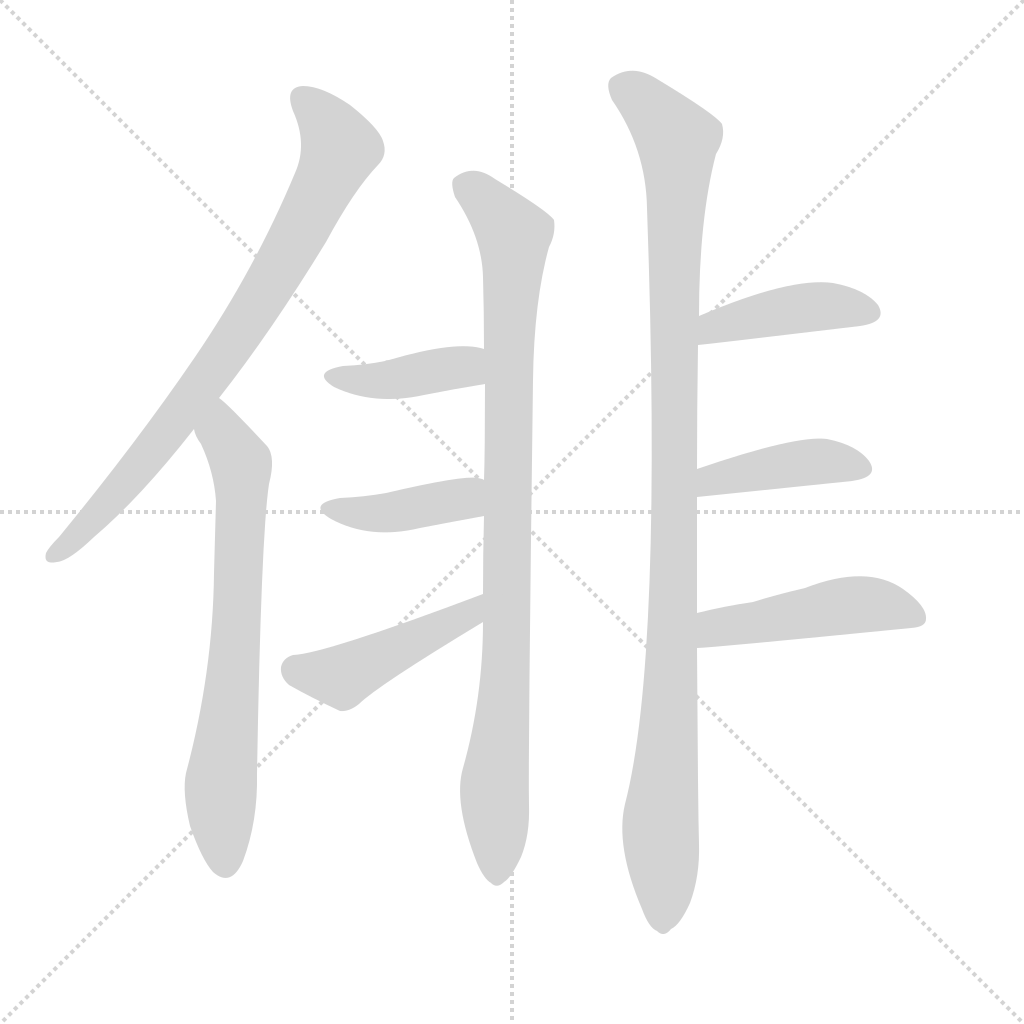
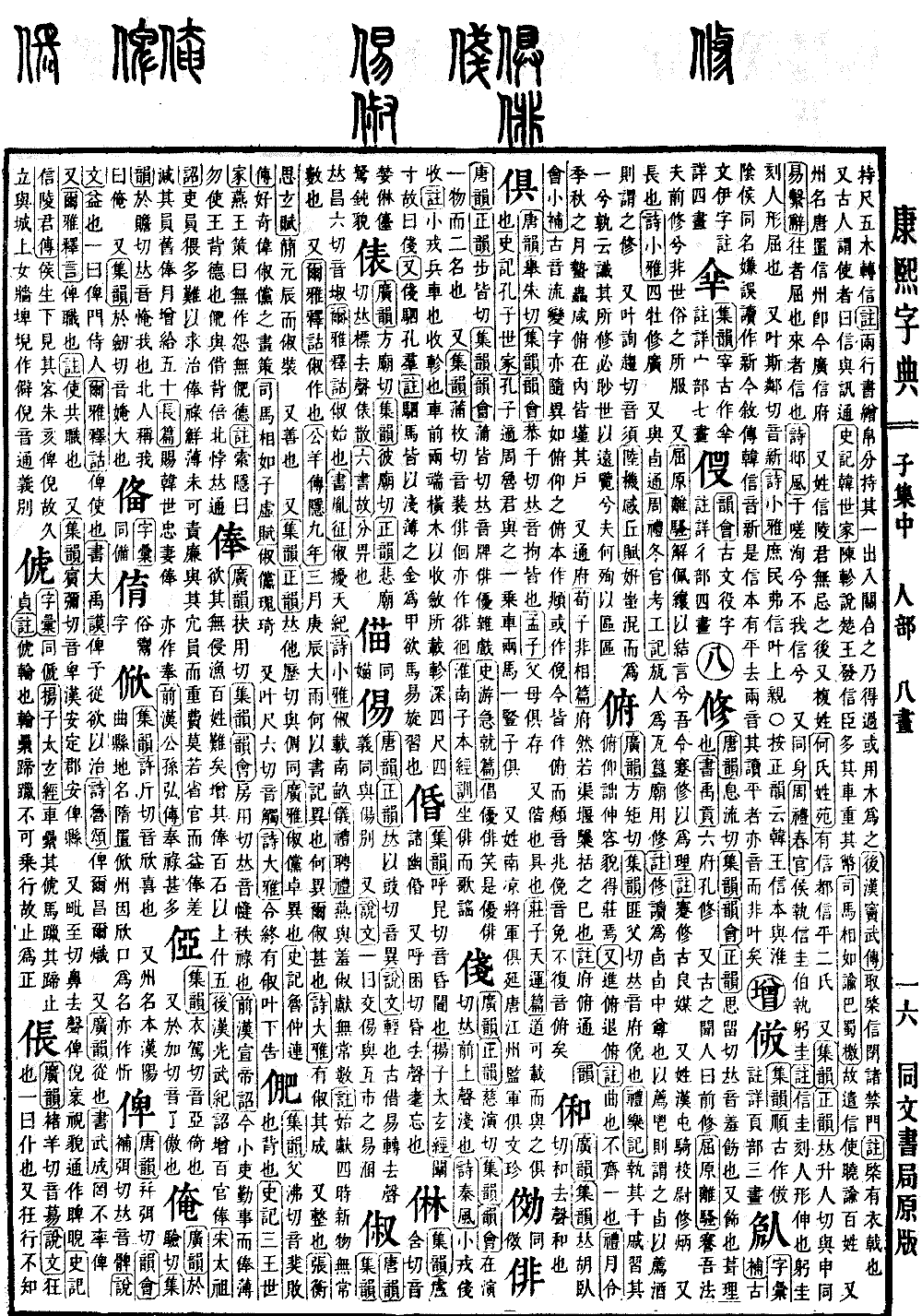
Zi Collection, Middle Volume. Radical: Person (rén). pái. Kangxi Strokes: 10. Page: 106, Number 10. According to the Tang Rimes (Tangyun) and Correct Rimes (Zhengyun), the pronunciation follows the fanqie phonetic of bù and jiē. According to the Collected Rimes (Jiyun) and Rime Collection (Yunhui), it follows the fanqie of pú and jiē. The pronunciation is the same as pái. The term páiyōu refers to entertainers and jesters who perform variety acts. The Quick Access Primer (Jijiupian) by Shi You mentions entertainers and humorous performers, explaining that yōu and pái are two names for the same thing. Additionally, the Collected Rimes records a reading with the fanqie of pú and méi, pronounced the same as péi. This is used in the term páihuí, also written in the variant form meaning to pace or linger. The Master of Huainan (Huainanzi) in the chapter On the Canonical Norm (Benjingxun) records: sitting and pacing while singing.