Xu Collection, Upper Volume
Radical: Metal (jīn)
Kangxi Strokes: 17
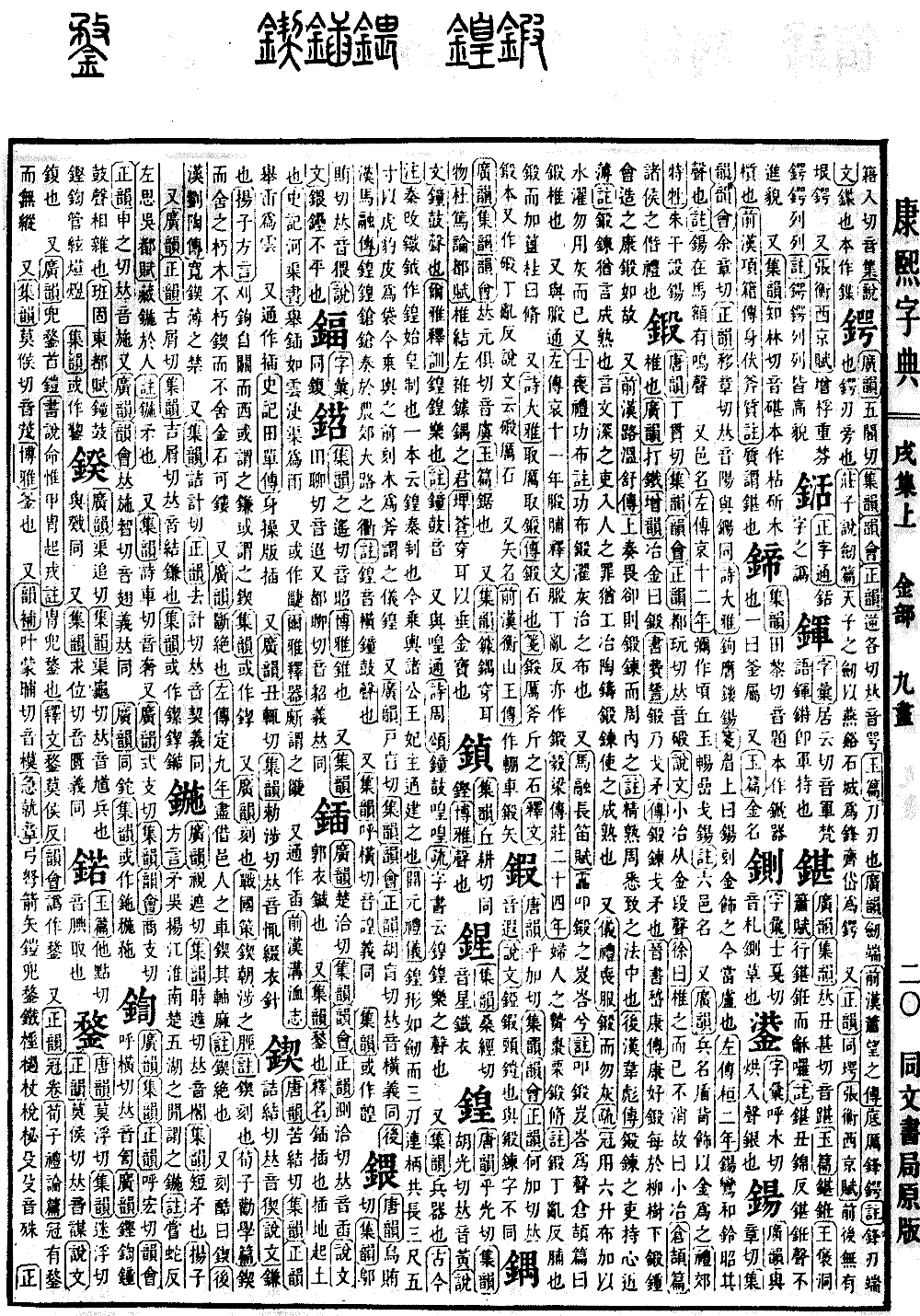
Page 1314, Entry 24
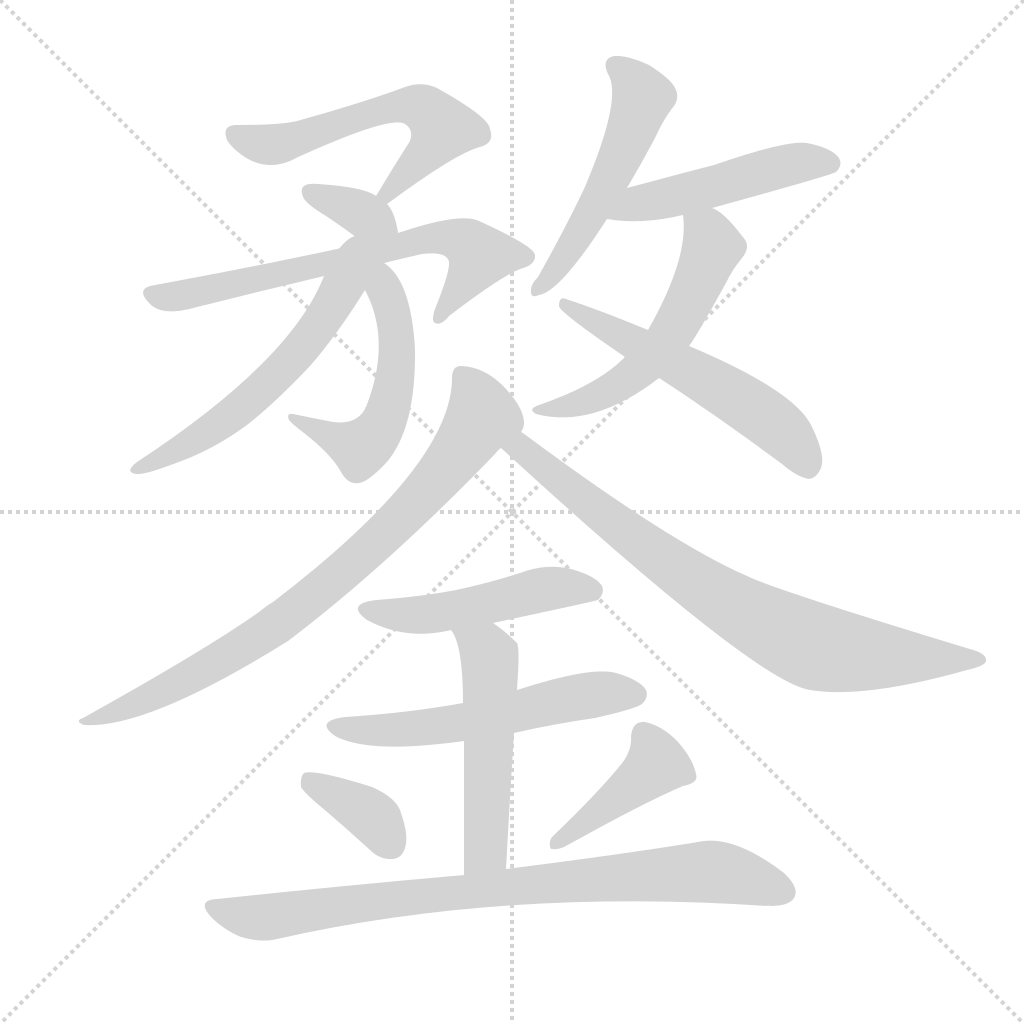
Pronounced mou.
According to the Explaining Graphs and Analyzing Characters (Shuowen Jiezi), it is defined as a pot.
Additionally, the Broad Rhymes (Guangyun) refers to a helmet, meaning a headpiece.
In the Book of Documents (Shujing), specifically the Charge to Yue (Shuoming), the commentary notes that the armor headpiece is a helmet.
The Explanation of Text (Shiwen) states the pronunciation is mou.
The Collection of Rhymes (Yunhui) notes it is mistakenly written as a variant form.
Furthermore, the Correct Rhymes (Zhengyun) refers to the curled edge of a cap.
In the Xunzi, specifically the Discourse on Ritual (Lilun), it mentions a cap with a curled edge.
Additionally, it is pronounced mao.
The Expanded Elegant (Boya) defines it as a cauldron.
Furthermore, according to the Supplement to Rhymes (Yunbu), it also rhymes with the sound of mu.
In the Urgent Formulation (Jijiuzhang), it is mentioned alongside bows, crossbows, arrows, armor, and helmets, as well as iron hammers, rods, staffs, and spears.
The Correct Character Guide (Zhengzitong) states that a helmet is shaped like a pot but has an everted rim; it is not a cooking utensil. The Long Notes on the Explaining Graphs and Analyzing Characters (Shuowen Changjian) argues that soldiers used helmets as cooking pots, which is why they are called helmet-pots. It suggests that a helmet is the name of the headpiece, while a pot is the name of the vessel, and thus one object serves both meanings. However, in the military, the flared-rim bronze vessel was used to cook during the day and struck to sound alarms at night; soldiers did not routinely use helmets for cooking. Instances of boiling bows, crossbows, and armor or eating leather straps only occurred when troops were under siege, suffering from famine, and cut off from reinforcements, out of sheer necessity. The assertion in the Long Notes is incorrect.