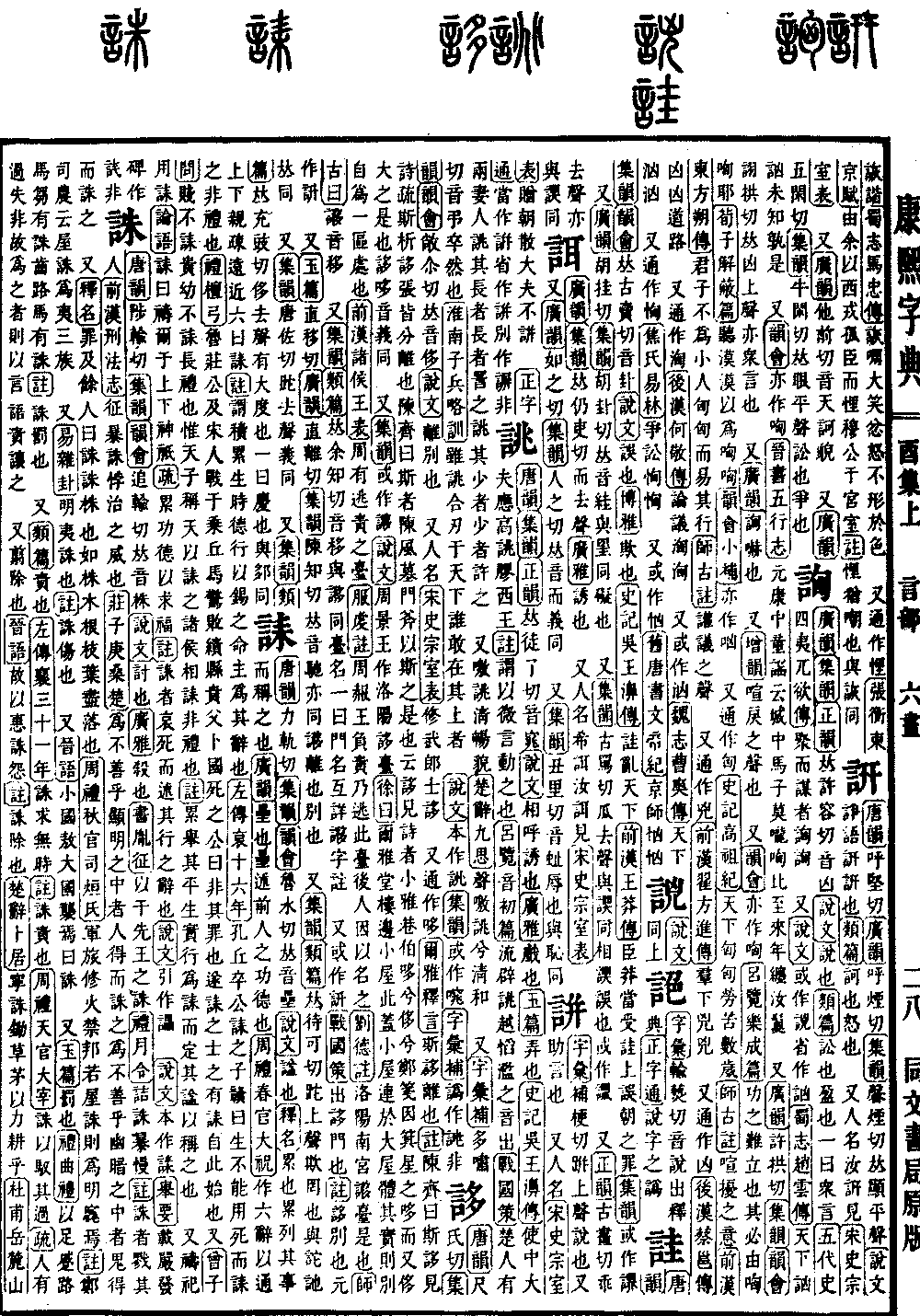
You Collection, Upper Volume
Radical: Speech (yán)
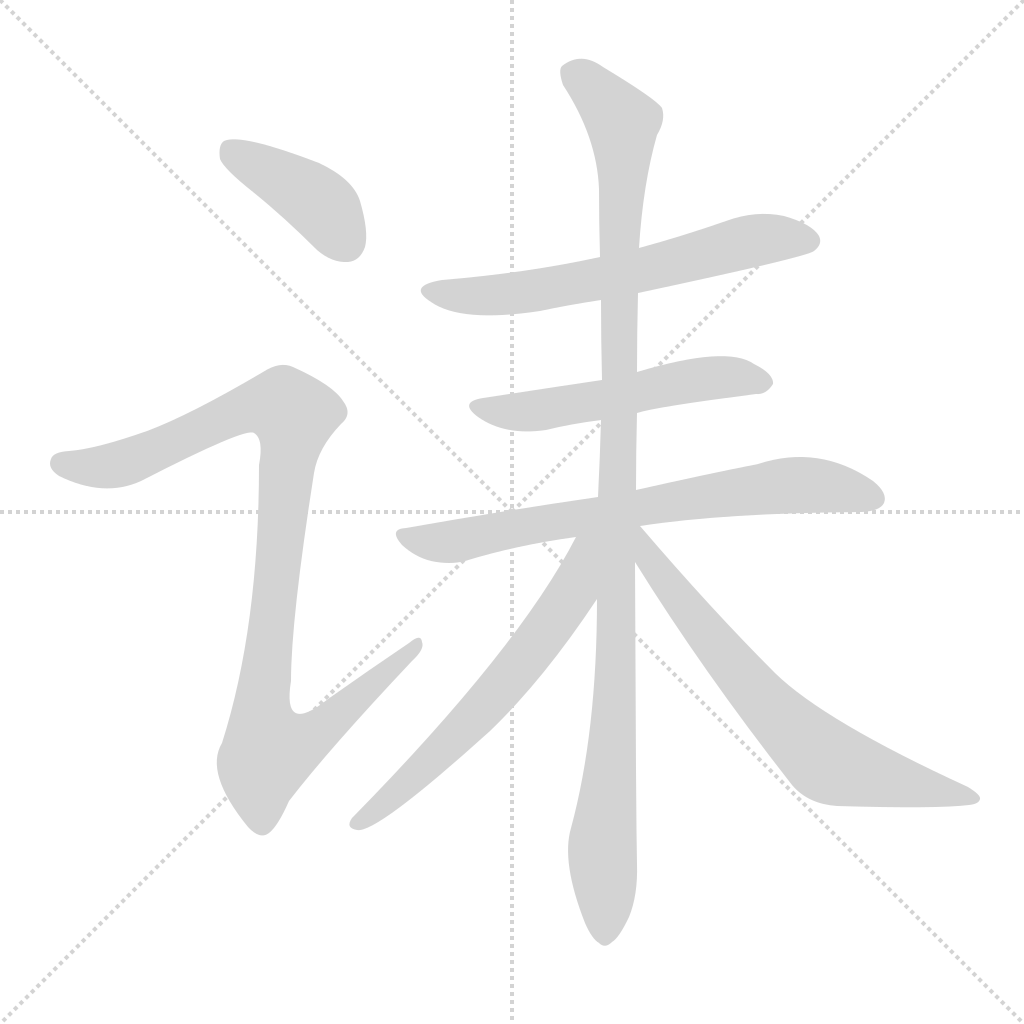
Lei
Kangxi strokes: 13
Page 1160, Entry 01
Pronounced lei (rising tone).
Shuowen Jiezi (Explanation of Simple and Compound Characters): An honorific title.
Shiming (Explanations of Names): To accumulate. It means to accumulate and list the deeds of a person and praise them.
Guangyun (Broad Rhymes): To pile up. It means to pile up and narrate the virtues and merits of a predecessor.
Book of Rites (Zhouli), Spring Office, Great Invoker: Create six types of declarations to connect those above and below, relatives and non-relatives, the near and the far; the sixth is called lei. Commentary: This refers to accumulating the virtues practiced during one's lifetime to bestow a title, serving as the text for that declaration.
Zuo Zhuan (Zuo’s Commentary), 16th Year of Duke Ai: Confucius died, and the Duke wrote a eulogy for him. Zigong said, In life you could not employ him, yet in death you write a eulogy for him; this is not ritual.
Book of Rites (Liji), Tan Gong: Duke Zhuang of Lu fought the Song people at Chengqiu. His horse startled, resulting in a defeat. Xian Benfu and Bu Guo died in the battle. The Duke said, It was not their fault, and subsequently wrote a eulogy for them. This was the beginning of eulogies for officers.
Additionally, in Zengzi Wen: The low-ranking do not write eulogies for the high-ranking, and the young do not write eulogies for the elderly; this is ritual. Only the Son of Heaven may invoke Heaven to eulogize; for feudal lords to eulogize one another is not ritual. Commentary: To accumulate and mention the actual deeds of a lifetime is to eulogize, and thus establish the honorific title to address them.
Furthermore, prayers and sacrifices use eulogies. Analects: The eulogy says, Praying for you to the gods above and below. Commentary: Accumulating merits and virtues to seek blessings. Commentary: A eulogy is a text lamenting the dead and narrating their conduct.
Shuowen Jiezi cites it as written in the form of lei. Shuowen Jiezi: The original form was written as lei. Juyao (Summary of Essentials) records it as written in the form of lei in the Yanfa, which is incorrect. The character originally follows the structure of three strokes and the hook component, with the hook protruding at the top.