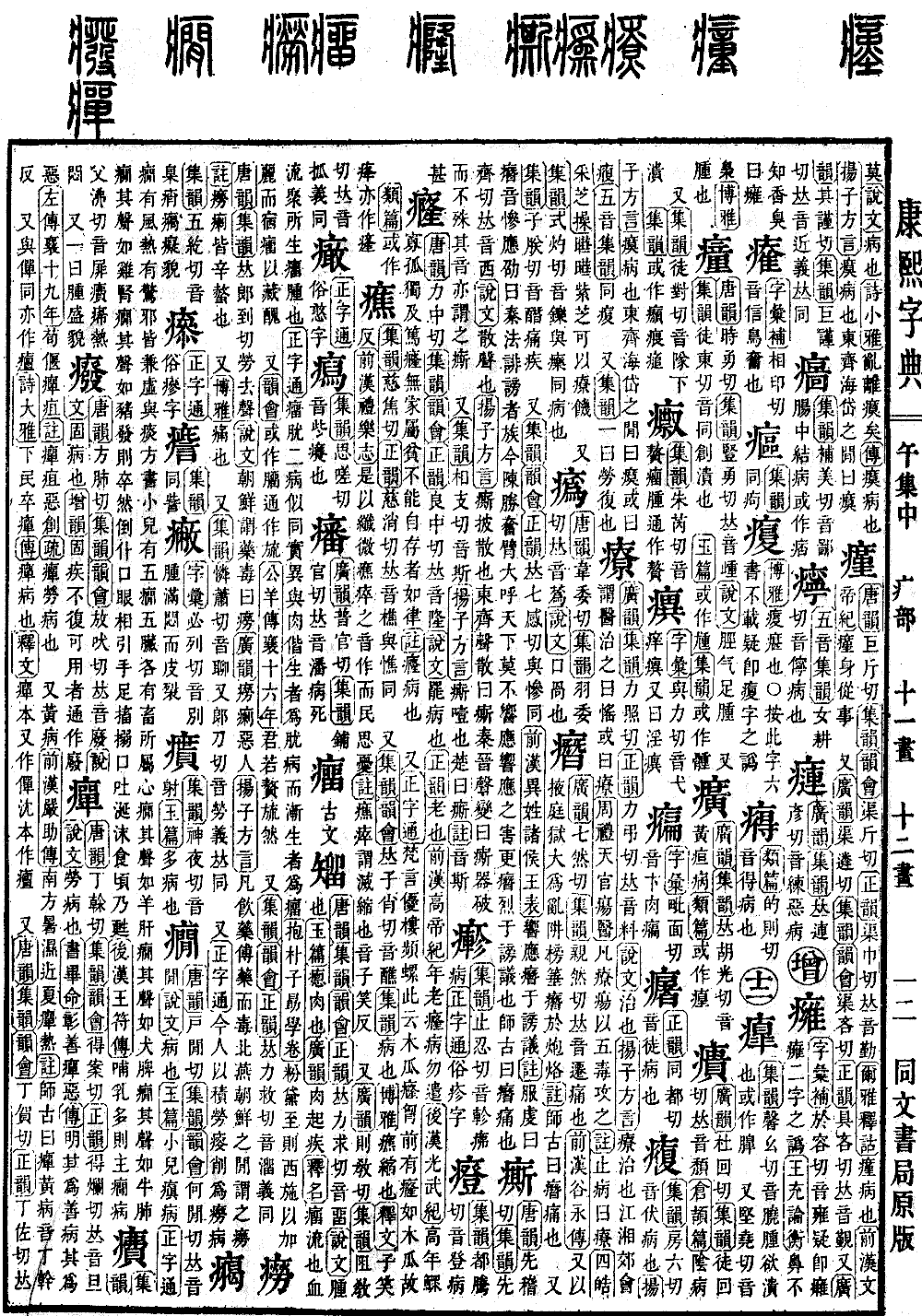
Wu Collection, Middle Volume
Radical: Sickness (bìng)
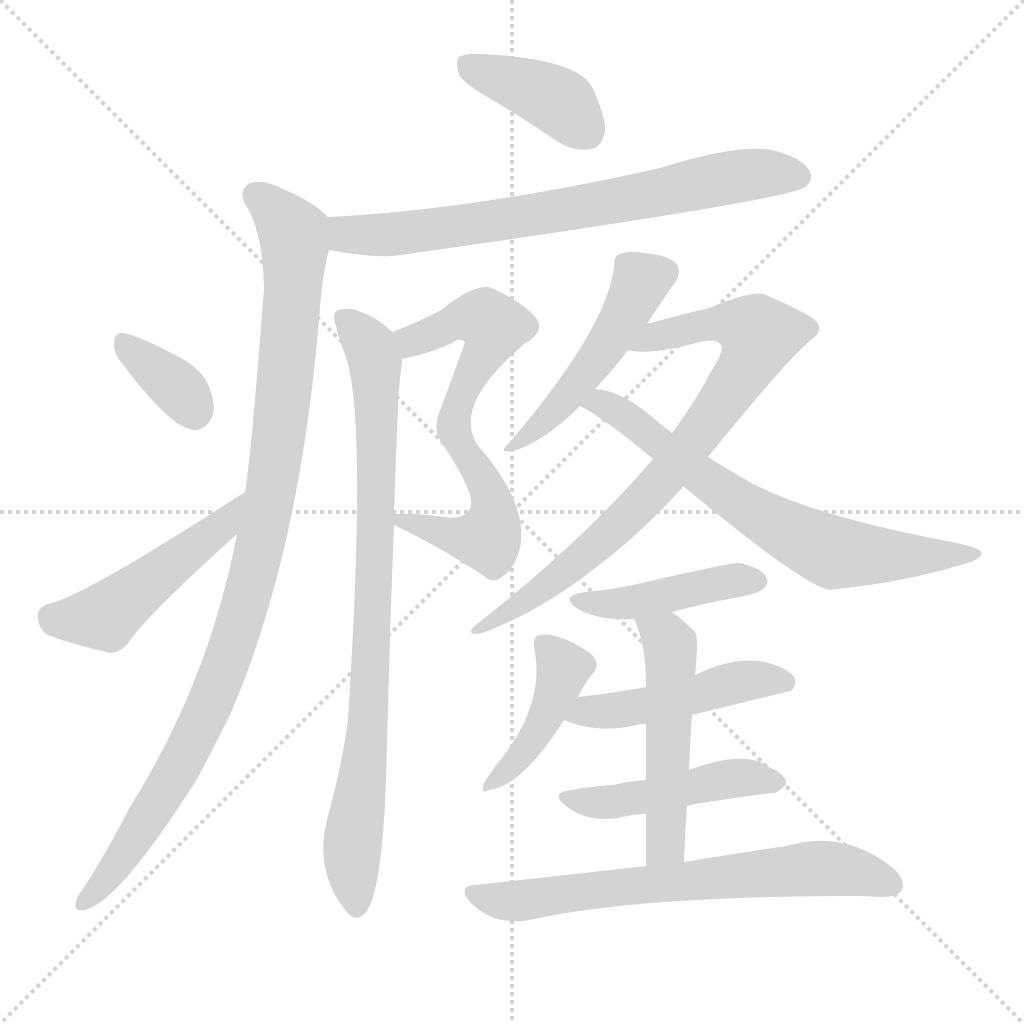
Long
Kangxi strokes: 17
Page 780, Entry 25
According to the Tang Dynasty Rimes (Tangyun), the Collected Rimes (Jiyun), the Rhyme Dictionary (Yunhui), and the Corrected Rimes (Zhengyun), it is pronounced long.
In the Explanation of Simple and Compound Characters (Shuowen), it means to be exhausted by illness. The Corrected Rimes states it means aged.
In the History of the Former Han (Qianhanji), Biography of Emperor Gaozu: Those who are aged or suffering from the illness of long should not be dispatched.
In the History of the Later Han (Houhanji), Biography of Emperor Guangwu: For those who are aged, widowed, orphaned, solitary, or those who are severely afflicted by long and have no relatives, and who are poor and unable to sustain themselves, they shall be treated according to the law. The commentary notes that long means illness.
Furthermore, according to the Collection of Correct Characters (Zhengzitong), the Sanskrit word ulubiluo translates to papaya long, meaning one has a swelling on the chest like a papaya.
In the Classified Dictionary (Leipian), it is sometimes written in the variant form of a character with the sickness radical and the character for dragon. It is also written in a variant form.