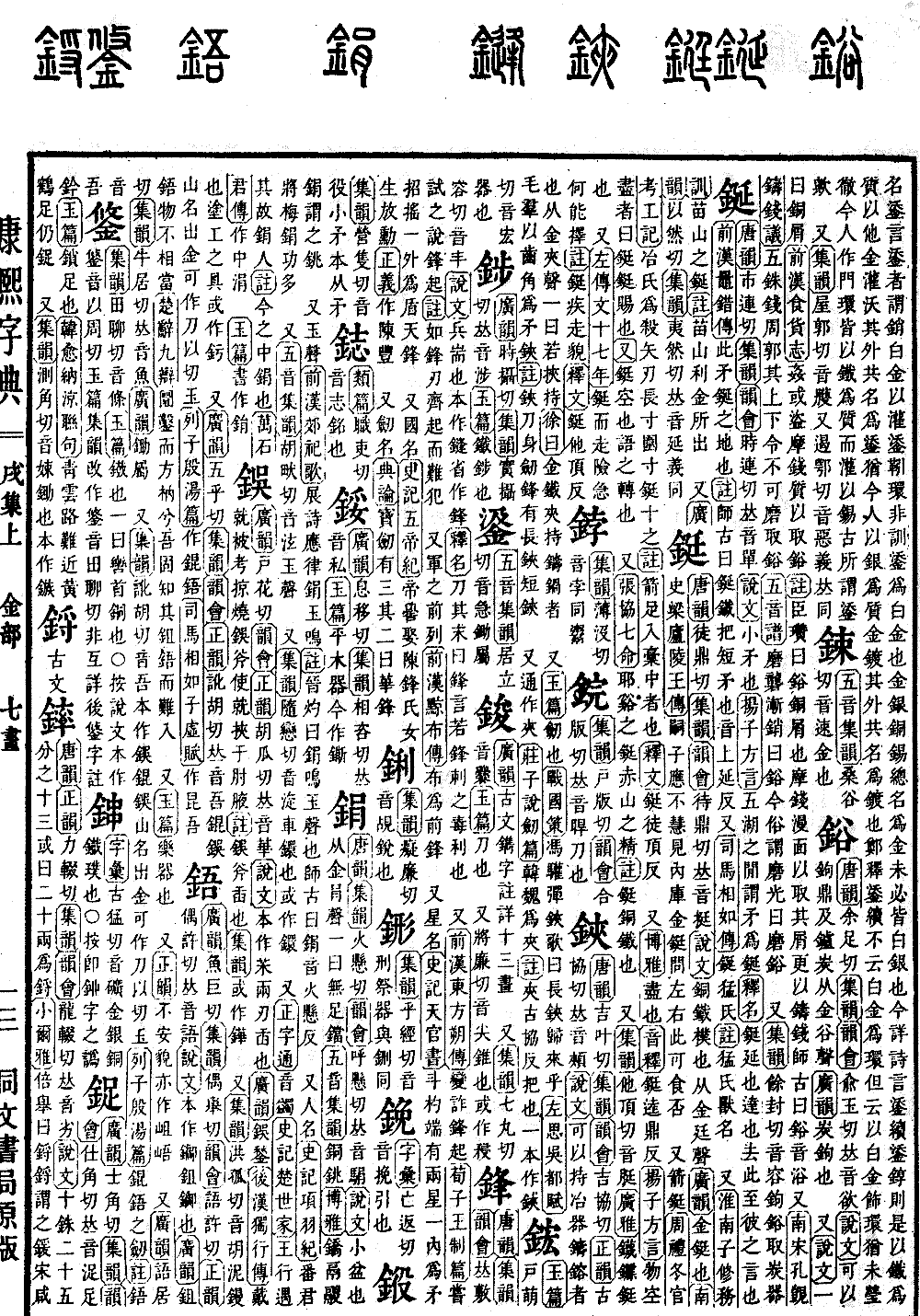
Xu Collection, Upper Volume
Radical: Metal (jīn)
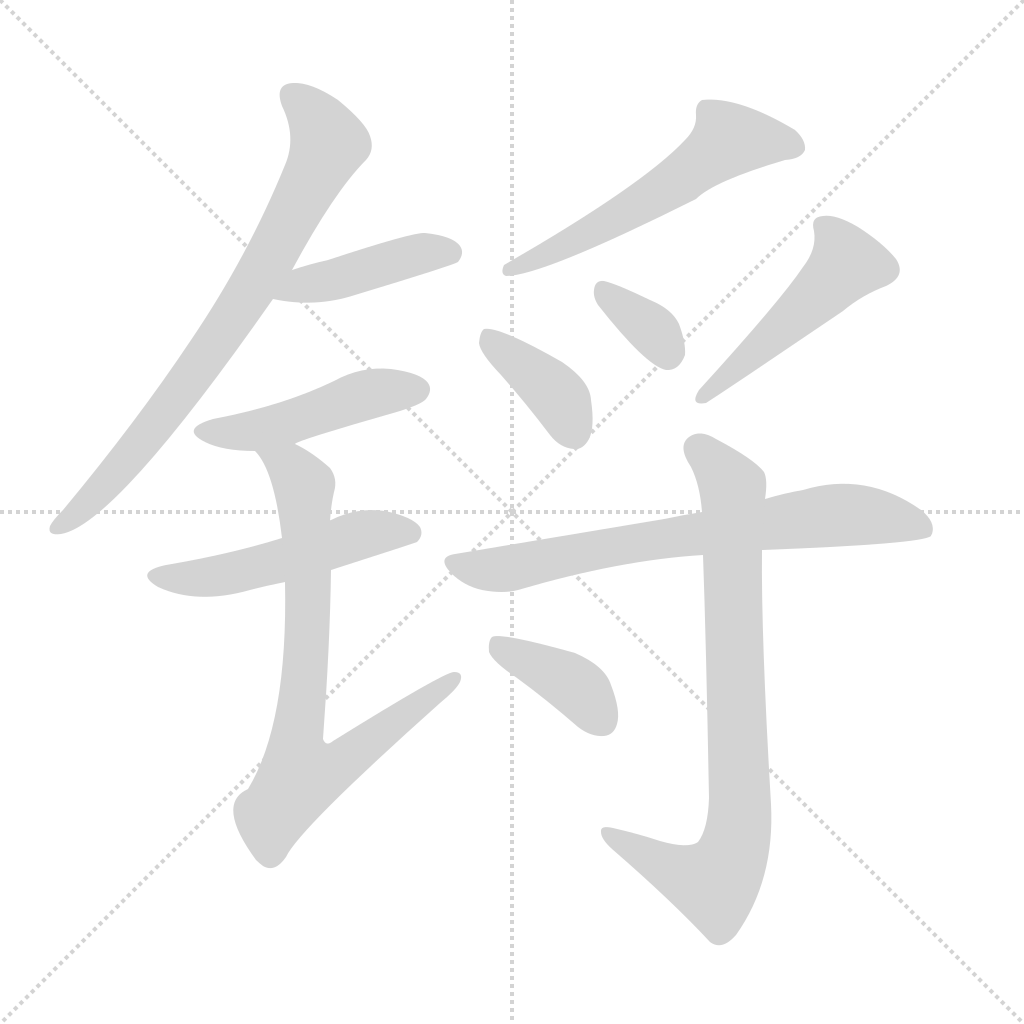
鋝
Kangxi strokes: 15
Page 1307, Entry 12
Ancient form. Pronounced liè.
Shuowen Jiezi (Shuowen): Thirteen twenty-fifths of ten zhu (an ancient unit of weight). Some say twenty liang (taels) make one lüe.
Xiao Erya (Small Erya): Twice a ju (a unit of weight) is called a lüe. A lüe is also called a huan. Song Xian says: A ju is three liang, so a lüe is six liang.
Book of Rites (Zhouli), section Winter Officers, Artificers Record (Kaogongji), chapter Metallurgists: Daggers and halberds each weigh three lüe; swords weigh nine lüe, or seven lüe for the next grade, or five lüe for the following.
Commentary: In modern Donglai, some consider two-thirds of a liang to be a jun, and ten jun to be a huan. A huan weighs six and two-thirds liang. A huan and a lüe are the same. Thus, three lüe equal one jin and four liang.
Six Writings Origins (Liushu Gu): The Shuowen claim that thirteen twenty-fifths of ten zhu equals one lüe would mean three lüe cannot equal one jin and four liang. Furthermore, for daggers and halberds to weigh only thirty-one zhu is already too light. If one considers twenty liang to be a lüe, then a sword weighing nine lüe would be eleven jin and four liang, which is already too heavy. This is also not correct. Huan and lüe are both six liang; they are essentially the same character. See the detailed note under the character huan.
Also pronounced liè. Meaning is the same. Sometimes written in a variant form (shuài).