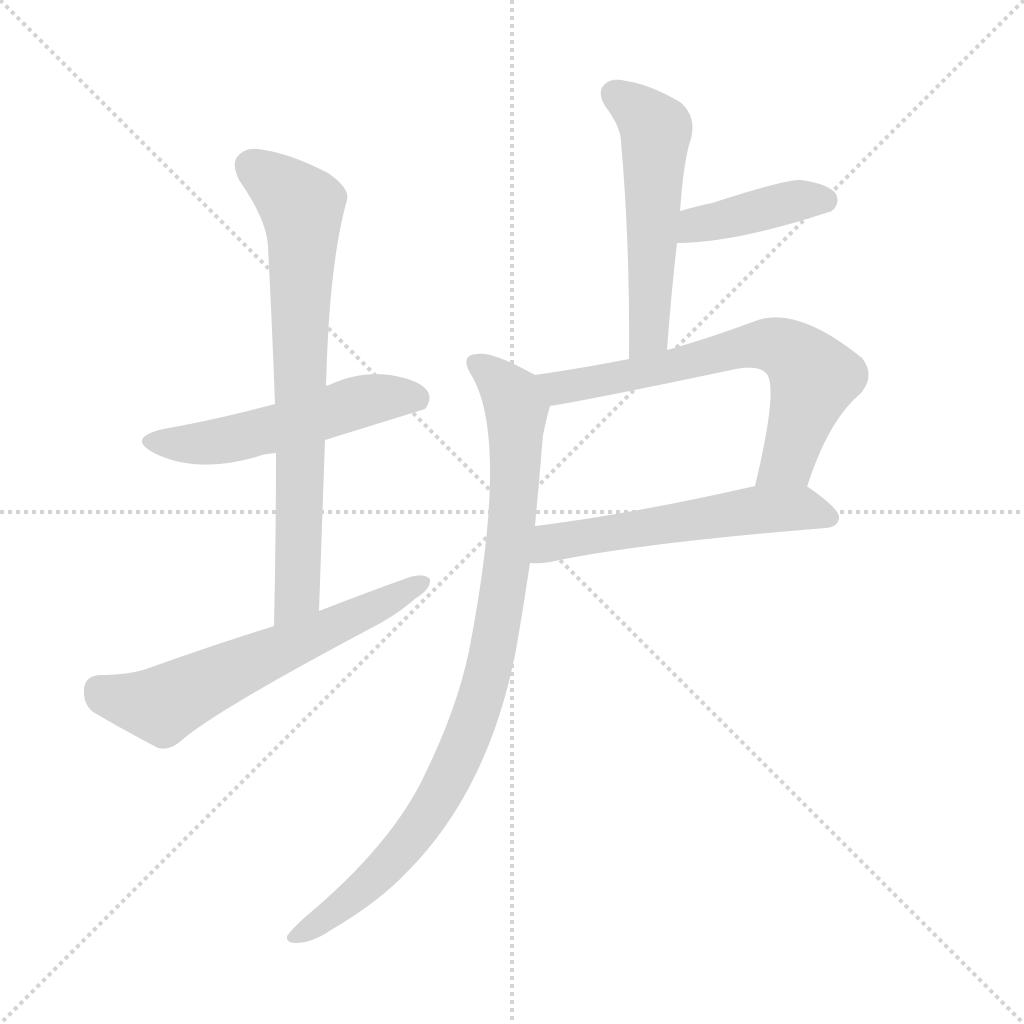
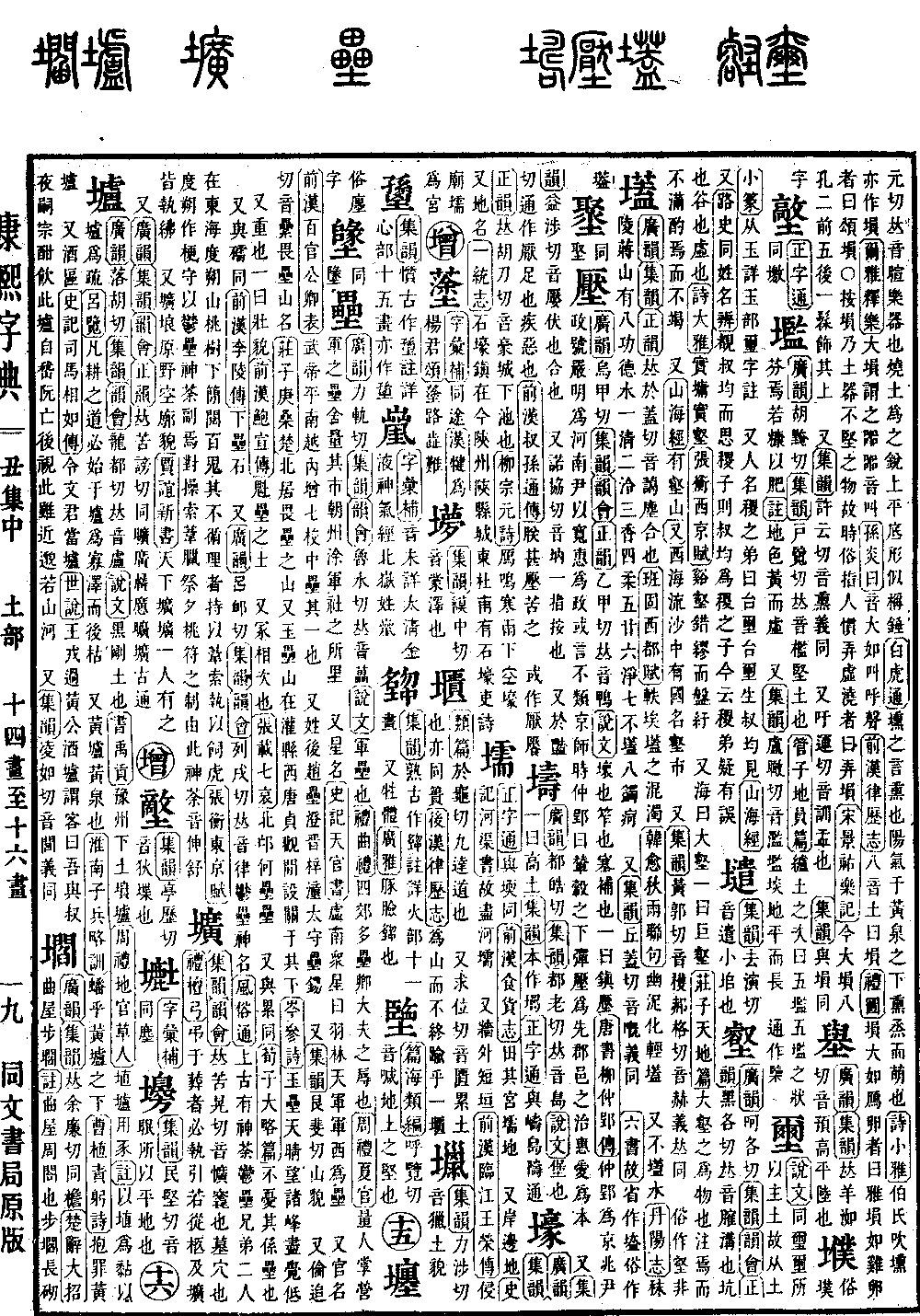
Chou Collection, Middle Volume. Radical: Earth (tǔ). Kangxi brush strokes: 19. Page 241, Entry 06.
Pronounced lu.
According to the Explaining Graphs and Analyzing Characters (Shuowen Jiezi), it refers to black, hard soil.
In the Tribute of Yu (Yugong) chapter of the Book of Documents (Shangshu), it describes the soil of Yuzhou as being loose and crumbling.
In the Earth Officer section of the Rites of Zhou (Zhouli), under the Grass Official, it mentions using sticky soil and loose soil for pigs. The commentary notes that sticky soil is used for its adhesive properties, while loose soil is used for its porosity.
According to the Master Lu's Spring and Autumn Annals (Lushi Chunqiu), the method of plowing must begin with the breaking up of loose soil, reducing moisture content until the soil is dry.
It also refers to the yellow, loose earth, meaning the underworld or the grave. In the Military Strategy chapter of the Huainanzi, it speaks of coiled beneath the yellow, loose earth. In the Poem of Self-Reproach (Zegong Shi) by Cao Zhi, it mentions carrying guilt into the yellow, loose earth.
It also refers to a wine stall. In the Biography of Sima Xiangru from the Records of the Grand Historian (Shiji), it mentions having Wenjun preside over the wine stall. In the New Account of Tales of the World (Shishuo Xinyu), it is recorded that Wang Rong passed by the wine stall of Huang Gong and said to his guest: I used to drink heartily at this stall with Ji Kang and Ruan Ji. Since the passing of Ji and Ruan, although this place is near, it feels as remote as mountains and rivers.
Also, pronounced lu. The meaning is the same.