Si Collection, Upper Volume
Radical: Water (shuǐ)
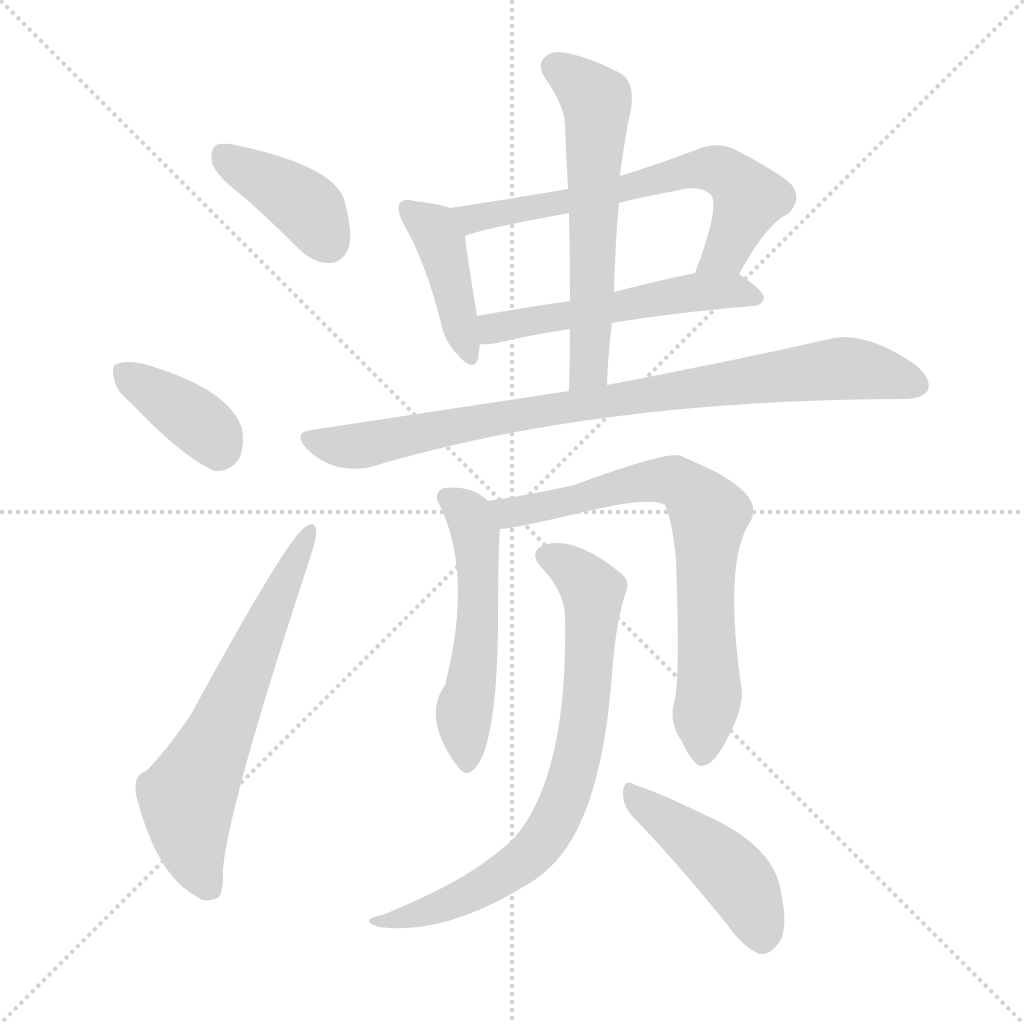
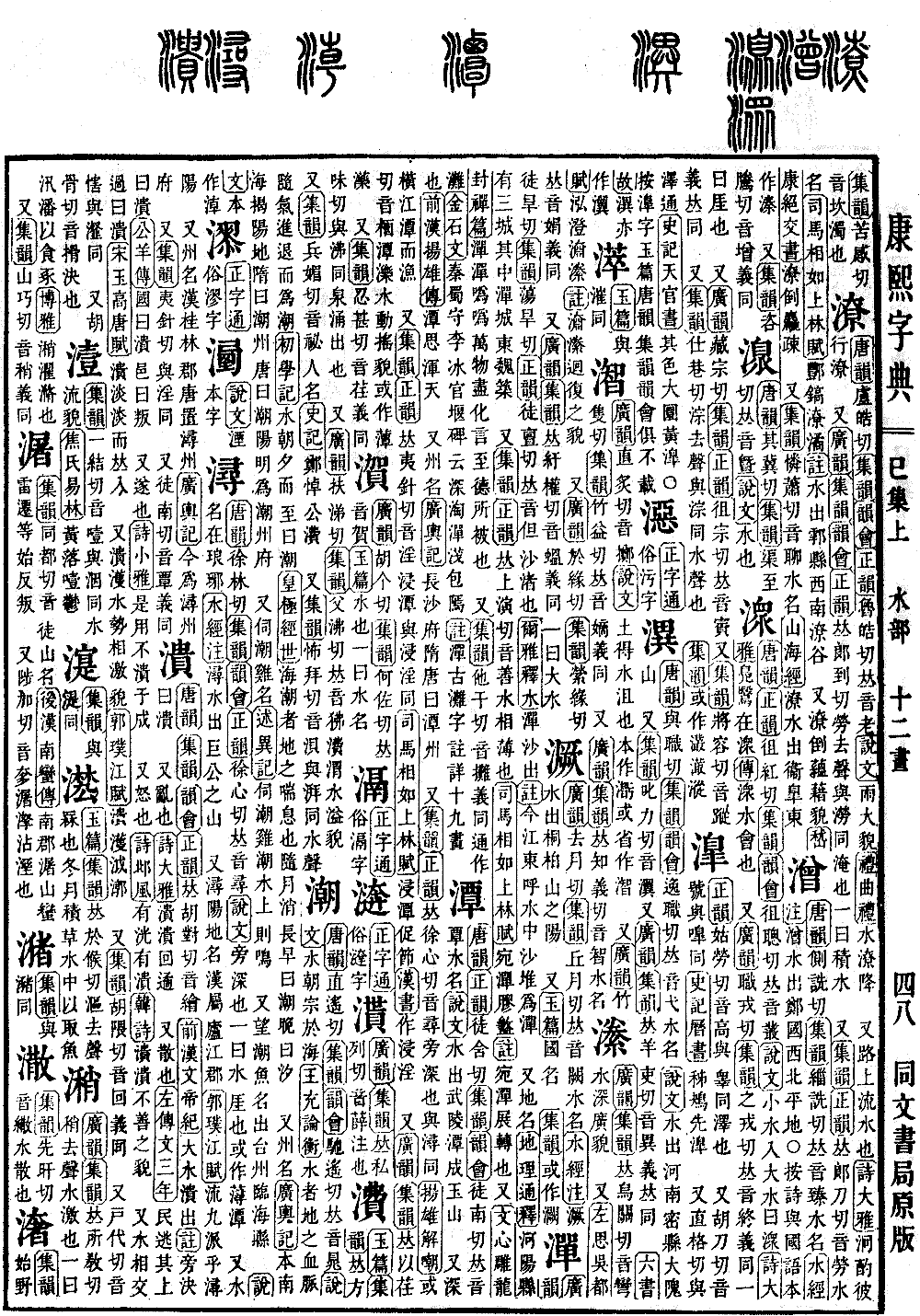
Entry: 潰
Kangxi Stroke Count: 16
Page 650, Entry 15
Pronounced hui (falling tone).
From Book of Han (Hanshu), Annals of Emperor Wen: A great flood burst forth.
Commentary: To break through the side is called hui.
Also means disorder.
From Classic of Poetry (Shijing), Greater Odes: In disordered and perverse ways.
Also means to scatter.
From Zuo Tradition (Zuozhuan), Third Year of Duke Wen: When the people flee from their superiors, it is called hui.
From Gongyang Commentary (Gongyangzhuan): A state fleeing is called hui, a city rebelling is called pan.
Also means to achieve or complete.
From Classic of Poetry (Shijing), Lesser Odes: Therefore, it did not reach completion.
Also means anger.
From Classic of Poetry (Shijing), Odes of Bei: Both majestic and angry.
From Han Commentary on the Classic of Poetry (Hanshi): Hui hui is the appearance of something not good.
Also, where waters intersect and pass each other is called hui.
From Song Yu, Rhapsody on Gaotang (Gaotang fu): Bubbling and surging, they enter.
Also, huihu describes the appearance of water currents clashing.
From Guo Pu, Rhapsody on the Yangtze River (Jiang fu): Surging and clashing.
Also, pronounced hui (level tone). The meaning is the same.
Also, pronounced dai (falling tone). Same as the character meaning mist or vapor (xie).
Also, pronounced hu (entering tone). To break through.