Shen Collection, Upper Volume
Radical: Grass (cǎo)
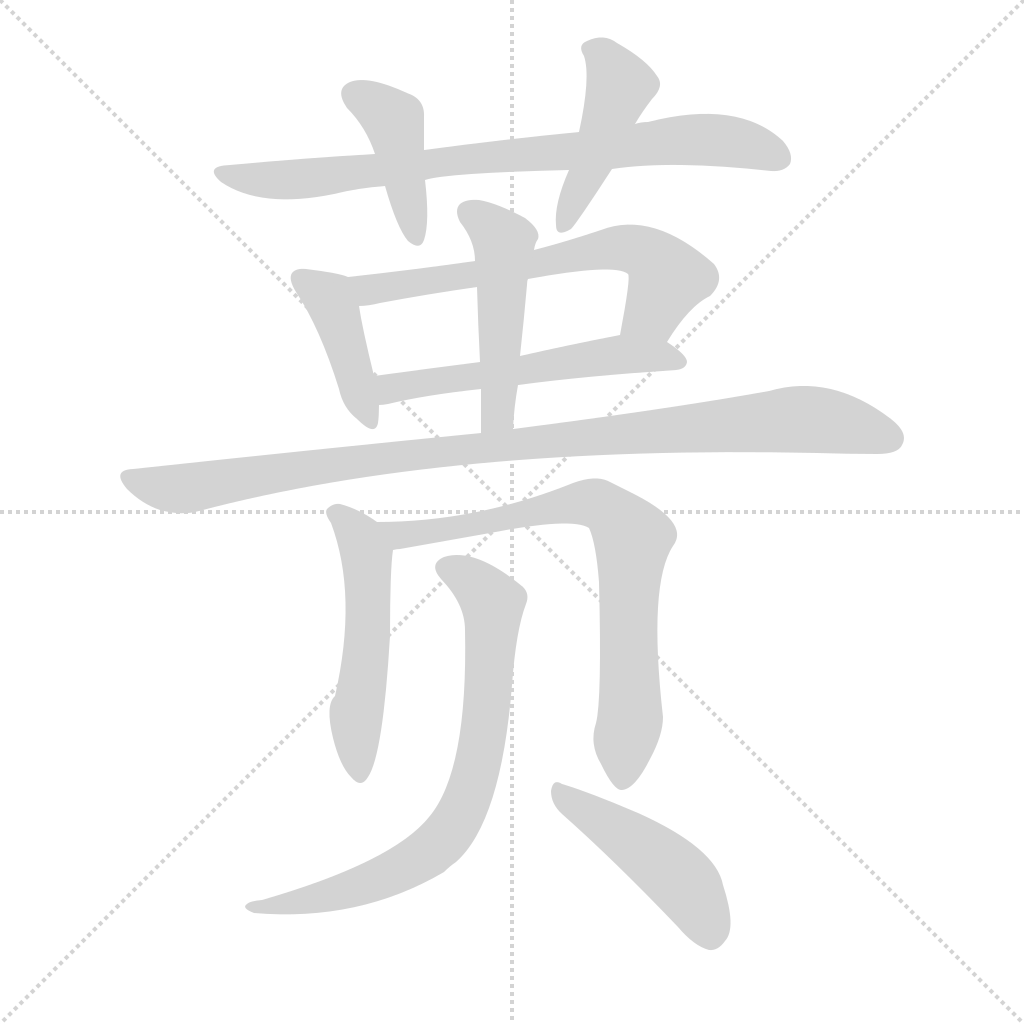
Kui
Kangxi strokes: 18
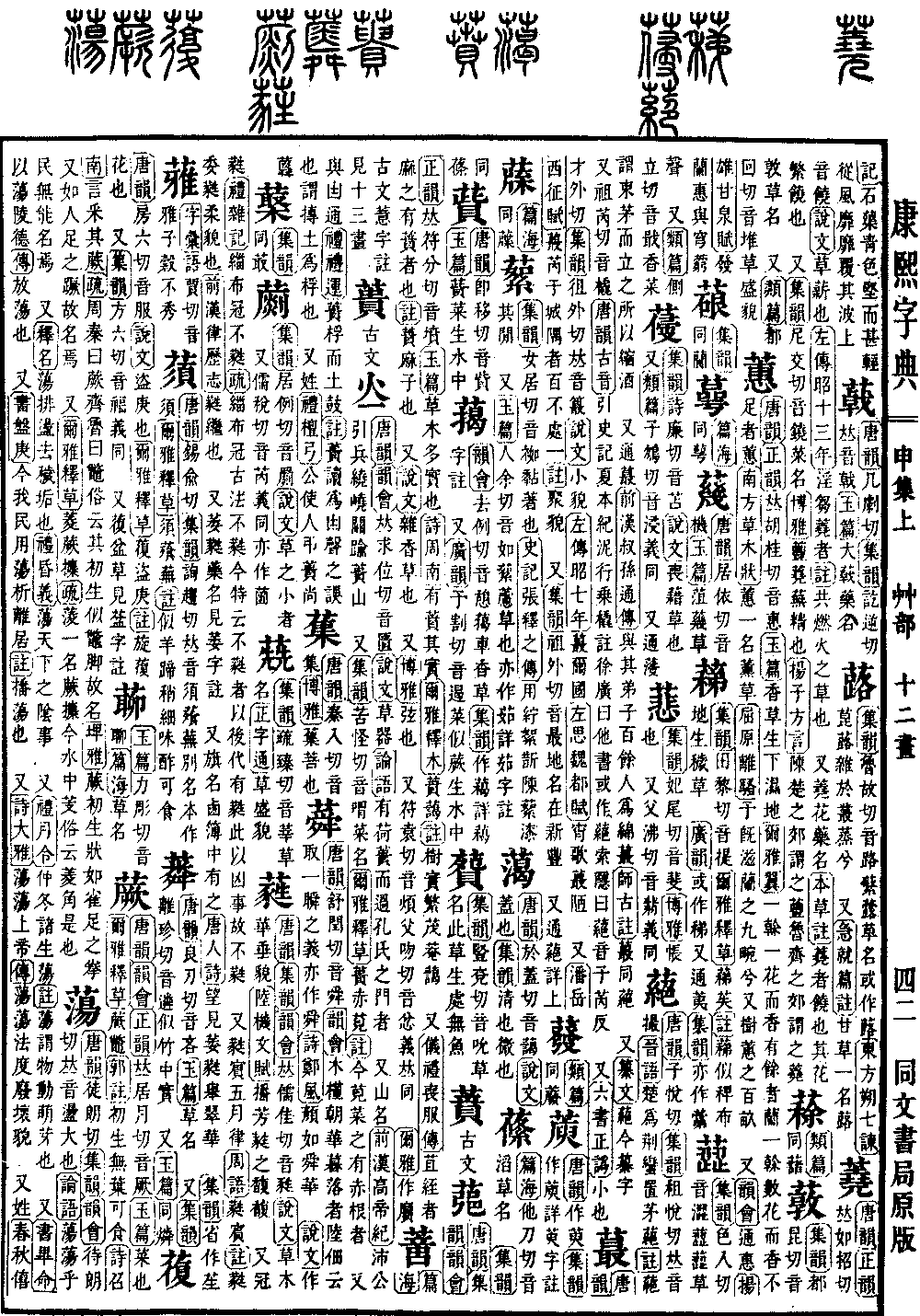
Page 1058, Entry 01
Ancient form. Tang Rhymes (Tangyun) and Rhyme Assembly (Yunhui), pronounced kui.
Shuowen (Explaining Graphs and Analyzing Characters): A container made of grass.
Analects of Confucius (Lunyu): There was one carrying a grass basket passing the gate of the Confucius household.
Also, a mountain name. History of the Former Han (Qianhan), Annals of Emperor Gao: The Duke of Pei led troops to bypass Yao Pass and cross Kui Mountain.
Also, Collection of Rhymes (Jiyun), pronounced kuai. A vegetable name.
Erya (Approaching Elegance), Explaining Grasses: Kui is red amaranth. Annotation: Today, this refers to amaranth with red stems.
Also, used interchangeably with a character meaning to knead. Book of Rites (Liji), Conveyance of Rites (Liyun): Knead a clod of earth into a drumstick and use a clay drum. Annotation: Knead is read as the other character, as the sound was mistakenly recorded, meaning to knead earth to form a drumstick.
Also, a surname. Book of Rites (Liji), Tan Gong: The Duke sent someone to offer condolences to Kui Shang.
Verification: Erya (Approaching Elegance), Explaining Grasses: Kui is red amaranth. Annotation: Today, this refers to amaranth with red stems. Corrected from red roots to red stems according to the original text.