Wu Collection, Middle Volume
Radical: Eye (mù)
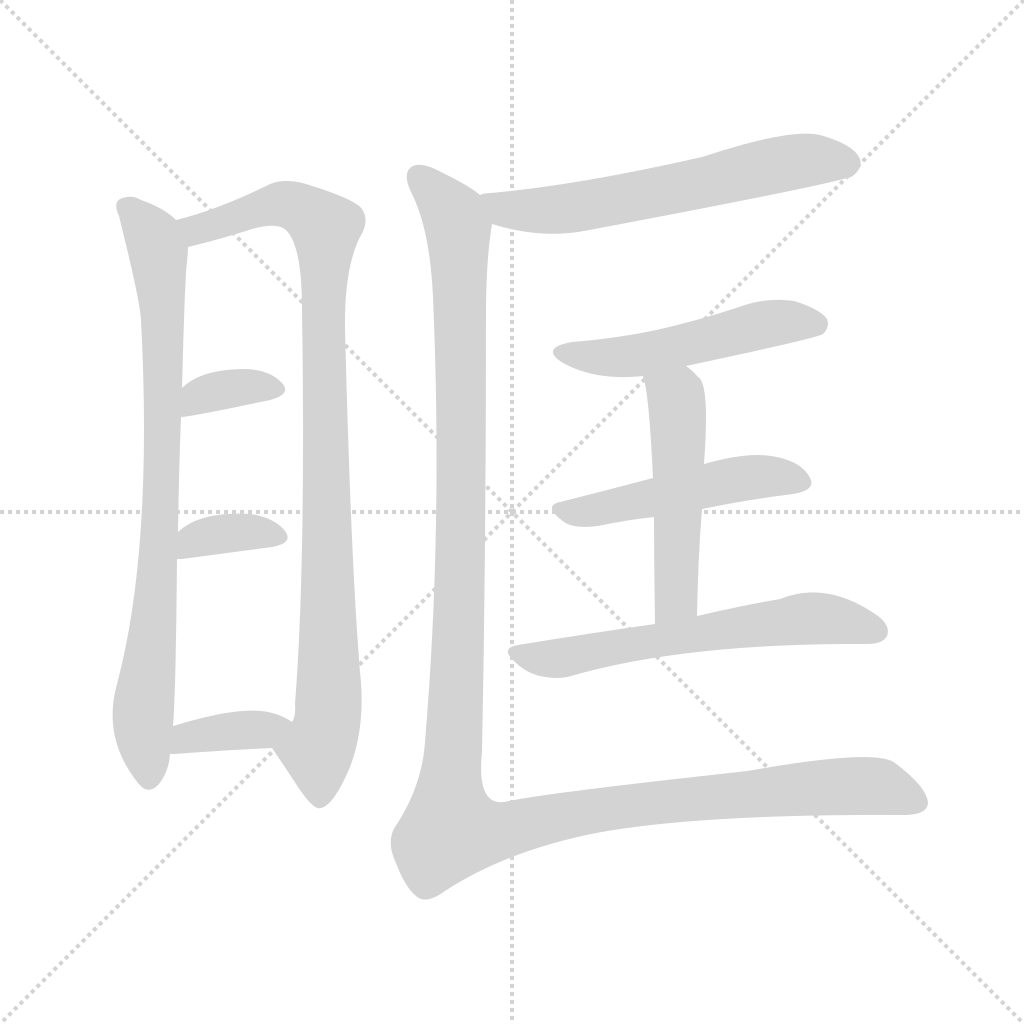
眶
Kangxi stroke count: 11
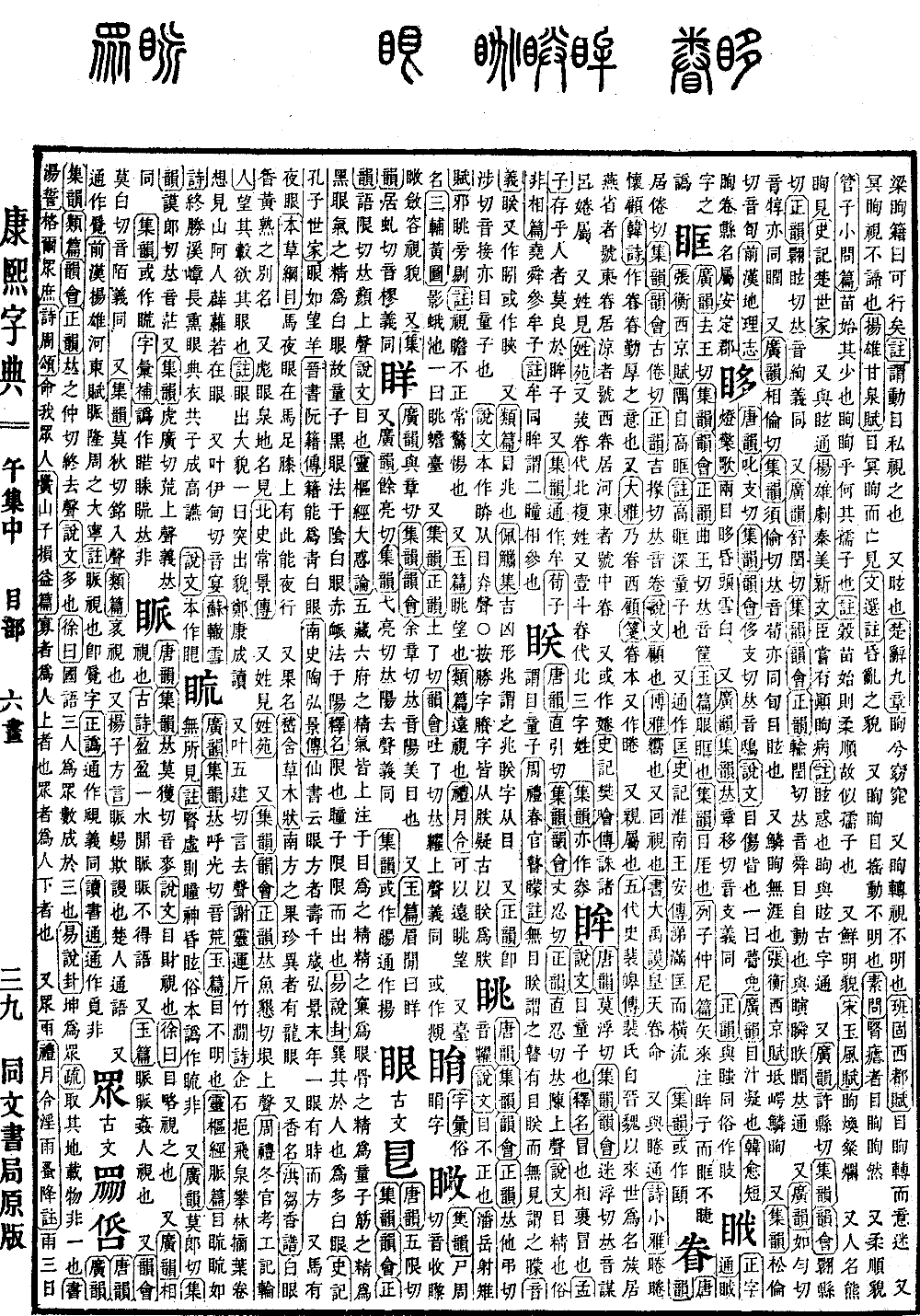
Page 807, Entry 03
According to the Broad Rhymes (Guangyun), pronounced kuang (falling tone). According to the Collected Rhymes (Jiyun), the Rhyme Collection (Yunhui), and the Correct Rhymes (Zhengyun), pronounced kuang (falling tone).
In the Jade Chapter (Yupian), it refers to the eye socket. In the Collected Rhymes (Jiyun), it refers to the edge of the eye.
In the Book of Master Lie (Liezi), section on Confucius (Zhongni pian): An arrow comes to strike the pupil, yet the eye socket does not blink.
In the Western Capital Rhapsody (Xijing fu) by Zhang Heng: With corners of the eyes and high eye sockets. The commentary notes: High eye sockets refers to deep pupils.
It is also interchangeably written as kuang. In the Records of the Grand Historian (Shiji), Biography of Liu An, King of Huainan: Tears filled the eye sockets and flowed sideways. The Collected Rhymes (Jiyun) notes it is also written in a variant form.