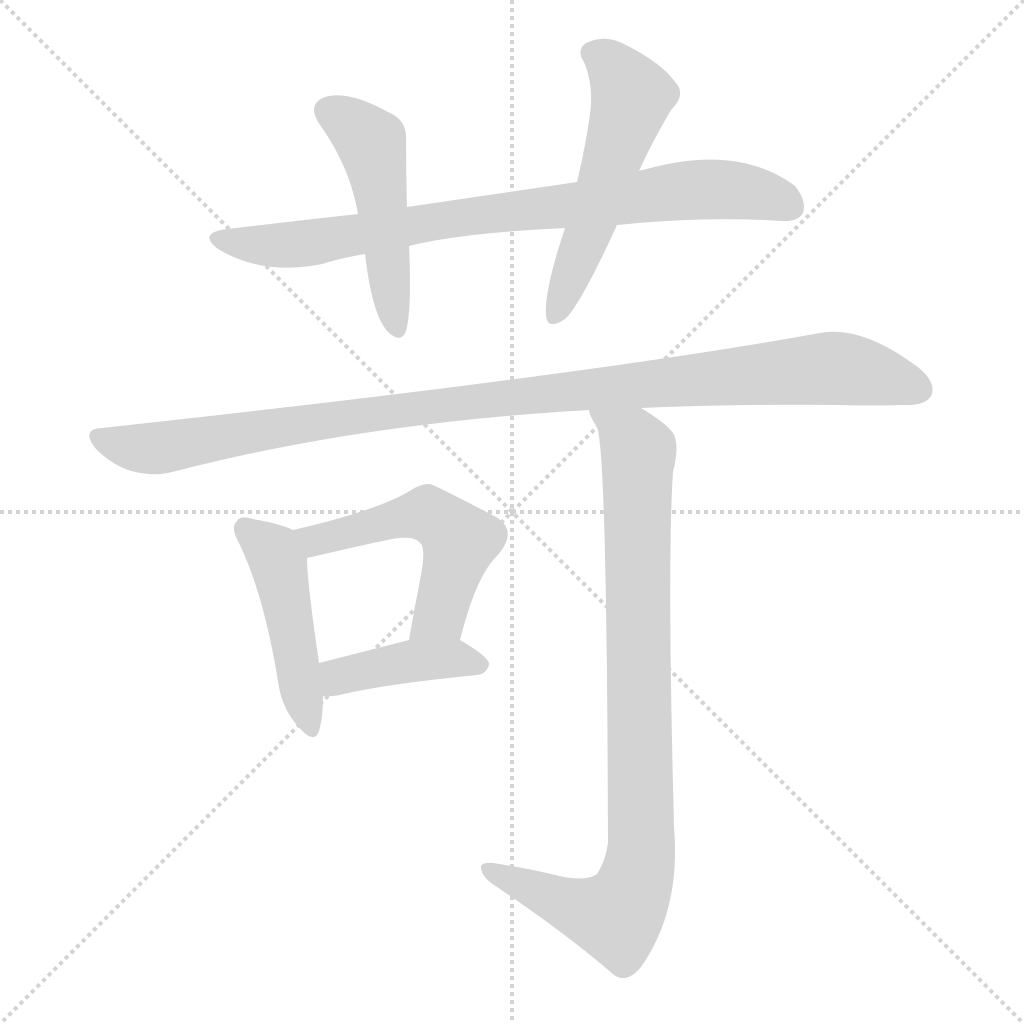
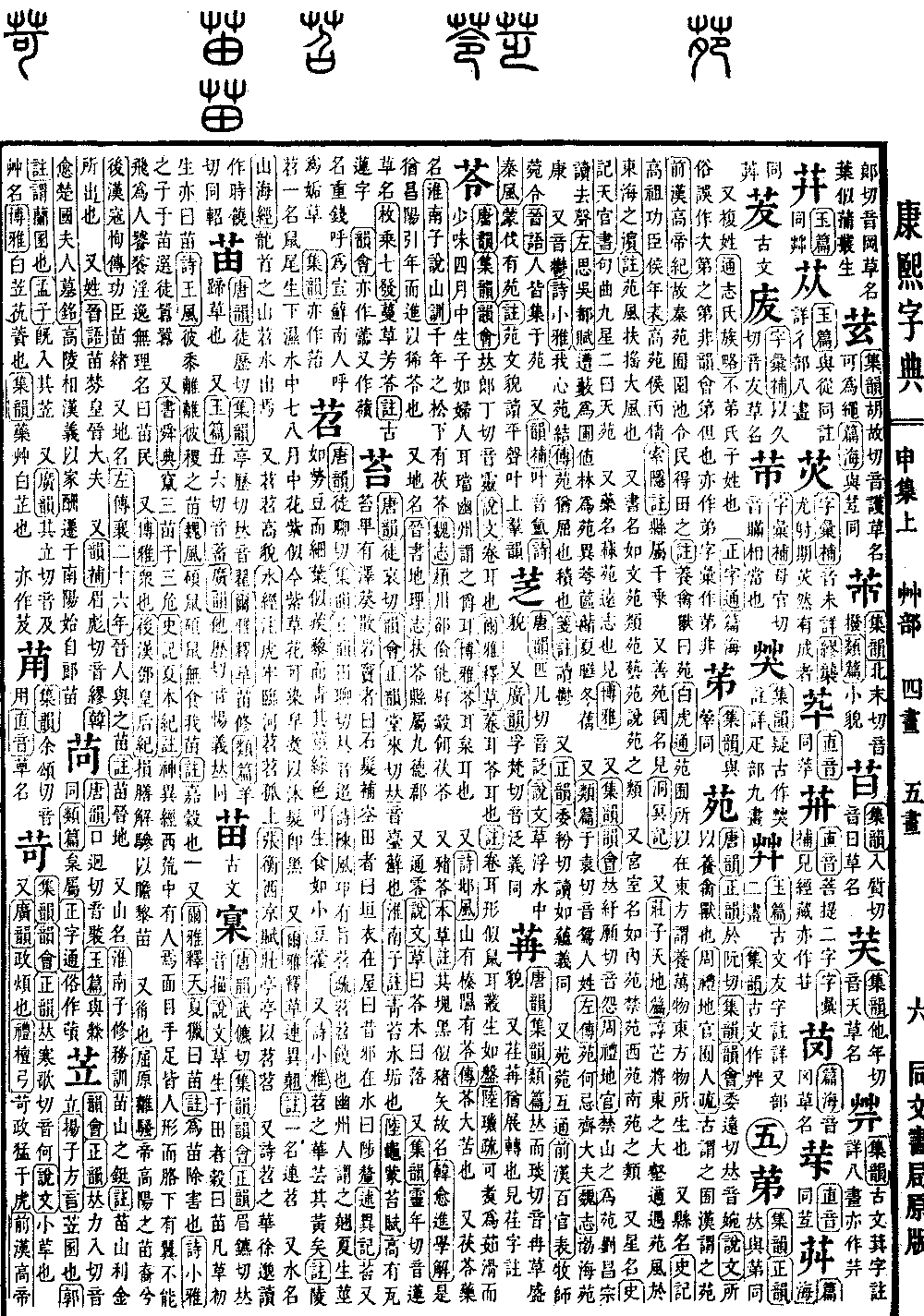
Shen Collection, Upper Volume
Radical: Grass (cǎo)
Kangxi Strokes: 11
Page 1022, Entry 33
Jiyun, Yunhui, and Zhengyun state: Pronounced he.
Shuowen Jiezi states: Small grass.
Guangyun states: Burdensome government.
Book of Rites (Liji), Tan Gong chapter states: A burdensome government is fiercer than a tiger.
History of the Former Han (Qianhan Shu), Annals of Emperor Gao states: The elders have long suffered under the burdensome laws of the Qin.
Shigu commentary states: Burdensome means petty or minute.
Book of Rites (Liji), Nei Ze chapter states: Inquire about whether their clothing is warm or cold, and if they suffer from illnesses, pains, or itchy skin, then respectfully massage or scratch them.
Erya, Explanation of Words states: Ka means jealousy or resentment.
Commentary states: One who is troublesome and burdensome is often prone to illness and resentment.
Rites of Zhou (Zhouli), Spring Officials, Shifu chapter states: During a great mourning period, when ordering the internal and external noblewomen to attend the morning assembly, if there are those who do not wail or show respect, then penalize them severely.
Commentary states: Penalize means to reprimand.
Discourses of the States (Jin Yu) states: Morning and night they disturb our borders.
Commentary states: Disturb means to harass.
Basic Questions (Suwen) states: Chronic illnesses do not arise.
Commentary states: Chronic means heavy or severe.
Yangzi, Dialects (Fangyan) states: Ka means anger.
Also a surname.
Zhengzitong states: During the Han dynasty, there was Ke Yi.
Also pronounced with a rising tone.
Leipian states: Pronounced he. Means urgent or pressing.
Jiyun states: Pronounced he.
Qunjing Yinbian states: Pronounced he. Means to examine strictly.
Zheng Kangcheng commentary on the Rites states: The Minister of Passages is in charge of strictly examining treacherous individuals.
History of the Former Han (Qianhan Shu), Biography of Wang Mang states: An officer under the Minister of Works passed the Fengchang pavilion at night, and the pavilion chief questioned him strictly.
Jiyun states: Pronounced he. The meaning is the same.