Wei Collection, Middle Volume
Radical: Silk (mì)
Kangxi Strokes: 10
Page 918, Entry 10
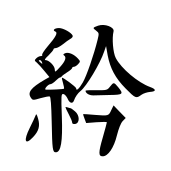
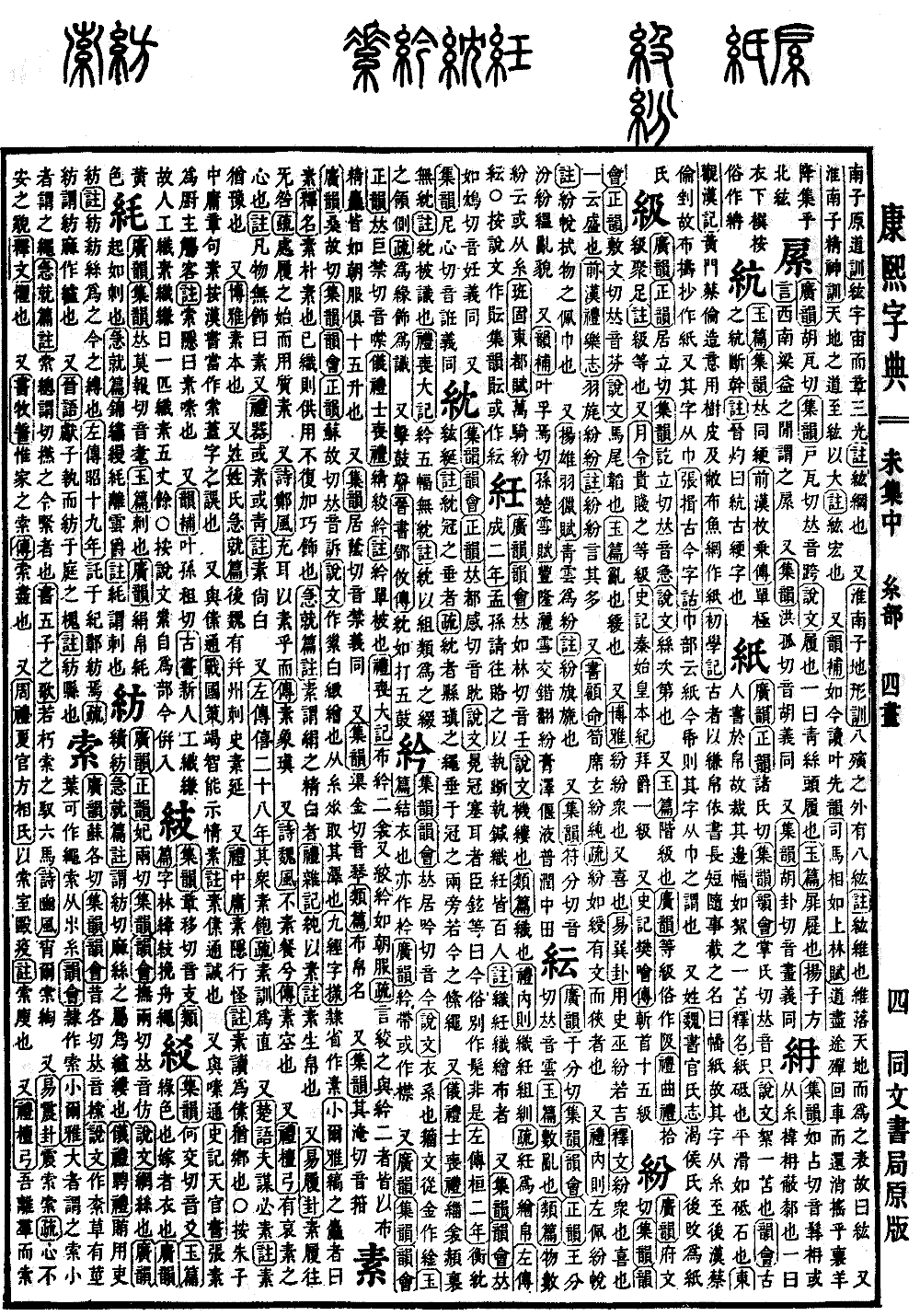
Pronounced jin. According to the Explaining Graphs and Analyzing Characters (Shuowen Jiezi), it refers to the ties of a garment. The ancient script form (zhouwen) uses the radical for metal. According to the Jade Chapters (Yupian), it means to knot or fasten clothing. It is also written as a variant form (jin). According to the Broad Rhymes (Guangyun), it is a sash or belt. It is also written as a variant form (jin).
Pronounced jin (falling-rising tone). According to the Ceremonial and Rites (Yili), in the section regarding the funeral rites for a scholar, it mentions the binding cloth. The commentary states that it is a single-layer coverlet. According to the Book of Rites (Liji), in the record of funeral affairs, it mentions two plain cloth coverlets. It further mentions binding cloths, similar to those found on morning court robes. The sub-commentary states that both the binding and the coverlet are made of cloth, and their fineness is equivalent to that of court robes, both being fifteen grade cloth.
Pronounced jin (falling-rising tone). The meaning is the same.
Pronounced qin. According to the Classified Chapters (Leipian), it is the name of a type of cloth or silk.
Pronounced qian.