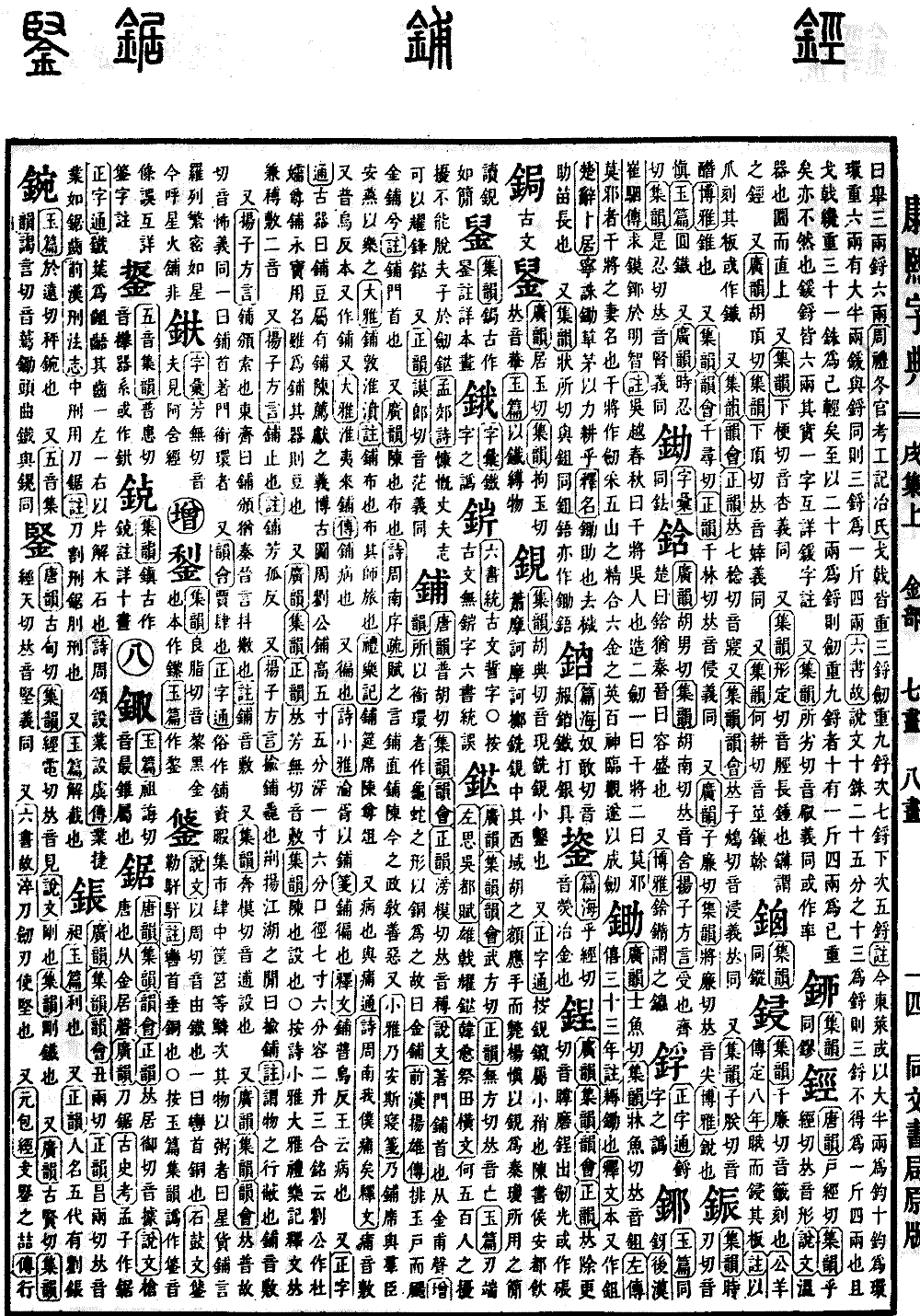
Xu Collection, Upper Volume
Radical: Metal (jīn)
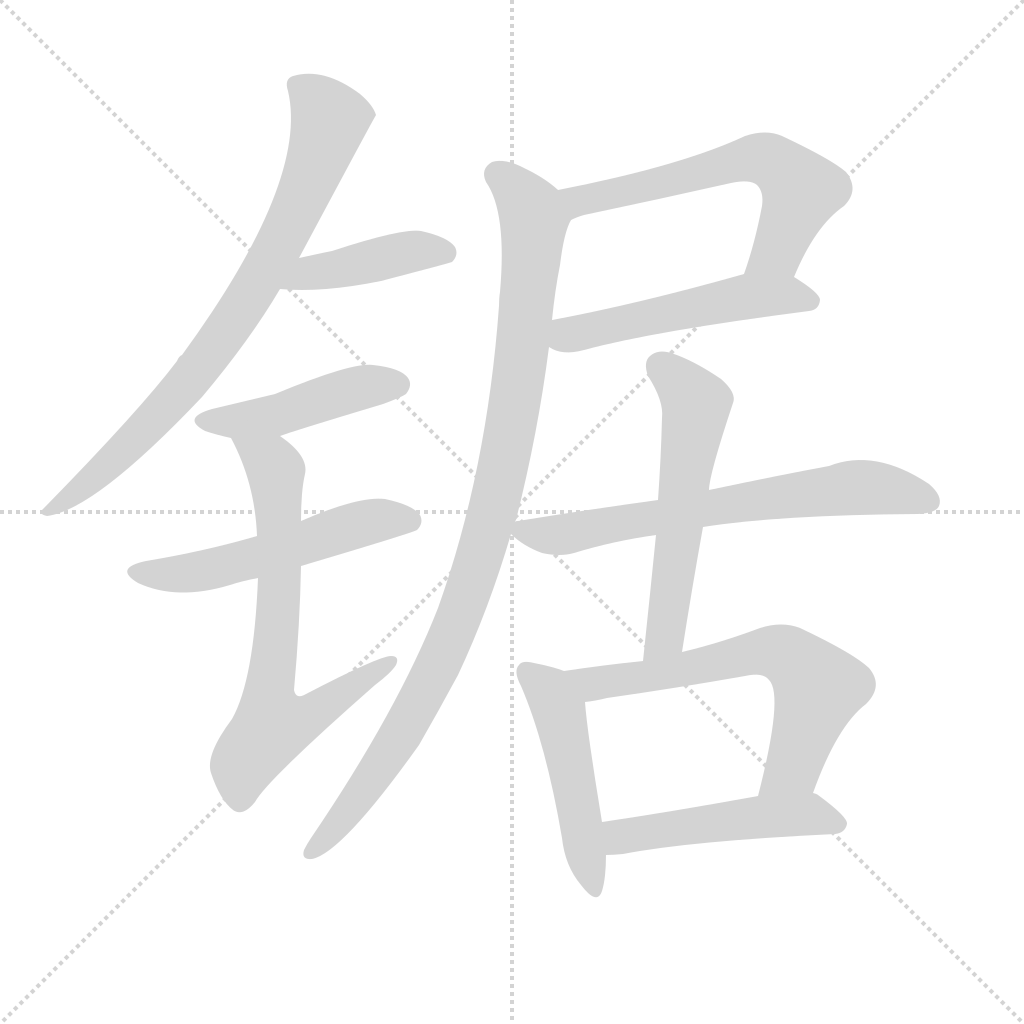
Saw
Kangxi strokes: 16
Page 1308, Entry 01
Tang Rhyme (Tangyun), Collected Rhymes (Jiyun), Dictionary of Rhymes (Yunhui), and Correct Rhymes (Zhengyun) state the pronunciation is ju (falling tone).
Shuowen Jiezi (Shuowen) states: A tool for cutting. Formed from Metal, with ju as the phonetic element.
Guangyun (Guangyun) states: A knife-like saw.
Gushi Kao (Gushi Kao) states: The philosopher Mengzi created the saw.
Zhengzitong (Zhengzitong) states: Made of iron plates toothed like uneven teeth, with teeth alternating left and right, used to cut through wood and stone.
Book of Odes (Shijing), Zhou Hymns, Commentary on Setting up Stands and Supports: Ye, meaning jagged or tooth-like, like the teeth of a saw.
History of the Former Han (Qianhan Shu), Treatise on Law: Used knives and saws. Commentary states: The knife is for the cutting punishment; the saw is for the amputation punishment.
Jade Chapters (Yupian) states: To cut or sever.