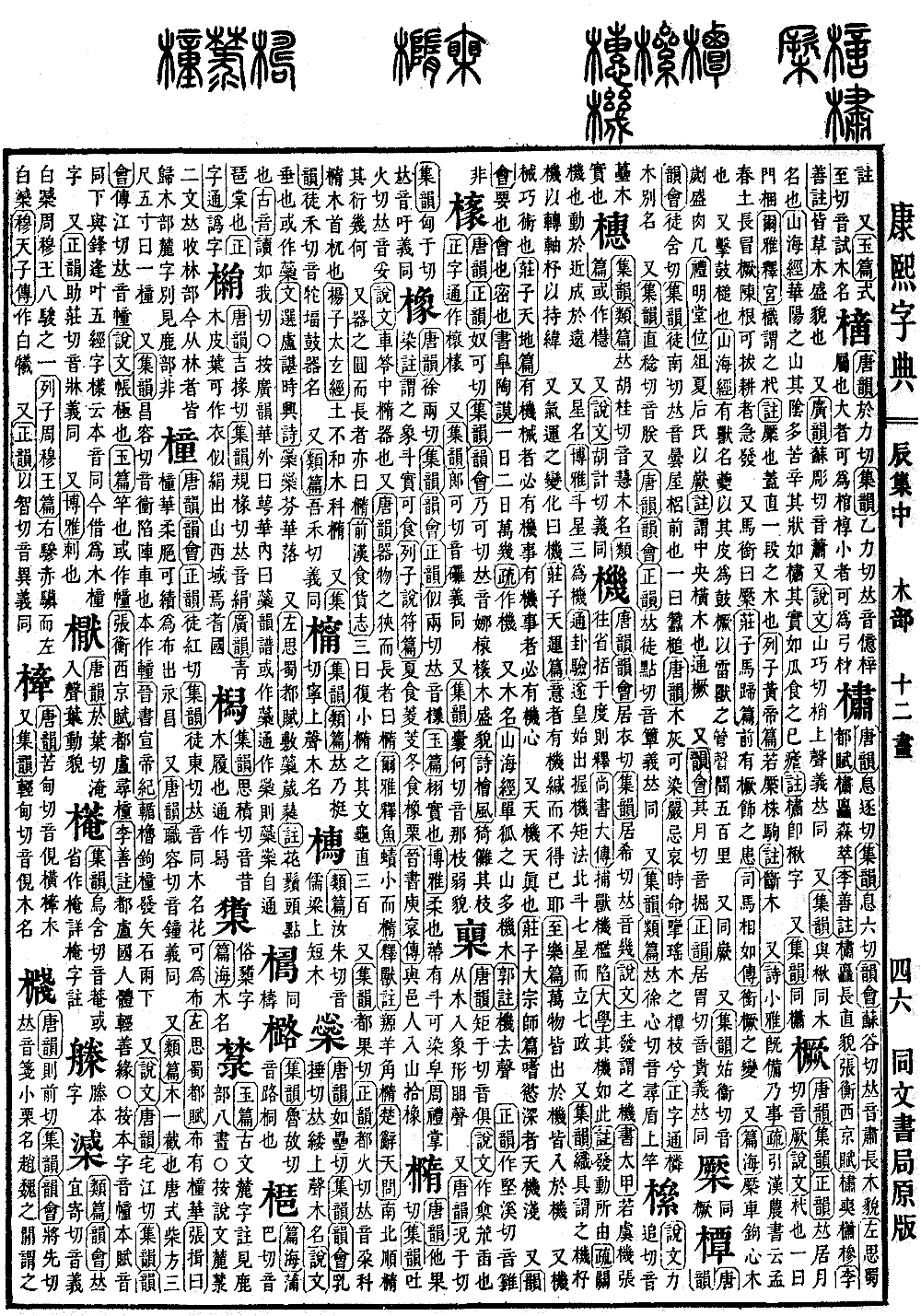
Chen Collection, Middle Volume. Radical: Wood (mù). Kangxi stroke count: 16. Page 554, Entry 03.
Pronounced jue.
According to the Explaining Graphs and Analyzing Characters (Shuowen Jiezi), it refers to a small wooden stake. Another definition is a door sill.
According to the Er ya, in the section on explaining palaces, it is called a stake (yi). The commentary notes this is a stake (jue), essentially a short, upright piece of wood.
In the Liezi, in the Yellow Emperor chapter, it refers to a broken tree stump.
In the Book of Odes (Shijing), in the Minor Odes section, it appears in the line, once it is prepared, the task follows. The commentary cites the Han Dynasty Agricultural Treatise, which states that in the first month of spring, the soil rises above the stakes, the old roots can be pulled up, and farmers should plow immediately.
It also refers to a horse bit. In the Zhuangzi, in the Horses Hooves chapter, it mentions the trouble of bit ornaments. In the Biography of Sima Xiangru, it refers to an accident involving the bit.
According to the Pianhai, it refers to the hook-shaped wood on a carriage. It also refers to a drumstick.
The Classic of Mountains and Seas (Shanhai jing) states there is a beast named Kui whose skin is used to make a drum, struck with the bone of a thunder beast, with a sound heard for five hundred miles.
It is also written in a variant form (jue).
It is also pronounced gui. It refers to a stand for holding meat. In the Book of Rites (Liji), in the Hall of Distinction section, it states that for the sacrificial stand, the Xia Dynasty used a jue. The commentary explains this as the horizontal wood in the center. It is used interchangeably with the standard form.
It is also pronounced jue. It is also pronounced gui. The meaning remains the same.