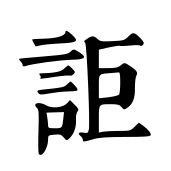
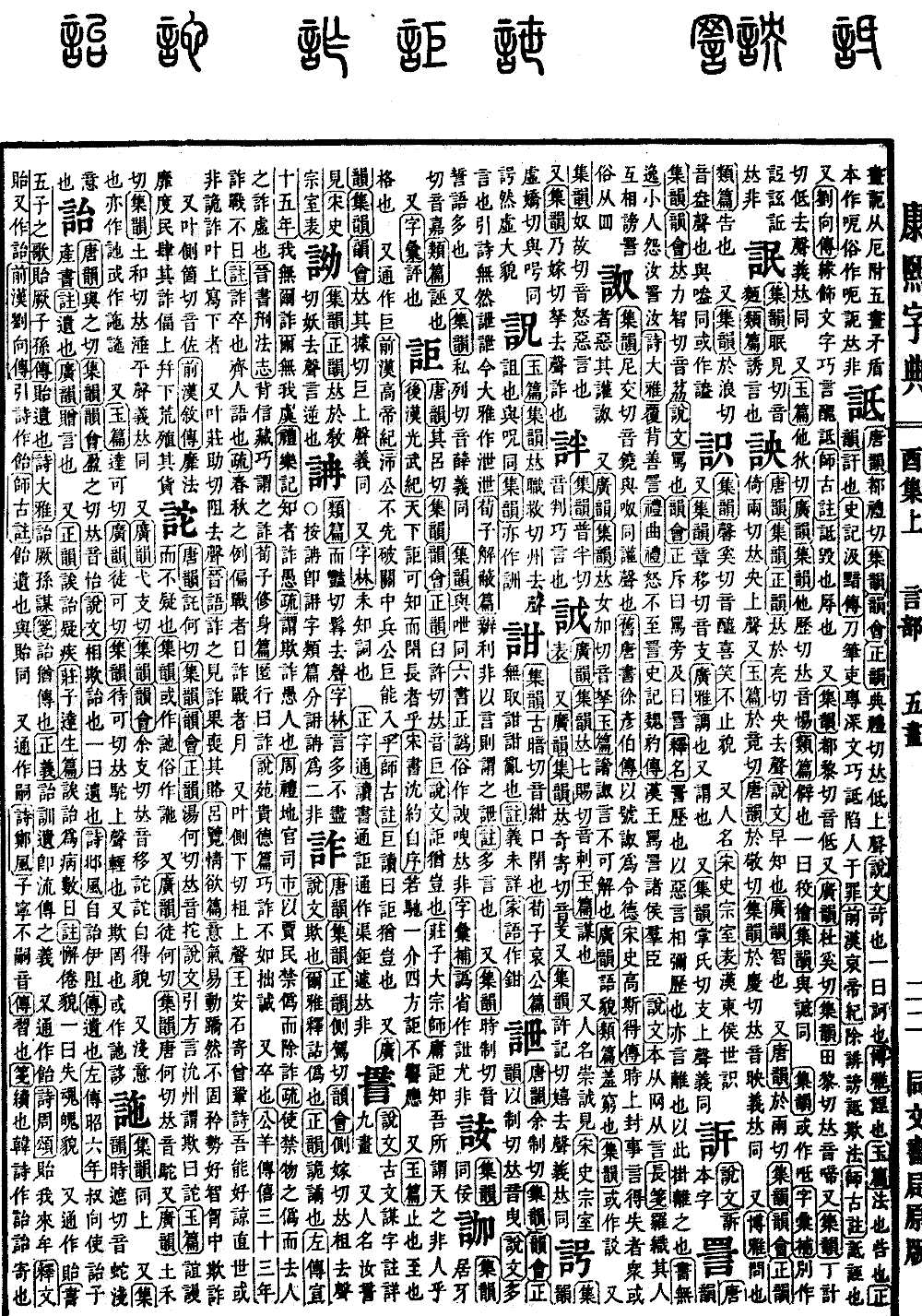
You Collection, Upper Volume
Radical: Speech (yán)
Kangxi Strokes: 12
Page 1154, Entry 16
According to Tang Rhymes (Tangyun), it is pronounced ju (rising tone). According to Collected Rhymes (Jiyun), Rhyme Meetings (Yunhui), and Correct Rhymes (Zhengyun), it is pronounced ju (rising tone).
According to Explaining Graphs and Analyzing Characters (Shuowen), the character indicates a questioning or rhetorical negation.
In the Zhuangzi, section Great and Venerable Teacher (Dazongshi): How could I know that what I call Heaven is not actually human?
In the Book of the Later Han (Houhan shu), Annals of Emperor Guangwu: How could the world have known this and refused to welcome a man of virtue?
In the Book of Song (Songshu), Self-Preface of Shen Yue: If one were to dispatch a single messenger, how would the four quarters not respond?
Furthermore, according to Jade Chapters (Yupian), it means to stop, to arrive, or to obstruct.
It is also used interchangeably with the character for great (ju).
In the Book of Han (Hanshu), Annals of Emperor Gaozu: If the Duke of Pei does not first defeat the forces in Guanzhong, how could you possibly enter?
According to the commentary by Shigu: The character for great is read as ju, having the same meaning as a questioning or rhetorical negation.
According to Extensive Rhymes (Guangyun), Collected Rhymes (Jiyun), and Rhyme Meetings (Yunhui), it is pronounced ju (falling tone). The meaning is the same.
According to Forest of Characters (Zilin), it is a word used when something is unknown.
According to General Thoroughness of Characters (Zhengzitong), in the Reading Thoroughness (Dushutong), it is noted that this character is used interchangeably with others meaning canal, giant, or hurried, but this is incorrect.
Textual Research: Regarding the entry citing Extensive Rhymes (Guangyun), Collected Rhymes (Jiyun), and Rhyme Meetings (Yunhui) as pronounced ju (rising tone), note that the pronunciation is actually a falling tone, not a rising tone. The character rising has been corrected to falling.