Shen Collection, Middle Volume
Radical: Tiger (hǔ)
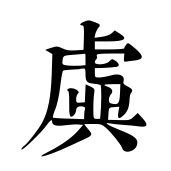
虡
Kangxi strokes: 14
Page 1075, Entry 08
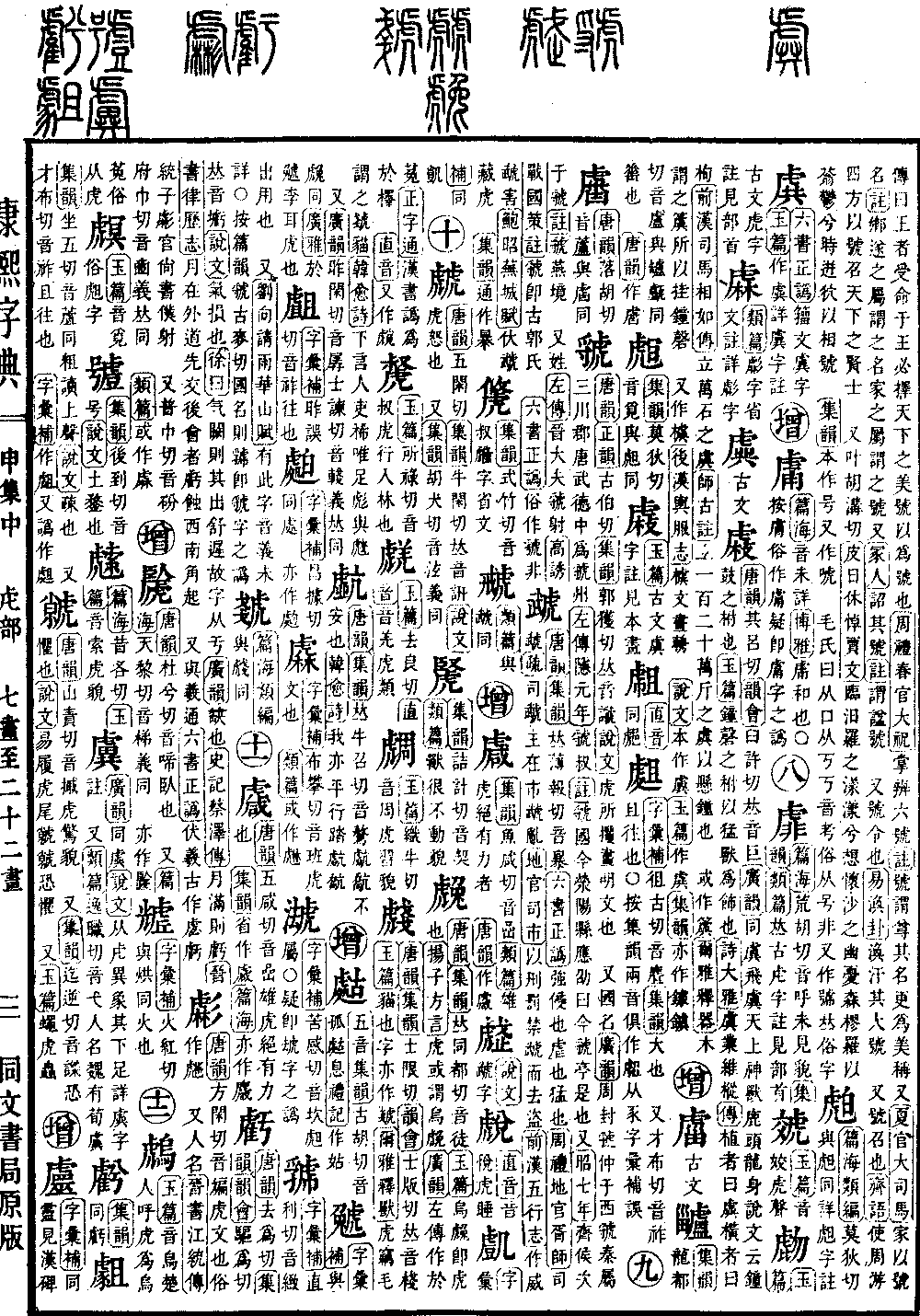
Ancient characters. Pronounced ju. In the Guangyun (Rhyme Dictionary), it is the same as the character for a flying mythical creature with a deer head and dragon body, said to be a divine beast of the heavens. The Shuowen Jiezi (Explaining Single-Component Characters and Analyzing Compound Characters) states that it refers to the pedestal of a bell or drum. The Yupian (Jade Chapters) states that it is a bell or chime stand decorated with fierce beasts. In the Book of Odes (Shijing), it is written: The uprights of the bell stands are tall and straight. The commentary states: The vertical supports are called ju, while the horizontal beams are called xun. In the History of the Former Han Dynasty (Qian Hanshu), Biography of Sima Xiangru, it is written: Erecting a ten-thousand-stone bell stand. The commentary by Yan Shigu states: Erecting a bell stand weighing 1.2 million catties to suspend bells. Sometimes also written in a variant form (ju). In the Erya (Approaching Elegance), section on implements, it is noted: When made of wood it is called ju, which is used for hanging bells and chimes. Also written as another variant form (ju). In the History of the Later Han Dynasty (Hou Hanshu), Treatise on Carriages and Attire, it is written: Ornamented shafts and stands. The Shuowen Jiezi states the original form was a different character. The Yupian also records the same variant form. The Jiyun (Collected Rhymes) also notes it is written as another variant form (ju).