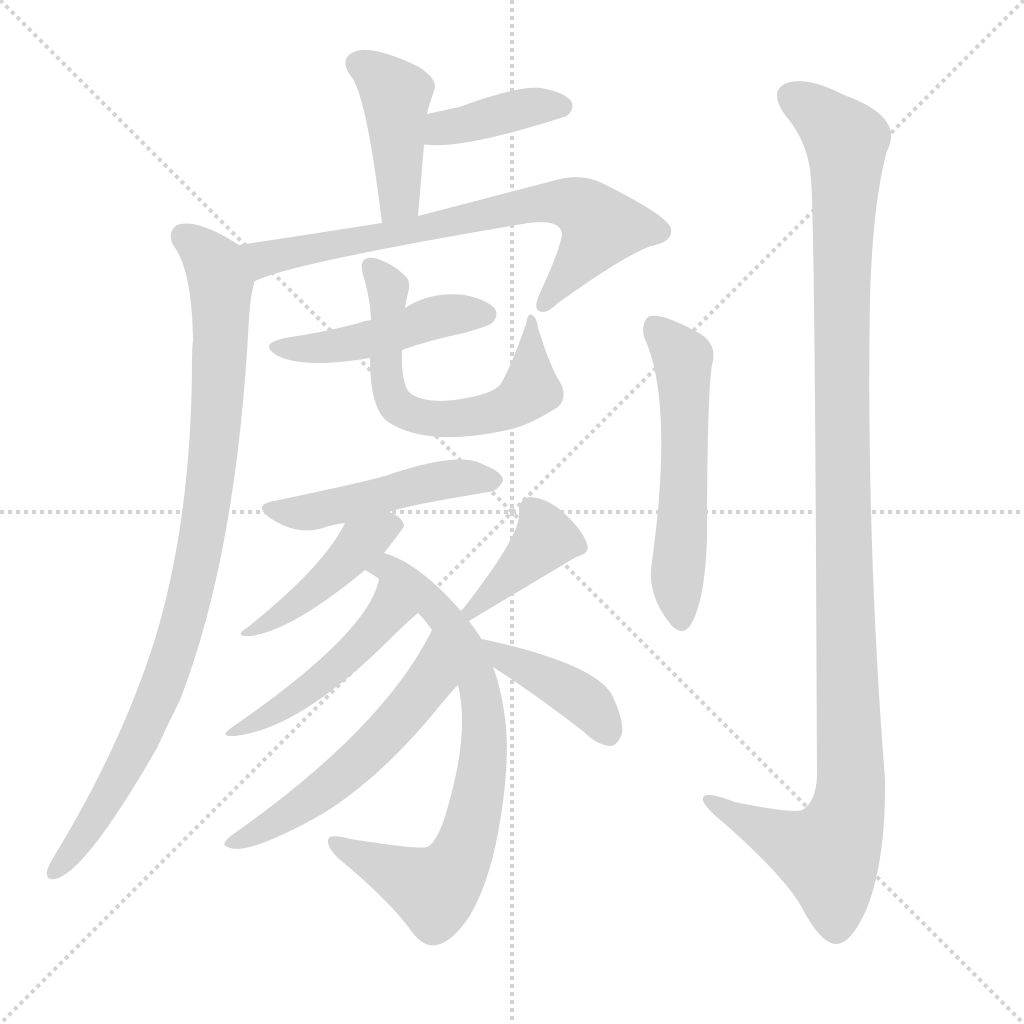
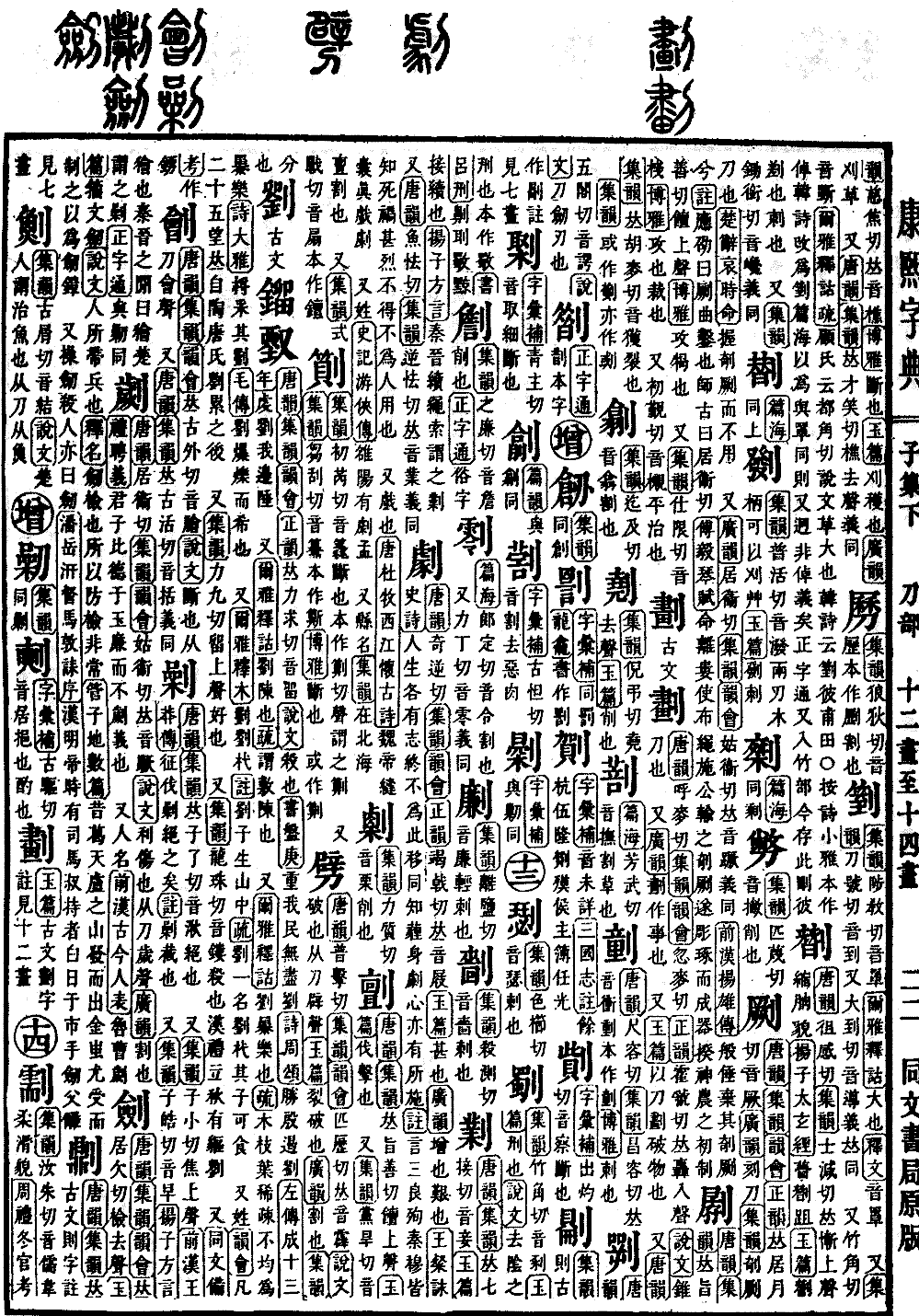
Zi Collection, Page Position: Lower. Radical: Knife (dao). Ju. Kangxi Stroke Count: 15. Page Number: Page 144, Number 34. In the Tang Dynasty Rhymes (Tangyun), the pronunciation follows the fanqie of qi and ni. In the Collected Rhymes (Jiyun), the Rhyme Meeting (Yunhui), and the Correct Rhymes (Zhengyun), it follows the fanqie of jie and qie, sounding like ji. The Jade Chapters (Yupian) defines it as extreme. The Broad Rhymes (Guangyun) defines it as to increase or difficult. In the Poems on History (Yongshishi) by Wang Can: Each person has their own will, and in the end, they do not change it for this reason. All knew that burying the body was extreme, yet their hearts also had a purpose to serve. The commentary states: This means the three virtuous men who died with Duke Mu of Qin all knew the disaster of death was very severe, yet they could not help but be used by the lord. It also means play or drama. In the Poem of Recalling the Past at Xijiang (Xijiang Huaigu) by Du Mu of the Tang Dynasty: The Emperor of Wei sewing bags was truly a theatrical play. It is also a surname. In the Records of the Grand Historian (Shiji), Biographies of the Wandering Knights (Youxia Zhuan): In Luoyang, there was Ju Meng. It is also the name of a county. The Collected Rhymes notes it was located in Beihai.