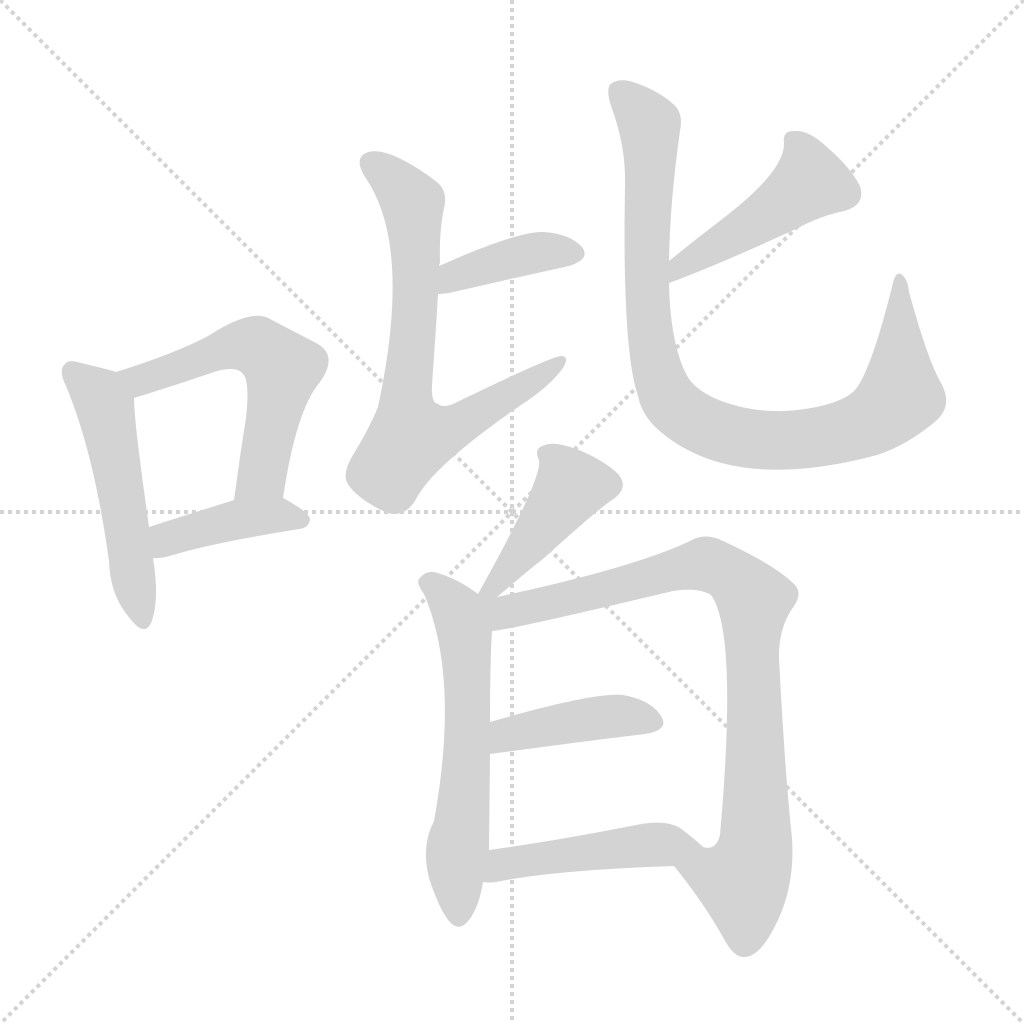
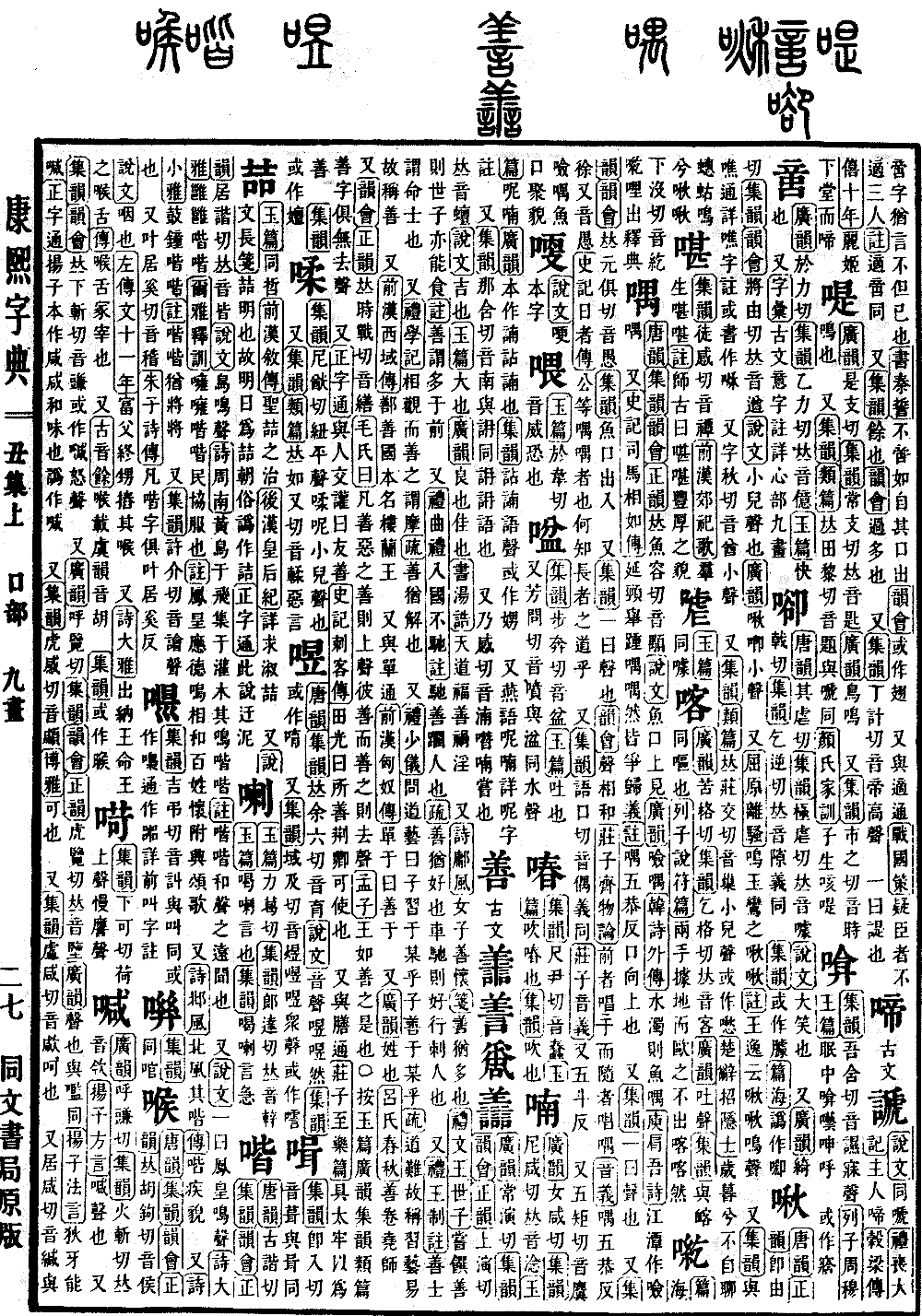
Chou Collection, Upper Volume
Radical: Mouth (kǒu)
Kangxi Strokes: 12
Page 197, Entry 28
Pronounced jie.
According to the Explaining Graphs and Analyzing Characters (Shuowen Jiezi), it refers to the sound of birds chirping.
In the Book of Odes (Shijing), it is written: The yellow birds are flying, gathering in the brushwood, and their chirping is jiejie. The commentary states that jiejie describes a harmonious sound that carries far.
Another interpretation in the Explaining Graphs and Analyzing Characters (Shuowen Jiezi) suggests it refers to the cry of the phoenix.
In the Book of Odes (Shijing), it is written: Yongyong jiejie. The Er-Ya (Glossary of Terms) says that yongyong jiejie means the people are in harmony and submission. The commentary explains that when the phoenix cries out in response to virtuous governance, the sounds harmonize, and the people return and compose songs of praise.
Also in the Book of Odes (Shijing), it is written: The north wind is jiejie. The commentary explains that jiejie describes the swift and rapid state of the wind.
Also in the Book of Odes (Shijing), it is written: The drums and bells are jiejie. The commentary explains that jiejie is like the sound of clanging.
According to the Collected Rhymes (Jiyun), pronounced hui. It refers to a sound.
Also, rhyming with the pronunciation ji. According to the Commentary on the Book of Odes by Zhu Xi (Zhuzi Shizhuan), all instances of the character jie are to be rhymed as ji.