Chen Collection, Lower Volume
Radical: Fur (máo)
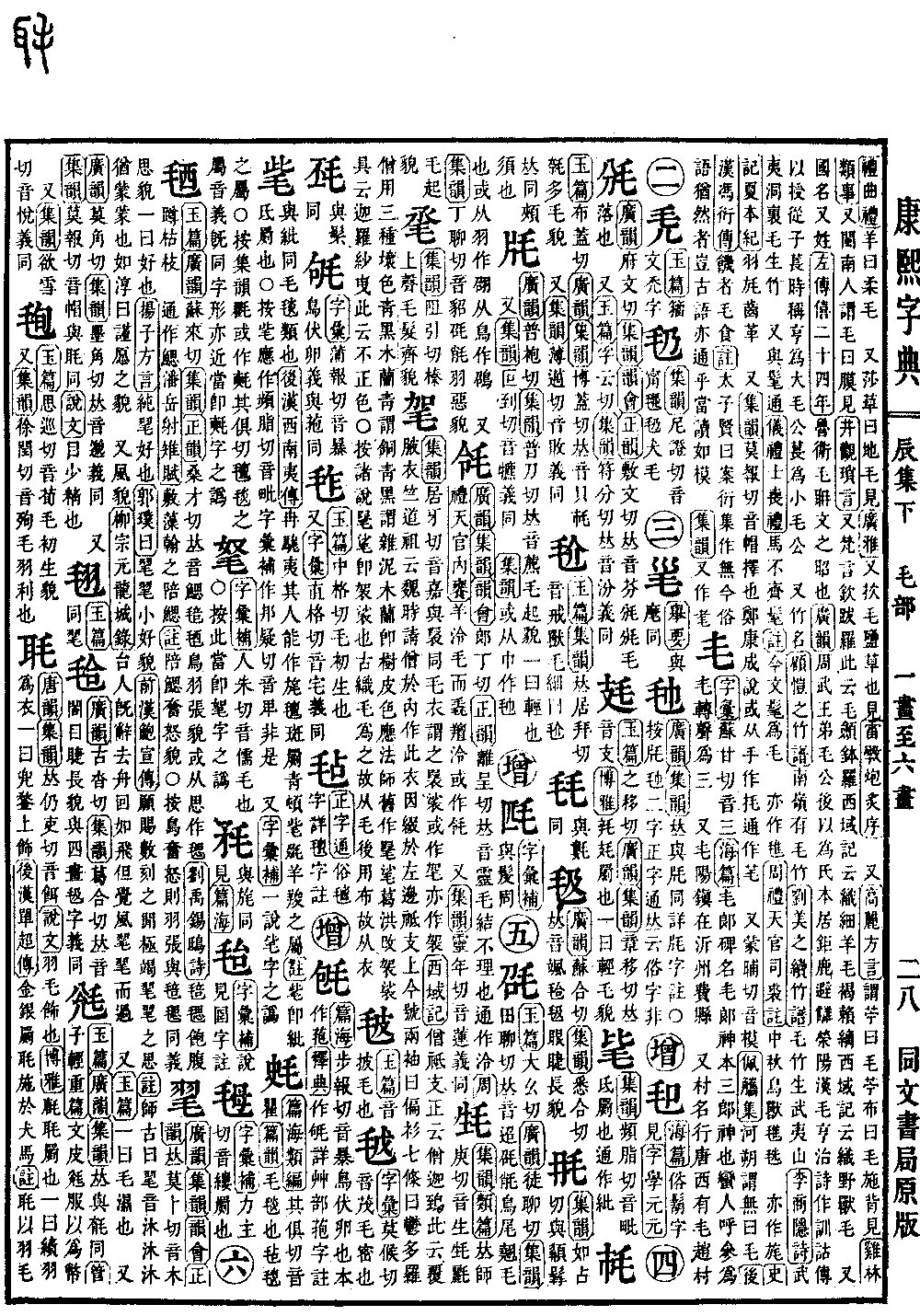
Page 592, Entry 21
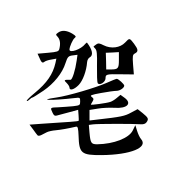
According to the Collected Rhymes (Jiyun), pronounced jia. It is the same as the character for kasaya (a monk's robe). A garment made of fur is called a kasaya. It is also written as the current character, or as a variant form of kasaya.
In the Records of the Western Regions (Xiyu Ji), it is referred to as sangzhizhi, though the correct term is sangjachi, which refers to a garment that covers the armpits. Zhu Daozu stated that during the Wei dynasty, when monks were invited to the palace, they created this type of clothing, which was then attached to the left side of the undergarment. Today, the two sleeves are called the pishan, and the seven-strip robe is known as the uttarasanga. It is made using the three permissible colors: green, black, and magnolia-brown. Green refers to the color of verdigris, black refers to the color of mixed mud, and magnolia-brown is the color of tree bark. Master Ying originally wrote it as the character for kasaya, but Ge Hong changed it to the standard form for kasaya. The full name is jialuoshaye, which refers to a color that is not pure. According to various accounts, this is what constitutes a kasaya. In ancient times, it was woven from fur, hence the radical for fur, but later it was made from cloth, hence the radical for clothing.