Mao Collection, Middle Volume
Radical: Hand (shǒu)
Kangxi stroke count: 13
Page 444, Entry 02
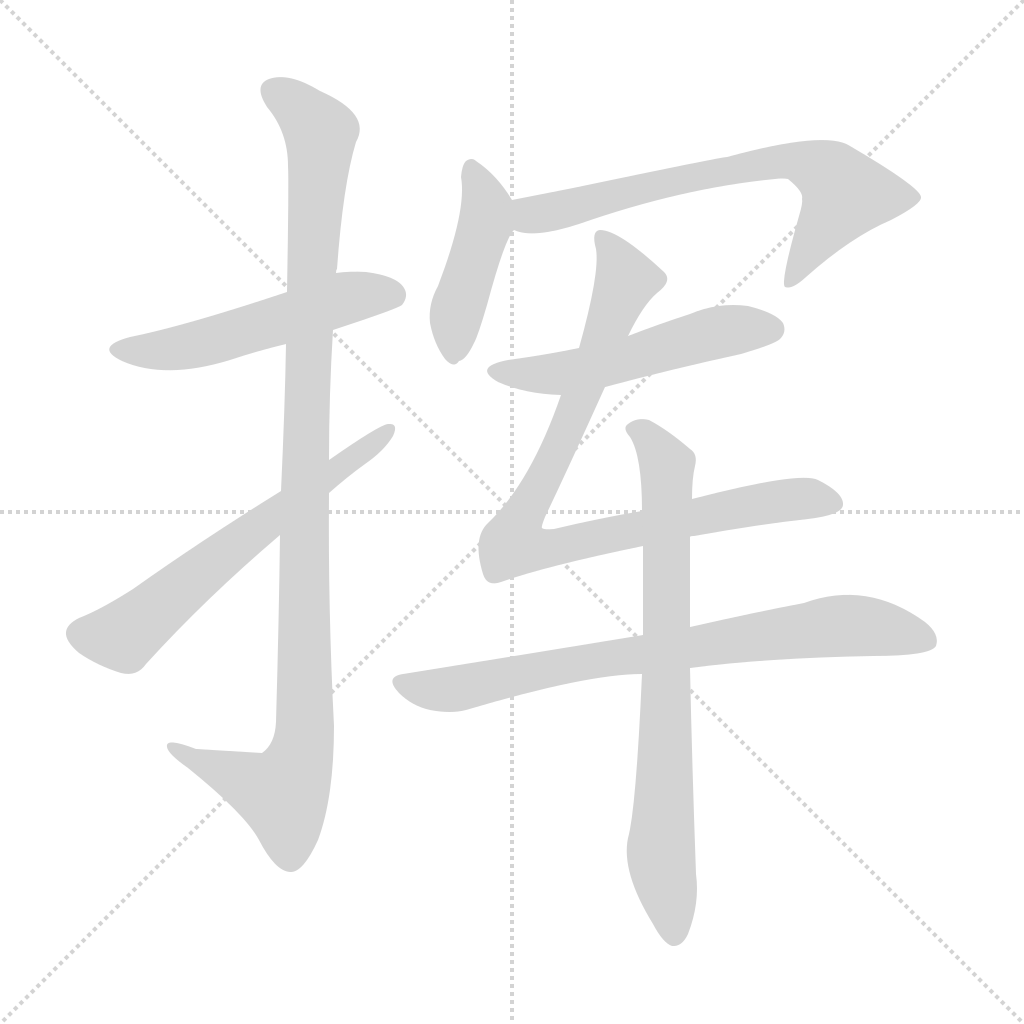
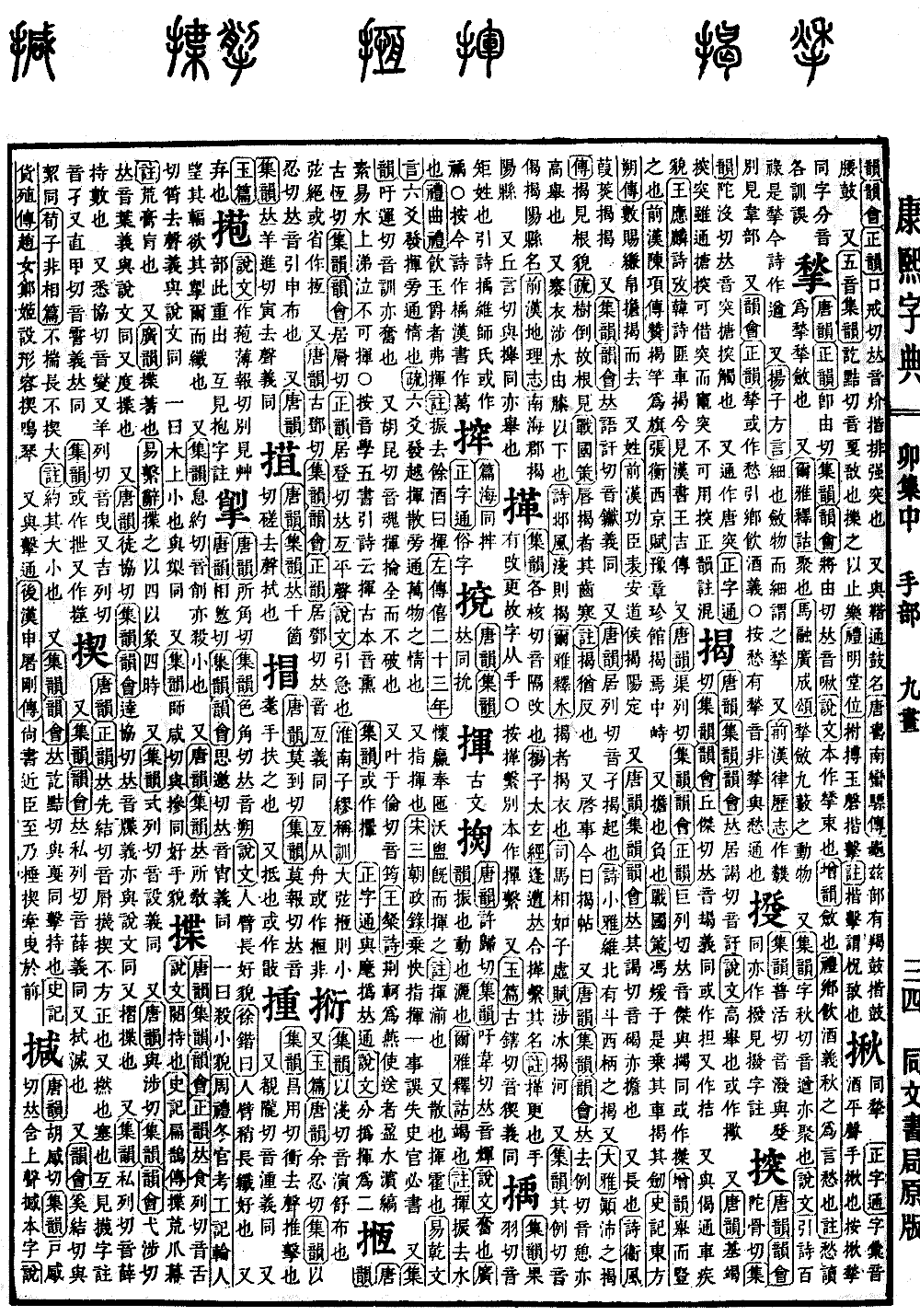
Ancient script. Pronounced hui. According to the Analytical Dictionary of Characters (Shuowen), it means to struggle or brandish. According to the Expanded Dictionary of Characters (Guangyun), it means to shake, to move, or to sprinkle. According to the Literary Expositor (Erya), it means to exhaust. Commentary notes that to wave or shake means to remove water. According to the Book of Rites (Liji), one who drinks from a jade goblet should not shake it. Commentary notes that shaking to remove leftover wine is called hui. According to the Zuo Commentary (Zuo Zhuan), Huai Ying held the ewer to wash hands, and once finished, she flicked the water away. Commentary notes that to flick is to splash. It also means to scatter, as in the term huihuo. According to the Book of Changes (Yijing), the six lines manifest and spread, communicating emotions widely. Commentary notes that the six lines break forth and scatter, reaching the essence of all things. It also means to command or direct. According to the Record of Government of the Three Song Dynasties (Song Sanchao Zhenglu), if one makes a mistake while quickly directing an affair, the court historian must record it. Also pronounced xun. It also means to struggle. Also pronounced hun. The term huilun means to remain whole and unbroken. Also pronounced yun. In the poem by Wang Jie, Jing Ke was the envoy of Yan, and those who saw him off filled the riverbank; dressed in white silk by the Yi River, tears could not be wiped away. Note: The Five Books on Phonology (Yinxue Wushu) cites this poem and states that in the ancient version, it was pronounced xun. According to the Collected Rhymes (Jiyun), it is sometimes written as a variant form. According to the Collection of Standard Characters (Zhengzitong), it is interchangeable with the characters hui and hui. The Analytical Dictionary of Characters (Shuowen) divides the concepts of hui and hui into two separate characters.