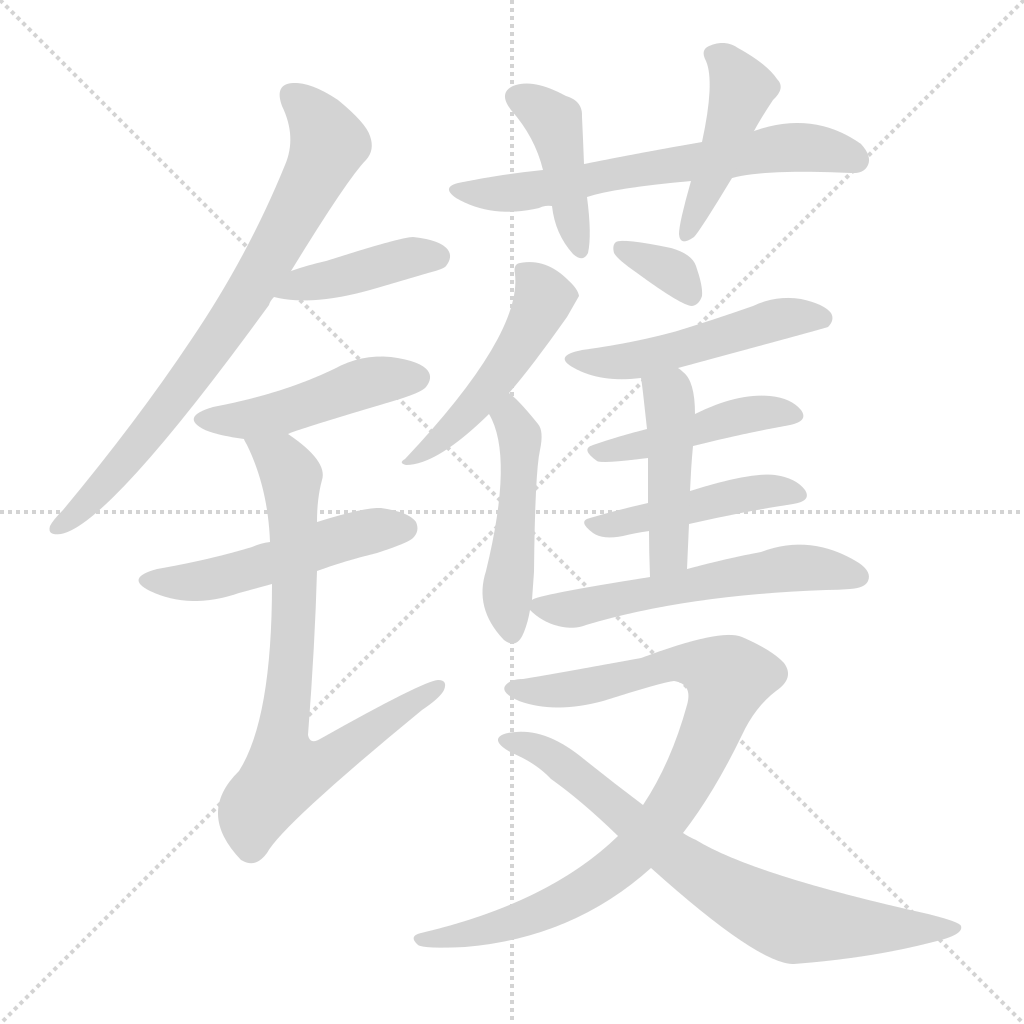
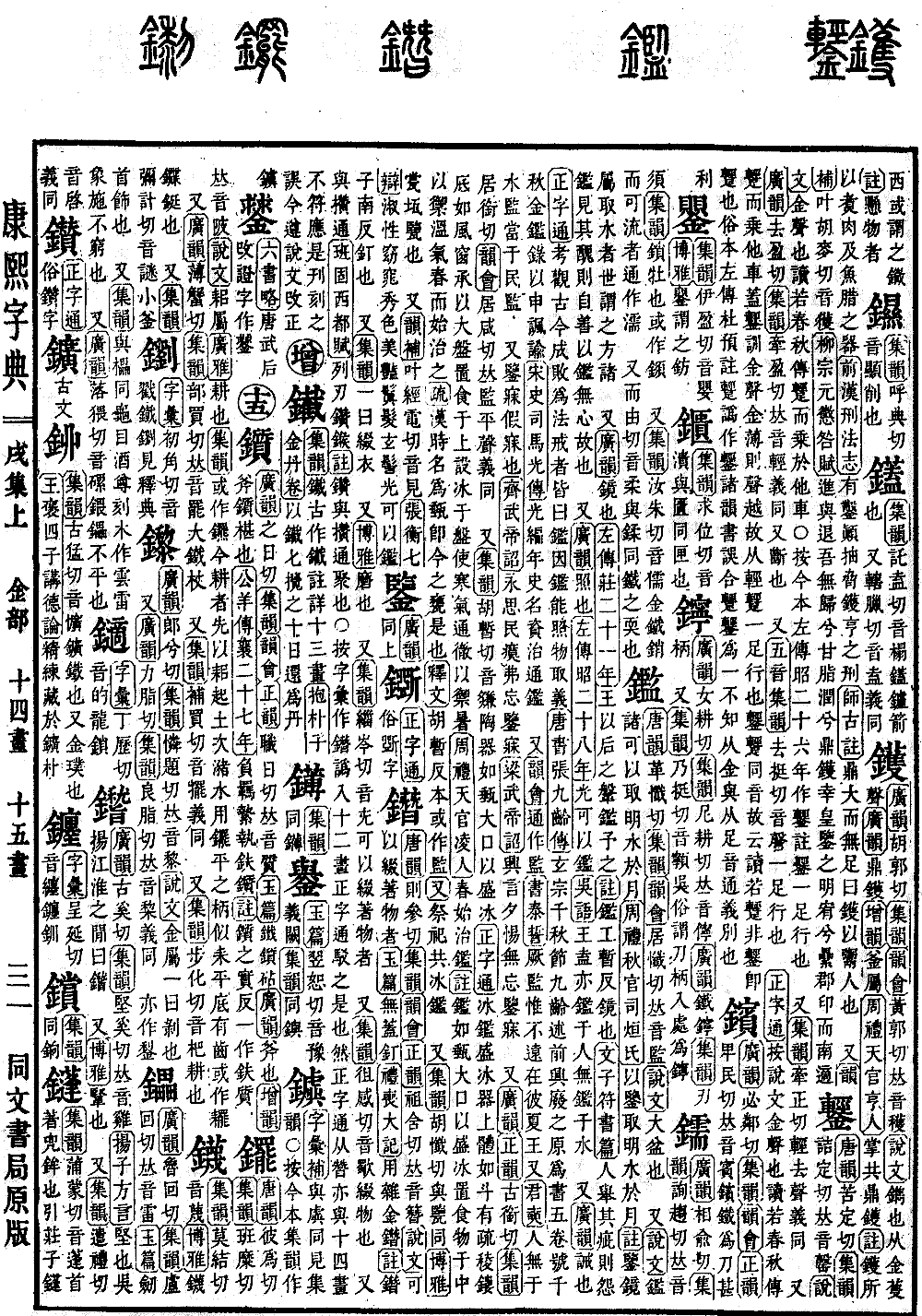
Xu Collection, Upper Volume
Radical: Metal (jīn)
22
Page 1325, Entry 14
Pronounced huò.
Shuowen Jiezi (Shuowen): To chisel. From Metal and the phonetic huò.
Guangyun (Guangyun): A cauldron or large pot.
Zengyun (Zengyun): A type of kettle.
Book of Rites (Zhouli), Offices of Heaven, Stewards of Cooking: Responsible for providing cauldrons and large pots.
Commentary: A cauldron or large pot is a vessel used for boiling meat, fish, and dried meat.
History of the Former Han (Qianhan), Treatise on Law: There are punishments involving drilling the skull, pulling the ribs, and boiling in a cauldron.
Yan Shigu Commentary: A cauldron that is large and footless is called a huo, used for boiling people.
Additionally, in rhyme supplementary works, it is pronounced huò.
Liu Zongyuan, Lament on Retribution: Advancing or retreating, I have nowhere to return; sweet fat lubricates the cauldron. Fortunately, the Emperor’s clear wisdom grants pardon; I carry the seal of the prefecture and head south.
Textual research: Yan Shigu Commentary states that a cauldron that is large and footless is called a huo, used for boiling people. Note that the original text of the History of the Former Han commentary uses the character for boiling (yù), which is synonymous with boiling (zhǔ). The pronunciation and meaning of yù are distinct. I have corrected the text to follow the original writing of yù.