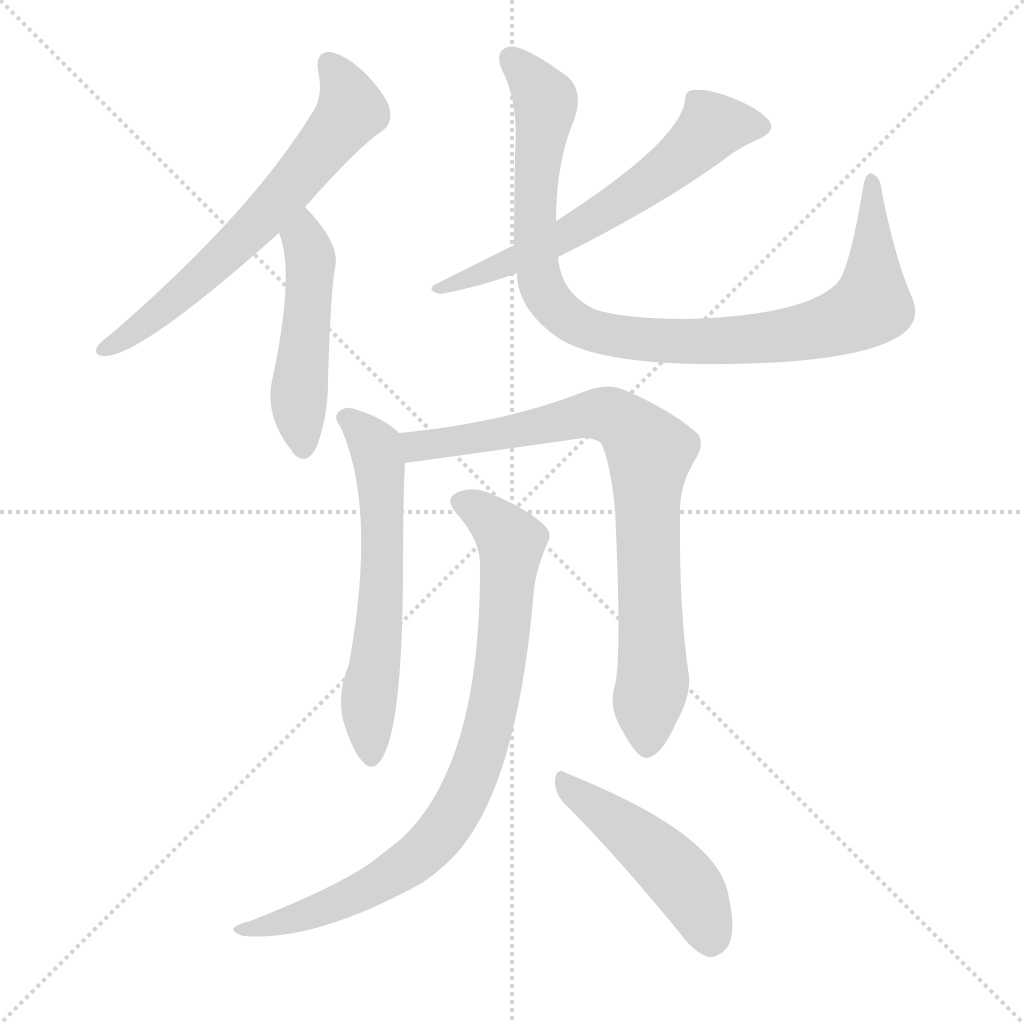
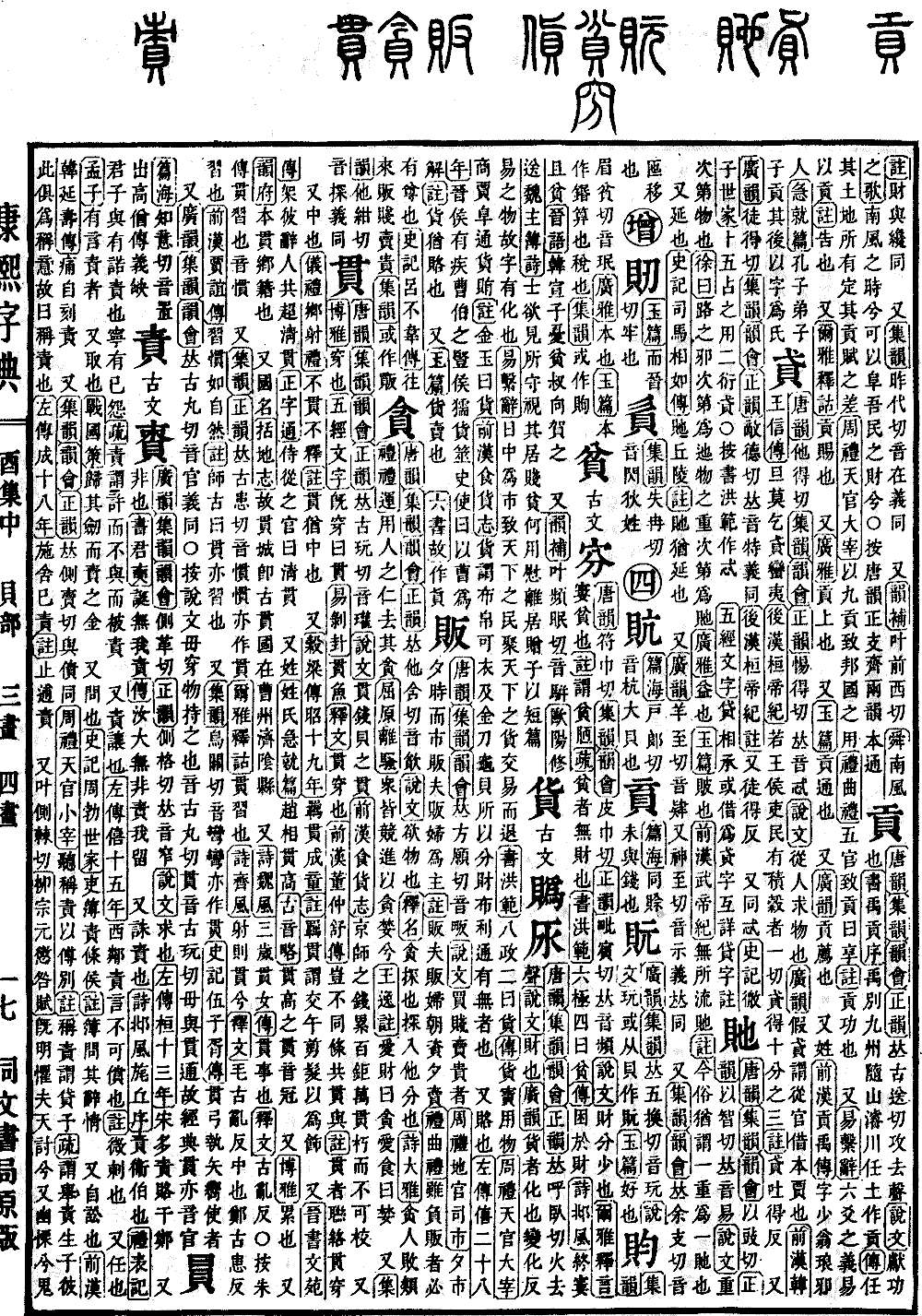
You Collection, Middle Volume. Radical: Shell (bèi). Stroke count: 11. Page 1205, Entry 01.
Ancient form. Tang Rhymes (Tangyun), Collection Rhymes (Jiyun), Rhyme Gathering (Yunhui), and Correct Rhymes (Zhengyun) record it as pronounced huo (falling tone).
Explanation from the Explaining Graphs and Analyzing Characters (Shuowen): Wealth.
Broad Rhymes (Guangyun): Goods are change. They are things that undergo transformation and exchange, which is why the character contains the element for change.
Book of Changes (Yijing), Commentary on the Appended Statements (Xici): At midday, markets are established to bring together the people of the world and gather the goods of the world, so that they may exchange them and then depart.
Book of Documents (Shujing), The Great Plan (Hongfan): Among the eight policies, the second is goods. Commentary: Goods refers to precious utility items.
Rites of Zhou (Zhouli), Offices of Heaven (Tianguan), Grand Administrator (Dazai): Merchants facilitate the circulation of goods and wealth. Annotation: Gold and jade are called goods.
History of the Former Han (Qianhan), Treatise on Food and Goods (Shihuozhi): Goods refers to items such as cloth and silk that can be worn, as well as gold, knives, tortoise shells, and cowries, which are used to distribute wealth, disseminate profit, and circulate what one has and what one lacks.
Also means to bribe. Zuo Commentary (Zuozhuan), 28th Year of Duke Xi: The Marquis of Jin was ill. The servant of the Earl of Cao, Hou Ru, bribed the divination officer, making him say that the Cao state should be spared. Annotation: Here, the term is used in the sense of a bribe.
Jade Chapters (Yupian): To sell.
Six Scripts Explained (Liushugu): Written as a variant form.