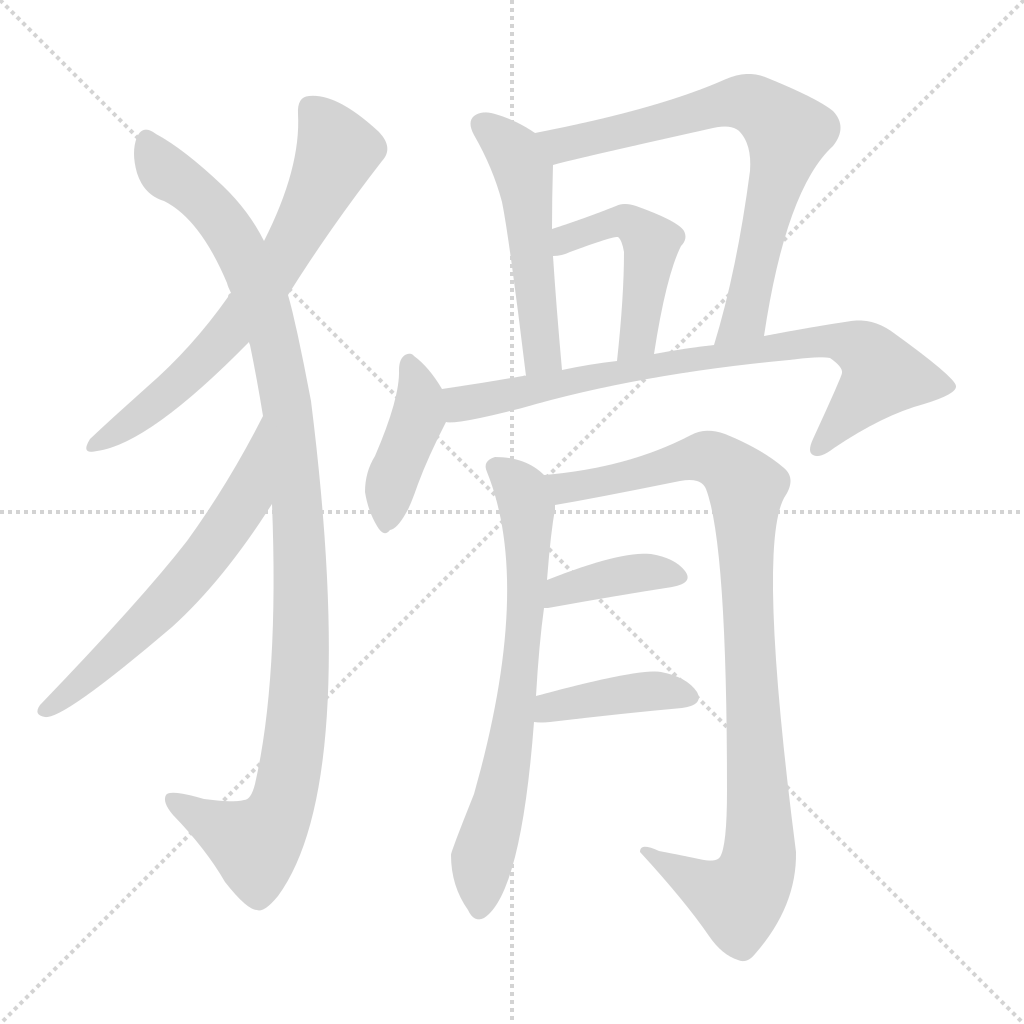
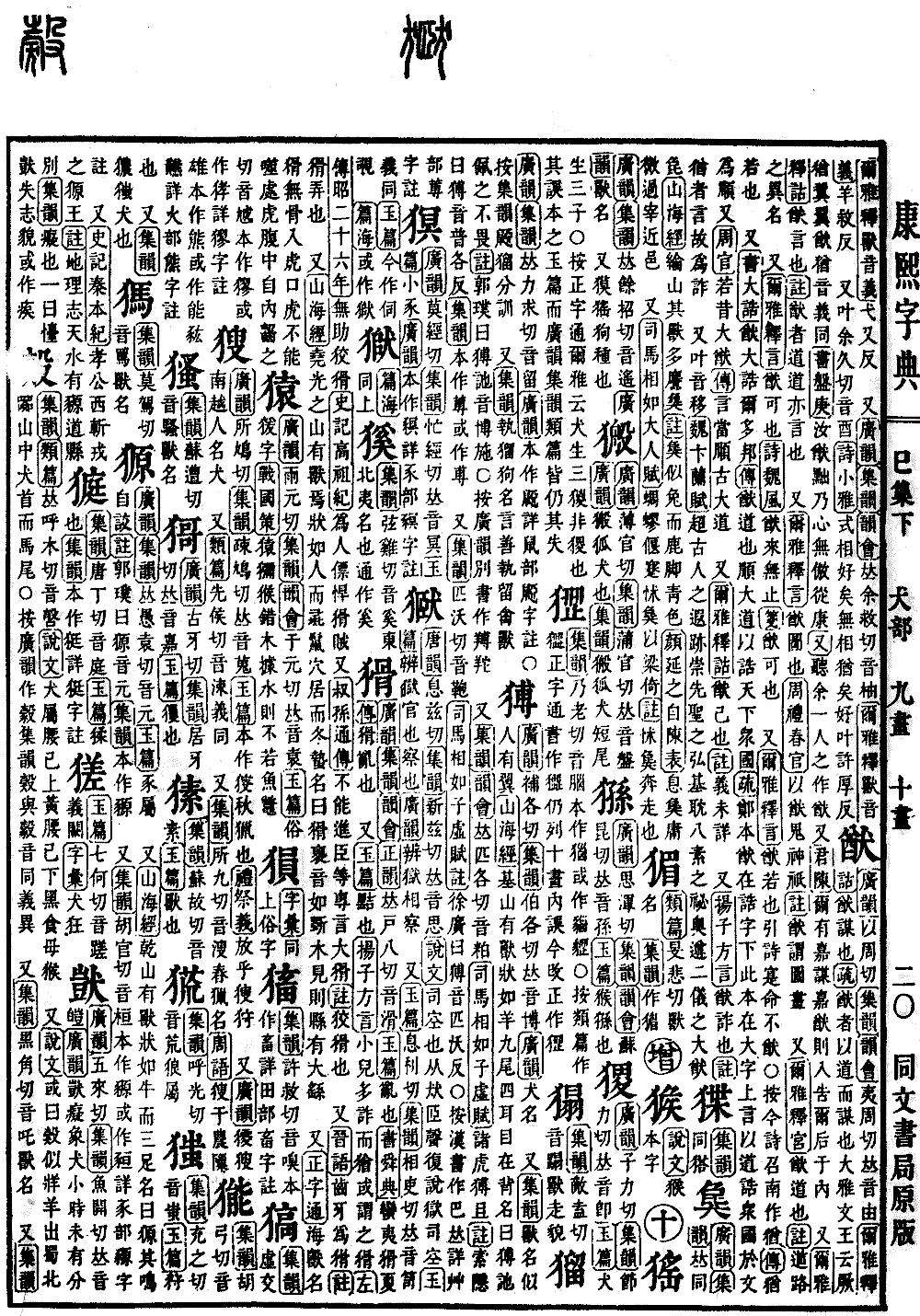
Si Collection, Lower Volume
Radical: Dog (quǎn)
14 strokes
Page 716, Entry 18
Broad Rhymes (Guangyun), Collected Rhymes (Jiyun), Rhyme Gathering (Yunhui), and Correct Rhymes (Zhengyun): Pronounced hua.
Jade Chapters (Yupian): Disorder.
Classic of History (Shujing), Canon of Shun: The barbarians disturb the summer.
Commentary: Disturb means disorder.
Also, Jade Chapters (Yupian): Cunning.
Master Yangs Dialect (Fangyan): A child who is deceptive and crafty is sometimes called hua.
Zuo Commentary (Zuo Zhuan), 26th Year of Duke Zhao: Do not assist in duplicity and craftiness.
Records of the Grand Historian (Shiji), Annals of Gaozu: Being light, fierce, crafty, and thievish.
Also, Biography of Shusun Tong: Unable to recommend us subjects, speaking only of great crafty ones.
Note: Means duplicity and craftiness.
Also, Discourses of the States (Jin Yu): Teeth act as a disturbance.
Note: Disturbance means to toy with.
Also, Classic of Mountains and Seas (Shanhaijing): In Mount Yaoguang, there is a beast. Its form is like a human, it lives in holes and hibernates in winter. It is named huahuai, its sound is like wood being chopped; its appearance signifies that the prefecture will have major labor service.
Also, Comprehensive Dictionary of Characters (Zhengzitong): A sea beast. The hua is boneless; it enters the tigers mouth, but the tiger cannot bite it. Dwelling inside the tigers belly, it gnaws from within.