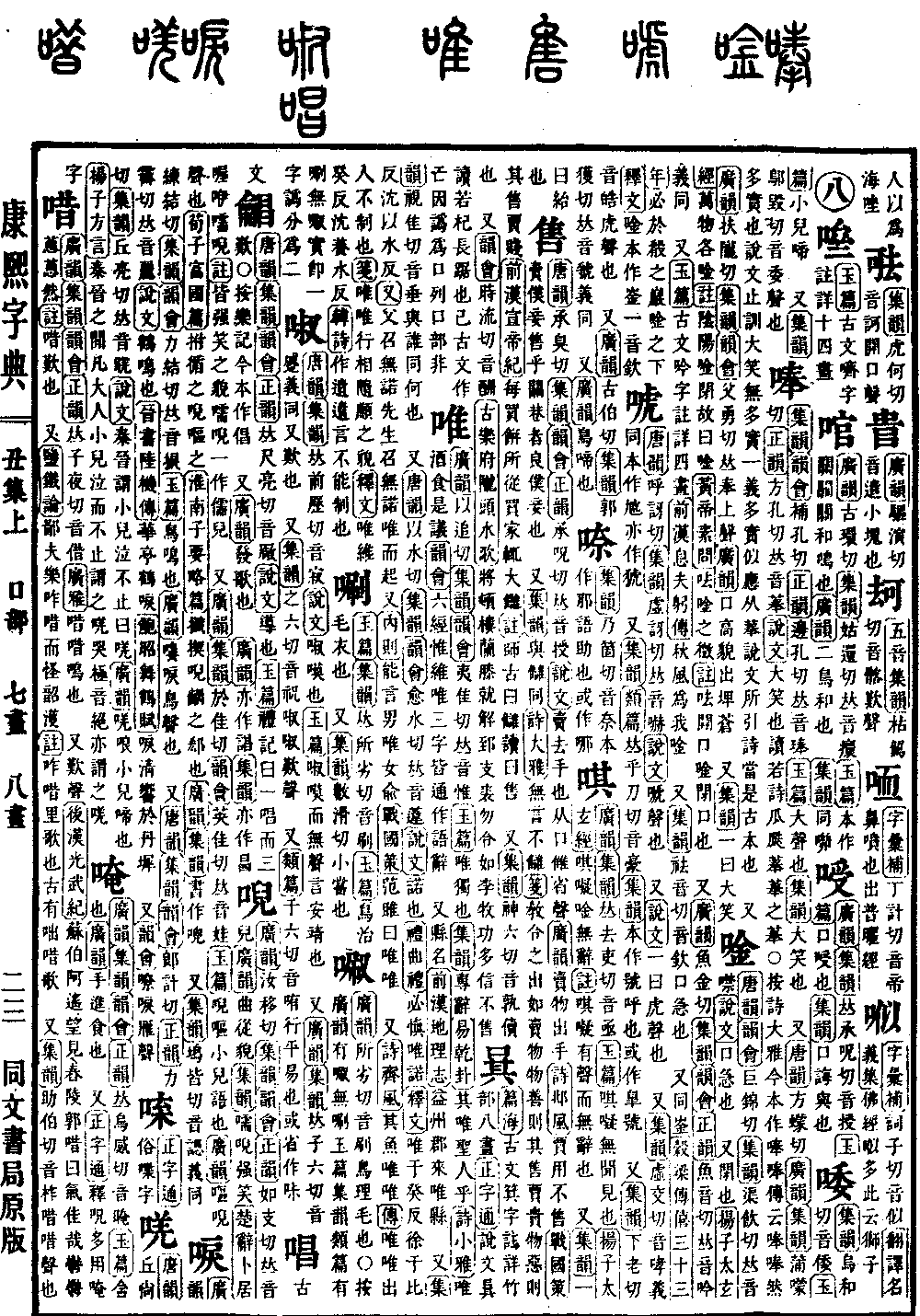
Chou Collection, Upper Volume
Radical: Mouth (kǒu)
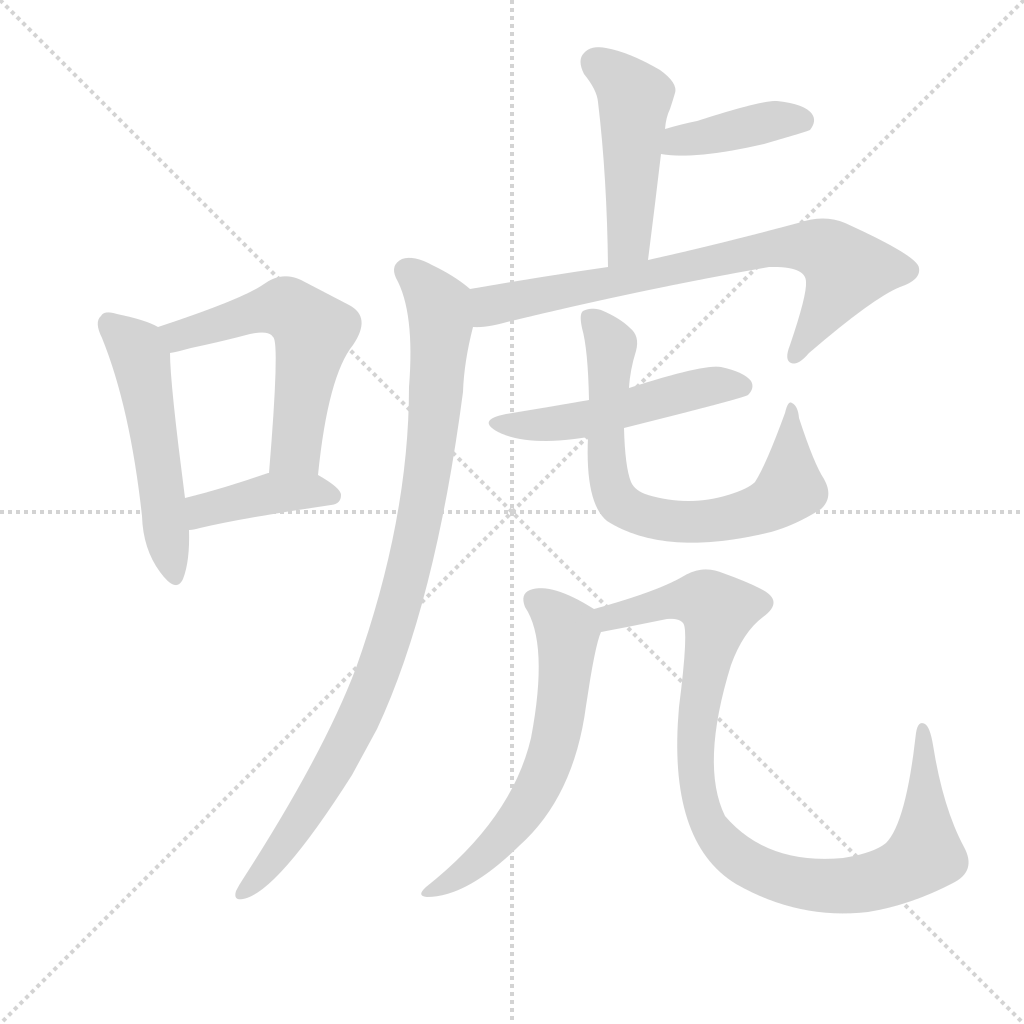
唬
Kangxi stroke count: 11
Page 193, Entry 12
Tang Rhymes (Tangyun): Pronounced xia (falling tone). Collected Rhymes (Jiyun): Pronounced xia (falling tone).
In the Explanation of Simple and Compound Characters (Shuowen): The sound of crying.
Also in the Explanation of Simple and Compound Characters (Shuowen): One source says it is the sound of a tiger.
Also in Collected Rhymes (Jiyun): Pronounced xiao (level tone). Meaning is the same. Originally written as xiao (variant form), also written as xiao (variant form).
Also in Collected Rhymes (Jiyun) and Classified Dictionary (Leipian): Pronounced hao (level tone).
In Collected Rhymes (Jiyun): Originally written as hao (shouting), meaning to call out. Sometimes written as gao hao (variant form).
Also in Collected Rhymes (Jiyun): Pronounced hao (rising tone). The sound of a tiger.
Also in Extensive Rhymes (Guangyun): Pronounced guo (entering tone). Collected Rhymes (Jiyun): Pronounced guo (entering tone). Meaning is the same.
Also in Extensive Rhymes (Guangyun): The cry of a bird.