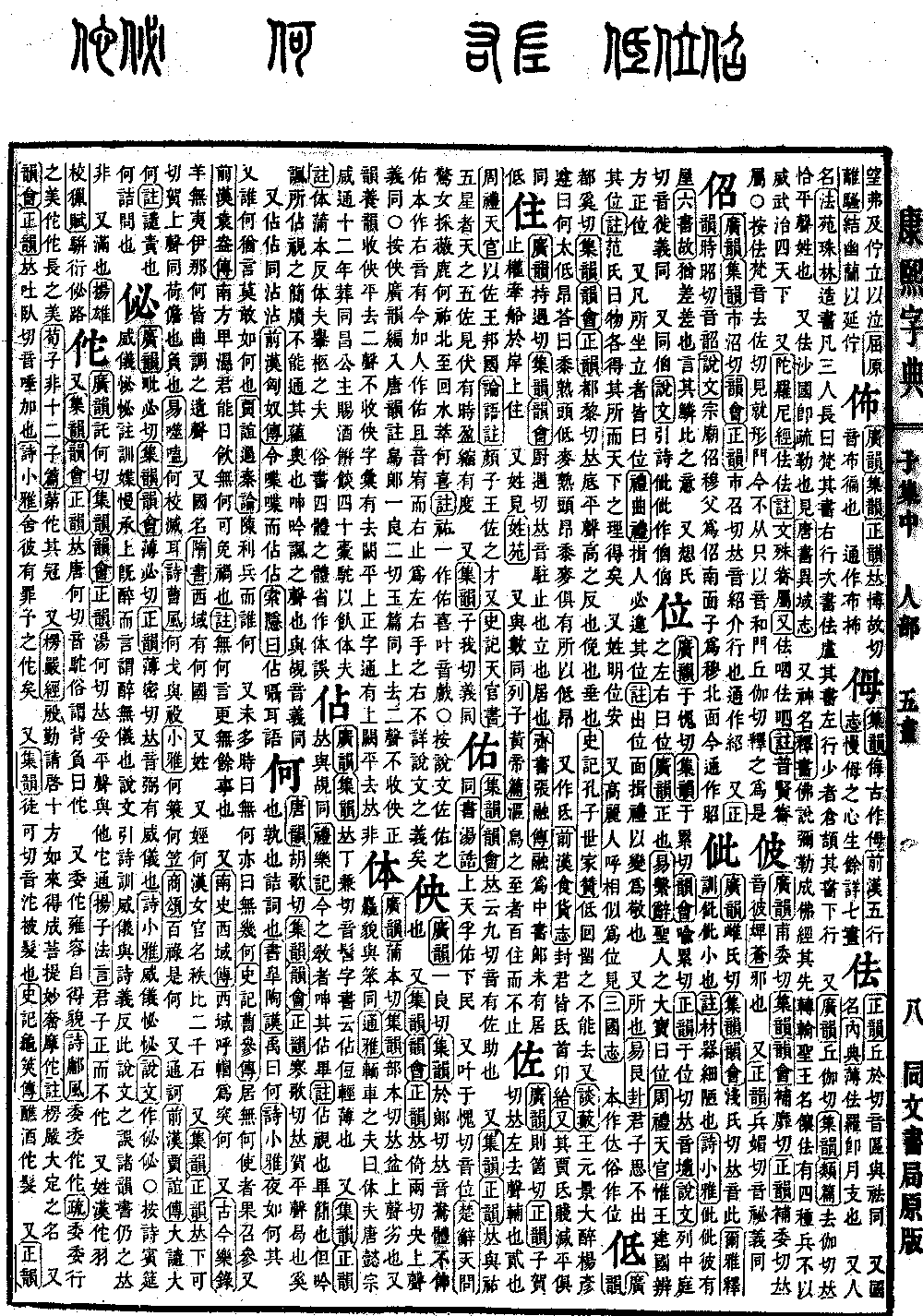
Zi Collection, Middle Volume
Radical: Person (rén)
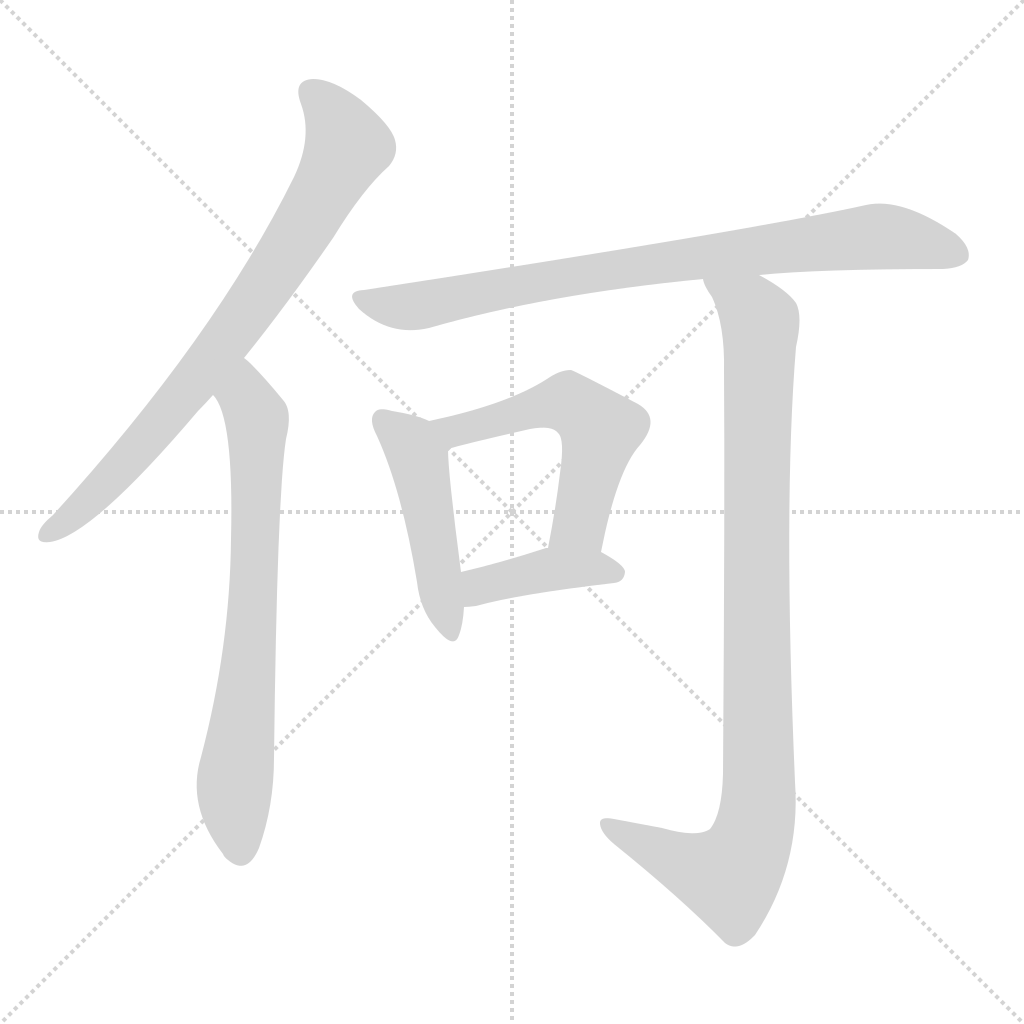
何
Kangxi Strokes: 7
Page 98, Entry 15
Pronounced hé (level tone).
Indicates a question, equivalent to what, why, or which, used as an interrogative term. Book of Documents (Shujing), Counsels of Gao Yao: Yu said, What. Book of Odes (Shijing), Lesser Odes of the Kingdom: How is the night? There is also the phrase shuihe, meaning no one dares to challenge. Jia Yi, Faults of Qin: Their sharp weapons and armored chariots were not questioned by anyone.
Also indicates that not much time has passed, called wuhe, or also called wujihe. Records of the Grand Historian (Shiji), Biography of Cao Can: Not long after he lived there, the envoy indeed summoned Can. Also, Book of Han (Hanshu), Biography of Yuan Ang: The south is damp, if you can drink daily, there will be no trouble, and you will avoid misfortune. Commentary: Wuhe means there is nothing else.
Also, History of the Southern Dynasties (Nan shi), Biography of the Western Regions: In the Western Regions, hats are called tuhe.
Also, Records of Music Past and Present (Gujin yuelu): Yangwuyi inahe are all sounds handed down in musical tunes.
Also, name of a state. Book of Sui (Suishu): There is a State of He in the Western Regions.
Also, a surname.
Also, jinghe, an official title for female court officials in the Han Dynasty, with a salary equivalent to two thousand shi.
Pronounced hè (rising tone).
Same as the character for carry or bear. Book of Changes (Yijing), Biting Cut hexagram: Carrying a cangue until the ears are destroyed. Book of Odes (Shijing), Odes of Cao: Carrying a ge-halberd and a dui-spear. Lesser Odes of the Kingdom: Carrying a bamboo rain hat and a conical hat. Odes of Shang: A hundred blessings are thus carried.
Also interchangeable with he. Book of Han (Hanshu), Biography of Jia Yi: Great reprimand and great questioning. Commentary: Qian means to rebuke. He means to interrogate.