Wu Collection, Lower Volume
Radical: Spirit (shì)
Guan, 13 strokes
Page 844, Entry 04
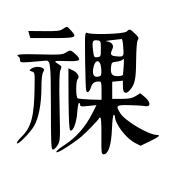
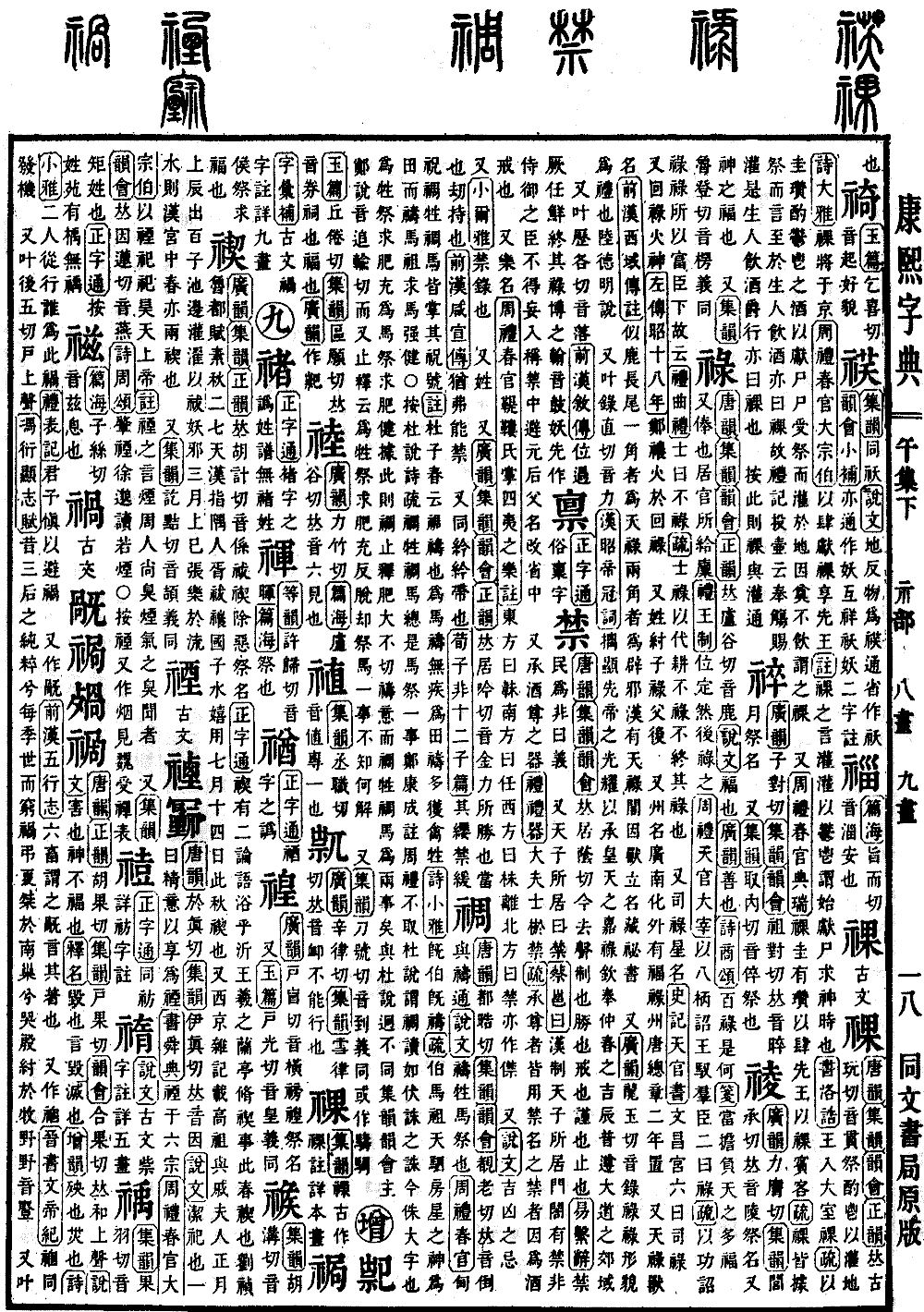
Ancient form: Pronounced guan. During sacrificial rites, fragrant wine is poured upon the earth to offer to the spirits. Book of Odes (Shijing): Performed the libation sacrifice in the capital. Rites of Zhou (Zhouli): Use the offering of cooked and raw sacrificial animals and the libation sacrifice to honor the former kings. Commentary: Libation means to pour; it is the act of using aromatic wine to pour upon the ground, referring to the moment when wine is offered to the ritual impersonator of the spirit to invite the spirit's descent. Book of Documents (Shujing): The king entered the Great Hall to perform the libation ritual. Sub-commentary: Using a jade ladle to scoop the aromatic wine and present it to the impersonator, the impersonator accepts the sacrificial wine and pours it upon the ground, then sets down the cup without drinking; this is called a libation. Also, Rites of Zhou (Zhouli): The libation jade tablet is paired with a jade ladle, used to sacrifice to former kings, and also used when performing the libation ritual for guests. Sub-commentary: Libations are generally directed toward sacrificial rites, but as for the drinking of wine by the living, this is also called a libation. Thus, the Book of Rites (Liji) states: Presenting the wine cup to perform the libation ritual, which shows that when the living drink wine, the act of passing the cup in order is also called a libation. Based on this, libation and pouring are synonymous.