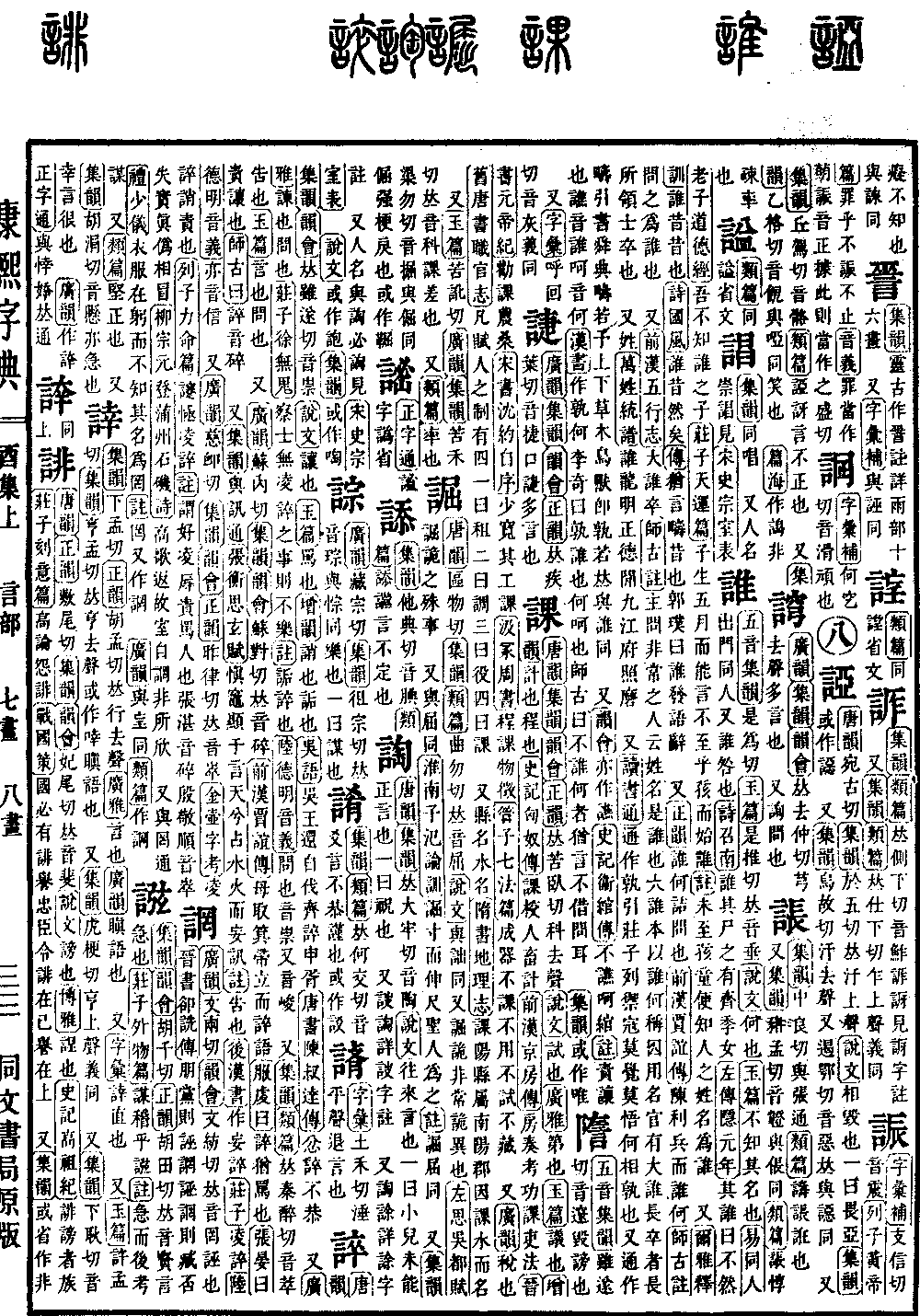
You Collection, Upper Volume
Radical: Speech (yán)
誹; Kangxi strokes: 15; Page 1165, Entry 01
Pronounced fěi.
According to the Explaining Graphs and Analyzing Characters (Shuowen Jiezi), it means to slander. According to the Erudite Elegance (Boya), it is to slander.
In the Records of the Grand Historian (Shiji), Biography of Emperor Gaozu: Those who slander are executed by their clans.
In the Zhuangzi, chapter on Deliberate Character: To discuss high principles while feeling resentful and slanderous.
In the Strategies of the Warring States (Zhanguo Ce): The state will necessarily have slander and praise; the loyal minister lets the slander rest with himself while the praise rests with the ruler.
Also, per the Collected Rhymes (Jiyun), it is sometimes abbreviated as the character for wrong or not (fēi).
In the History of the Former Han (Qianhan Shu), Biography of Chao Cuo: If slander is not managed, it will not be orderly.
The commentary by Yan Shigu states: The character for wrong (fēi) is read as slander (fěi).
Also, per the Collected Rhymes (Jiyun), it is pronounced fǔ (rising tone). The meaning is the same.
Also, per the Collected Rhymes (Jiyun) and the Rhyme Compendium (Yunhui), pronounced fěi. It is interchangeable with the character for wrong or not (fēi).
In the Categorized Compendium (Leipian), it means slanderous words.
In the Augmented Rhymes (Zengyun), it means to criticize or censure.
In the Records of the Grand Historian (Shiji), Treatise on the Balance of Standards: Zhang Tang reported that Yan Yi, while serving as one of the Nine Ministers, found the imperial edicts inconvenient; he did not speak out but slandered them in his heart.
In the History of the Former Han (Qianhan Shu), Treatise on Food and Money, it is written with the character for wrong or not (fēi).
The commentary states: The mouth does not speak, but the heart considers it wrong.
Also, per the Broad Rhymes (Guangyun), pronounced fàng. The meaning is the same.
In the Records of the Grand Historian (Shiji), Annals of Emperor Wen: The wooden post for slander.
The investigation commentary states: Pronounced fēi, also pronounced fèi. The Master Shi (Shizi) says: Yao erected a wooden post for slander. Wei Zhao states: In order to consider if there are defects in governance, people were made to write them on the wood; later generations continued this as an ornament. Today, the four-column wooden structures at the heads of palace walls and bridges are these.