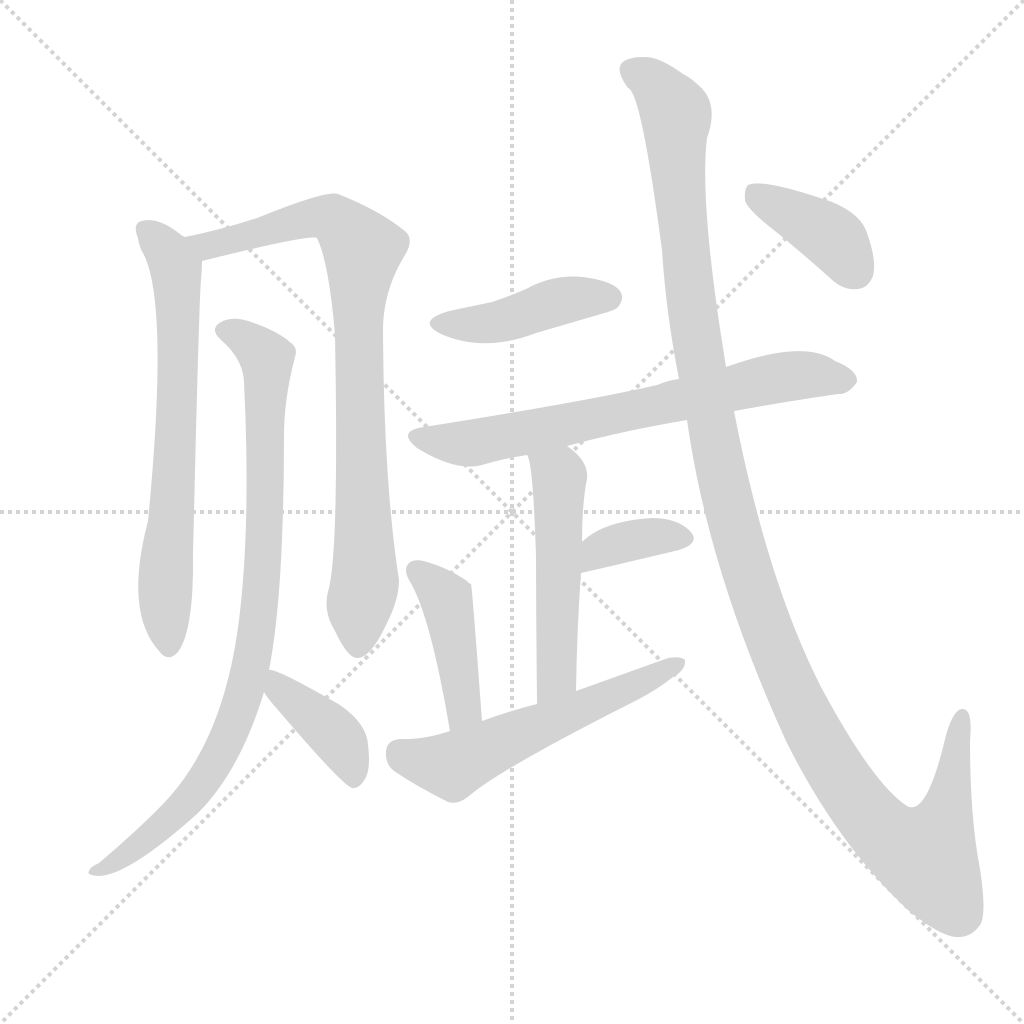
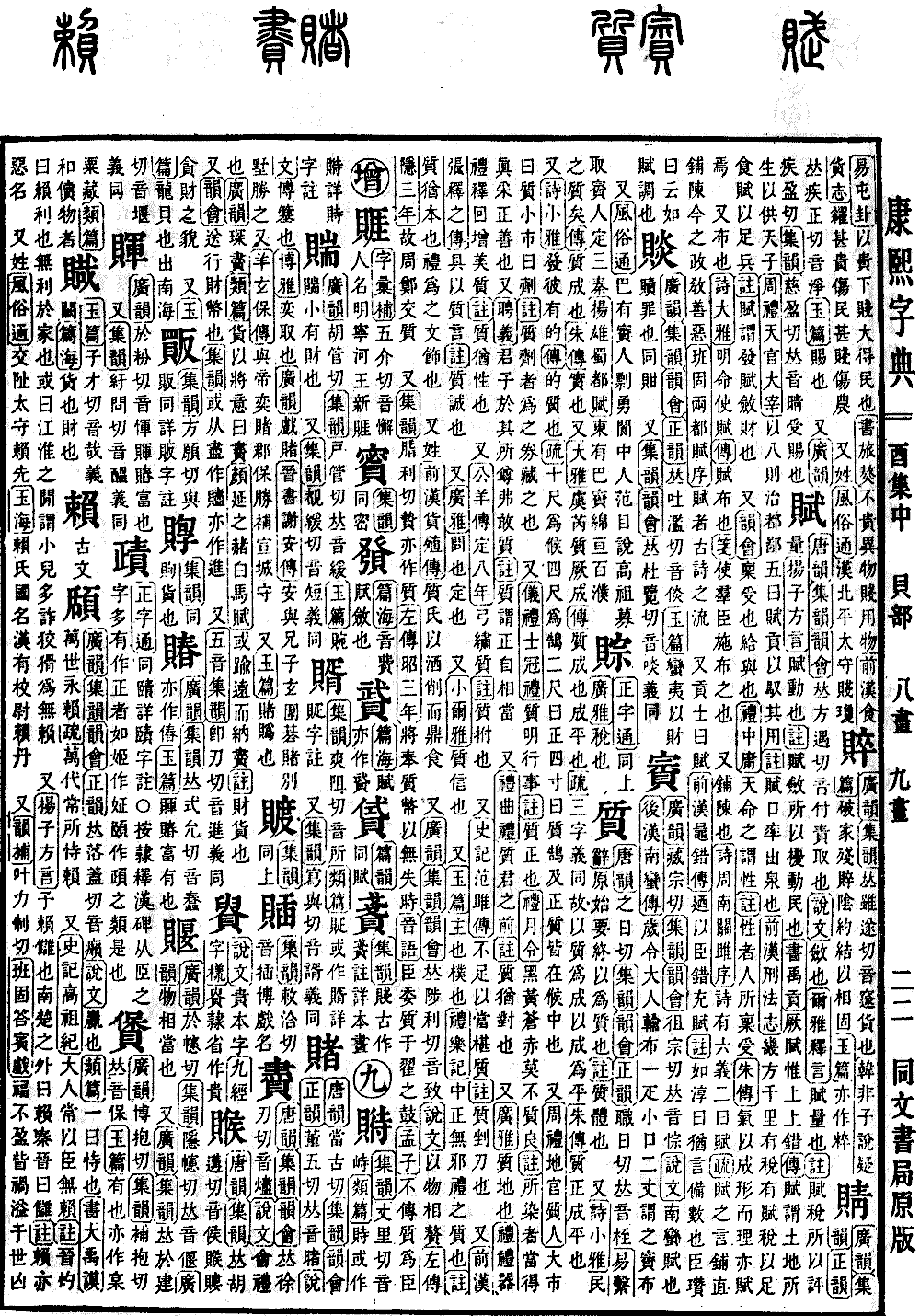
You Collection, Middle Volume
Radical: Shell (bèi)
Pronounced fù
To levy or collect.
Shuowen Jiezi: To collect or levy.
Erya, Explanations of Words: To measure. Commentary: Taxes and levies are used to measure and collect.
Yangzi, Dialect: To disturb. Commentary: Collection and levies are used to disturb the common people.
Book of Documents (Shangshu), Tribute of Yu: The land tax there is of the first grade, with some of the second grade mixed in. Commentary: Taxes refer to what the land produces, used to supply the Son of Heaven.
Rites of Zhou (Zhouli), Offices of Heaven, Grand Administrator: Use eight methods to govern the fiefs within the royal domain; the fifth is taxes and tribute, used to control their financial resources. Commentary: Taxes refer to money collected based on population.
History of the Former Han Dynasty (Hanshu), Treatise on Law: Within the thousand-li royal domain, there are levies and taxes; taxes are used to satisfy the need for grain, while levies are used to satisfy the need for military provisions. Commentary: Levies refer to the collection of taxes to accumulate wealth.
Also, Pronounced fù
To receive or to bestow.
Book of Rites (Liji), Doctrine of the Mean: That which is bestowed by Heaven is called nature. Commentary: Nature is what a person receives from Heaven. Zhu Xi Commentary: Vital energy congeals to form the physical body, and the principle is simultaneously bestowed within it.
Also, to promulgate.
Book of Odes (Shijing), Greater Odes: Clearly defined government orders, let them be promulgated. Commentary: To promulgate. Mao Commentary: To allow the ministers to implement and promulgate them.
Also, to expound.
Book of Odes (Shijing), Zhou Nan, Preface to Guan Ju: There are six styles of poetry, the second is called fu (exposition). Commentary: The meaning of fu is to expound, to directly expound upon the goodness or evil of contemporary government and education.
Ban Gu, Preface to the Two Capitals Rhapsody: The rhapsody (fu) is a derivative form of ancient poetry.
Also, to select scholars is called fu.
History of the Former Han Dynasty (Hanshu), Biography of Chao Cuo: Thereupon I, Chao Cuo, was made to fill the quota for selection. Commentary: Ru Chun said: It is like saying to make up the number. Chen Zan said: It is like levying taxes and dispatching personnel.
Page 1210, Entry 01