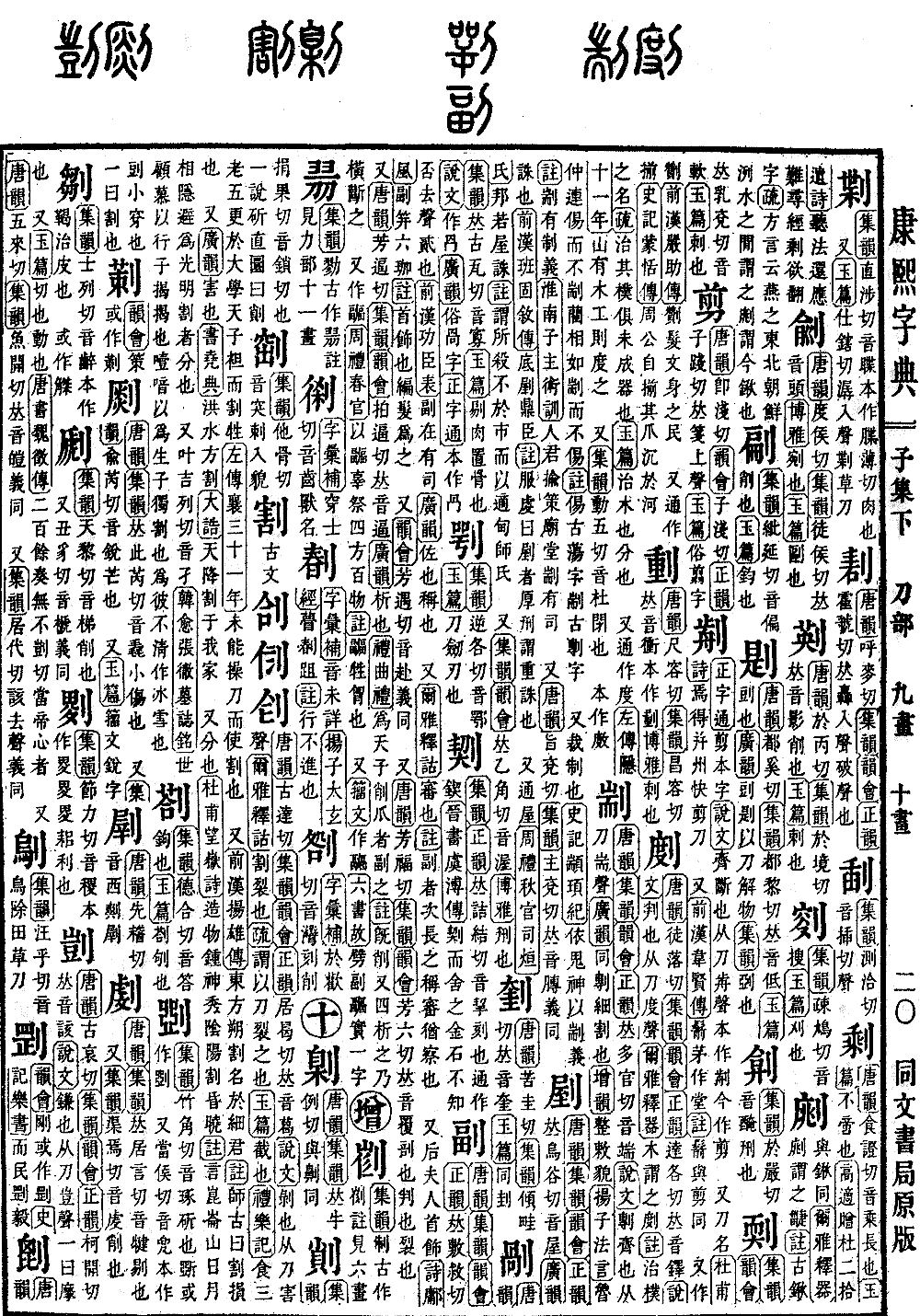
Zi Collection, Page Position: Lower
Radical: Knife (dāo)
fù
Kangxi Dictionary Strokes: 11
Page 142, Entry 23
Pronunciation:
- "Tang Yun," "Ji Yun," "Yun Hui," and "Zheng Yun" provide the pronunciation "fū jiù qiè," sounding like the departing tone of the character "pǒu."
Definitions:
1. Meaning of deputy or assistant. The "Book of Han - Table of Meritorious Officials" mentions "fù zài yǒu sī," referring to assistant officials. "Guang Yun" explains it as "assistant, to be called."
2. "Erya - Shigu" explains it as "to examine," with the annotation that "fù" is the title for a second-in-command (deputy position), and "shěn" means to examine thoroughly.
3. Refers to ancient ornaments worn by empresses. The "Book of Odes - Feng of Yong" states "fù jī liù jiā," with the annotation that these are hair ornaments made from braided hair.
Other Pronunciations and Definitions:
- "Yun Hui" also provides the pronunciation "fāng yù qiè," sounding like "fù," with the same meaning as above.
- "Tang Yun" has the pronunciation "fāng fú qiè," "Ji Yun" and "Yun Hui" have the pronunciation "fāng liù qiè," sounding like "fù," meaning to split open, to judge, or to divide.
- "Tang Yun" has the pronunciation "fāng bī qiè," "Ji Yun" and "Yun Hui" have the pronunciation "pāi bī qiè," sounding like "bī." "Guang Yun" explains it as "to split." The "Book of Rites - Qu Li" records that those who prepared fruit for the Son of Heaven should "fù zhī," with the annotation meaning to peel the fruit and then cut it into four pieces, transversely splitting it.
Variant Characters:
- Also written as "tǎn." The "Rites of Zhou - Official of Spring" states "yǐ tǎn gū jì sì fāng bǎi wù," with the annotation that "tǎn" refers to splitting open the chest of a sacrificial animal.
- Seal script (Dazhuan) is written as "tǎn." "Liu Shu Gu" considers "pī," "fù," and "tǎn" to be the same character.