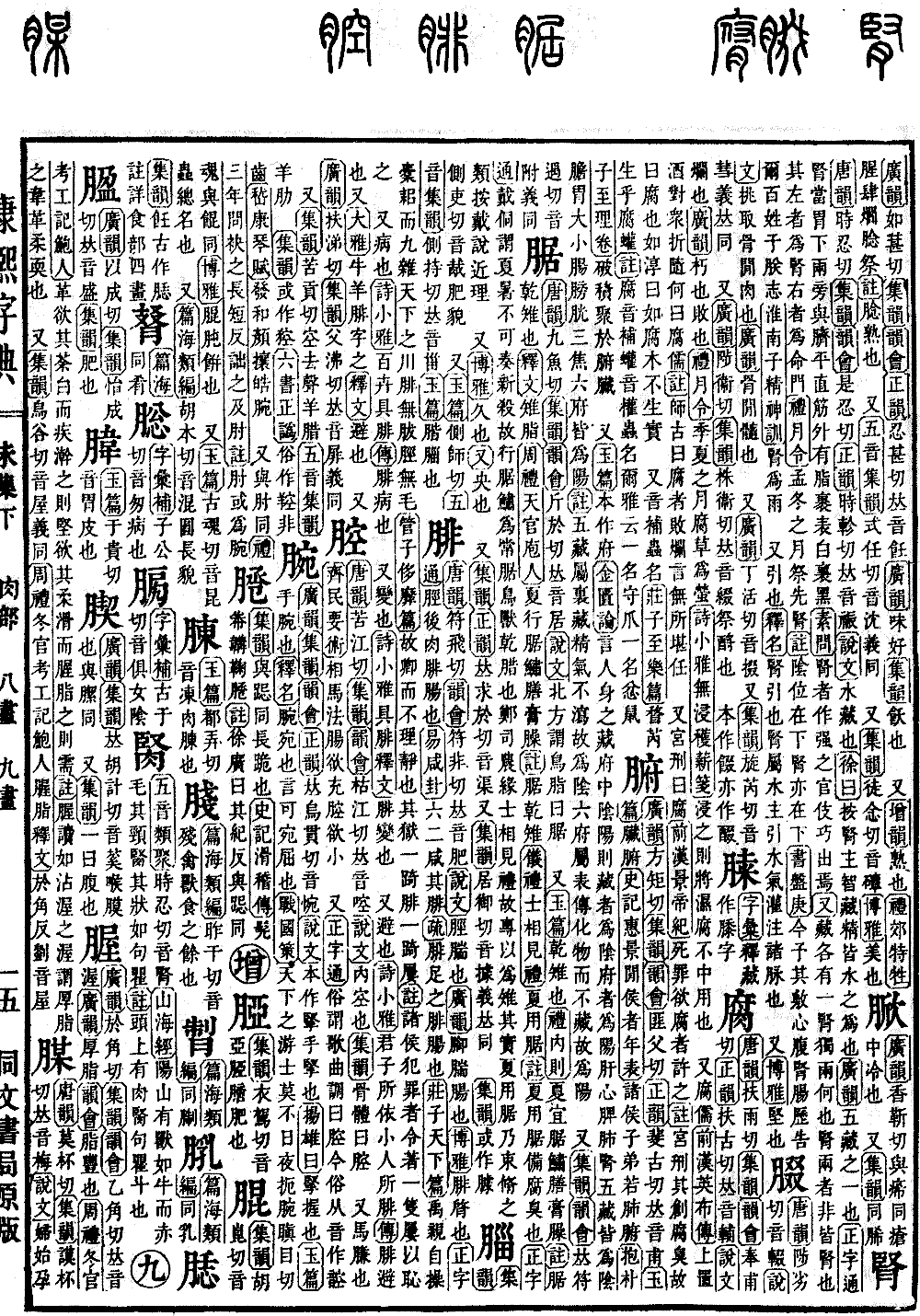
Wei Collection, Lower Volume
Radical: Meat (ròu)
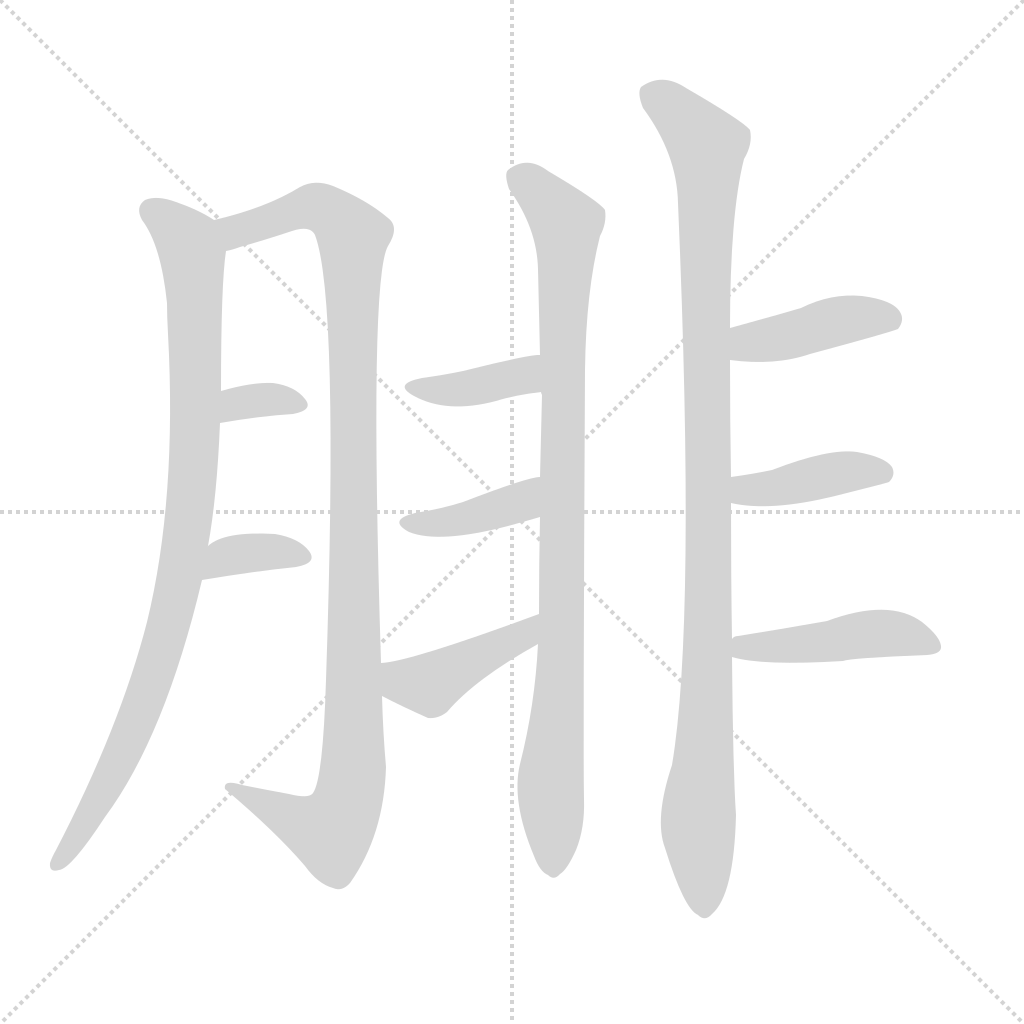
腓
Kangxi strokes: 14
Page 987, Entry 09
Pronounced fei. Pronounced fei. Pronounced the same as fei.
Shuowen Jiezi (Dictionary of Explaining Graphs): Refers to the calf of the leg.
Guangyun (Broad Rhymes): Refers to the muscle between the heel and the knee.
Boya (Erudite Extender): Fei is the calf of the leg.
Zhengzitong (Comprehensive Dictionary of Characters): The muscle on the back of the lower leg, which is the gastrocnemius muscle.
Book of Changes (Yijing), Hexagram Xian: The text for the second six line says: The stimulation occurs in the calf.
Commentary: Fei is the calf of the leg.
Zhuangzi, Chapter: Under Heaven: Yu personally carried the earth-carrying vessel and the shovel, diverting the rivers of the world, until there was no meat on his calves and no hair on his shins.
Guanzi, Chapter: Extravagance: The reason for appointing ministers of state without assigning them administrative duties is to maintain tranquility. That punishment involves making the criminal wear a shoe on one foot while the other remains bare.
Note: For nobles who have committed crimes, they are ordered to wear only one shoe to shame them.
Also refers to illness.
Book of Odes (Shijing): All the grasses are withering.
Commentary: Fei refers to the wilting caused by disease.
Also refers to change.
Book of Odes (Shijing), Lesser Odes of the Kingdom: Shiwen (Explanation of Text): Fei refers to change.
Also refers to avoidance.
Book of Odes (Shijing): The war chariots ridden by generals and commanders are what the soldiers use to find refuge.
Commentary: Fei refers to taking cover or avoiding.
Also: Great Odes of the Kingdom: Oxen and sheep avoid stepping on it.
Shiwen: Means to avoid.
Also pronounced fei. Pronounced fei. Pronounced the same as fei. The meaning is the same.
Textual Verification:
Guanzi, Chapter: Extravagance: That punishment involves making the criminal wear a shoe on one foot while the other remains bare.
Note: For nobles who have committed crimes, they are ordered to wear only one shoe to shame them.
Following the original text, the two instances of the character lu (a shoe) have been corrected to ju (a shoe).