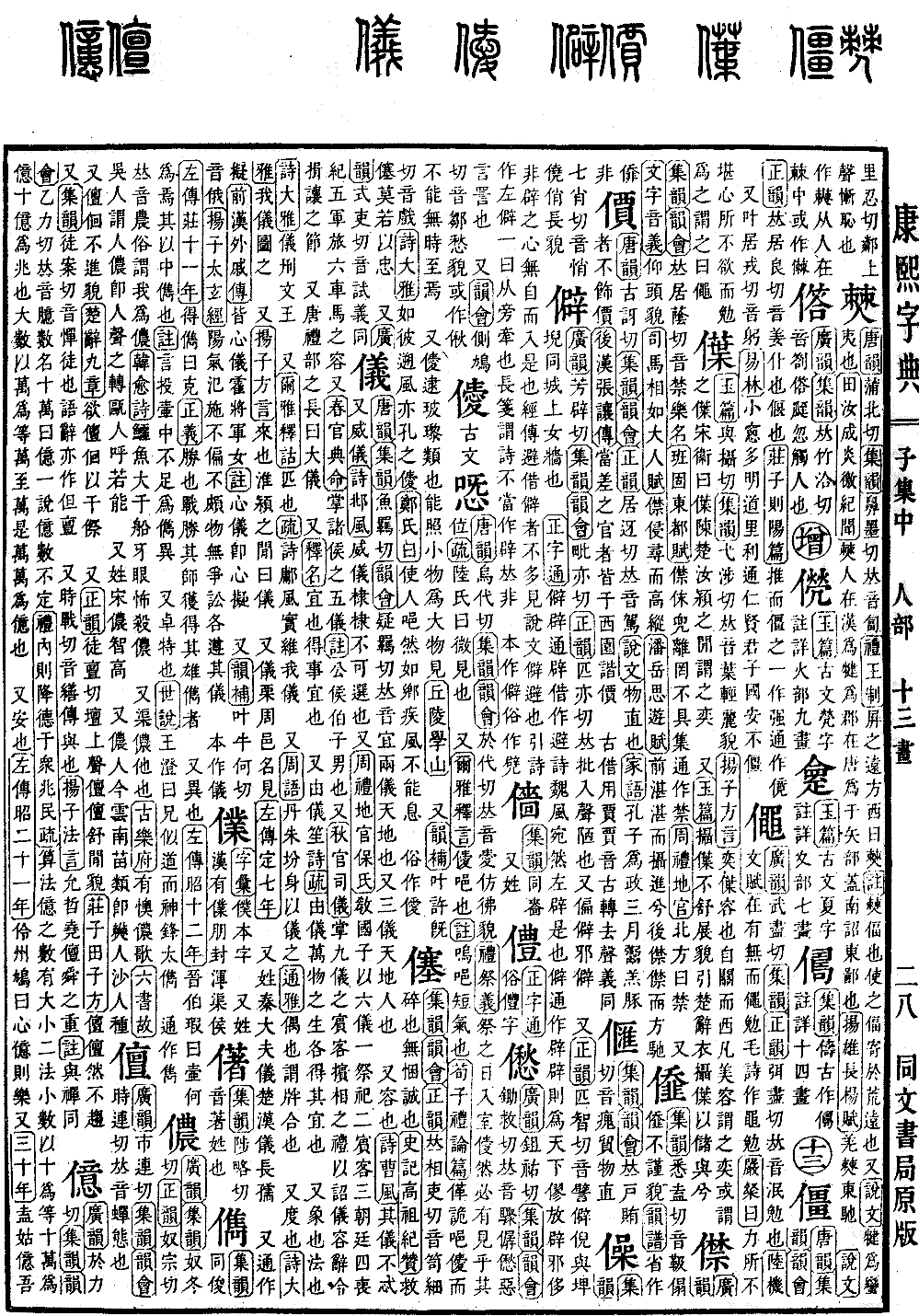
Zi Collection, Middle Volume. Radical: Person (rén). Kangxi Stroke Count: 15. Page: 118.
According to the Comprehensive Rhymes (Guangyun) and the Collected Rhymes (Jiyun), the pronunciation is derived from the initial sound of nú and the final sound of dōng. According to the Correct Rhymes (Zhengyun), it is derived from the initial sound of nú and the final sound of zōng. It is pronounced the same as the word nóng.
It is colloquially used to refer to oneself as I or me. As stated in a poem by Han Yu: The crocodiles are larger than boats, their teeth and eyes terrify me to death. Furthermore, the term qúnóng refers to another person or him. In the Ancient Music Bureau (Gu Yuefu), there is a song titled Song of the Distressed Man (Aonong Ge). According to the Origins of the Six Categories of Writing (Liushu Gu), people from the Wu region use the term nóng to refer to a person, which is a phonetic shift of the sound for person (rén). People from the Ou region pronounce it similarly to the word néng.
It is also used as a surname, such as the Song Dynasty figure Nong Zhigao. Additionally, it refers to the Nong people, a group currently categorized as a branch of the Miao in Yunnan, identified with the Bo or Sha peoples.