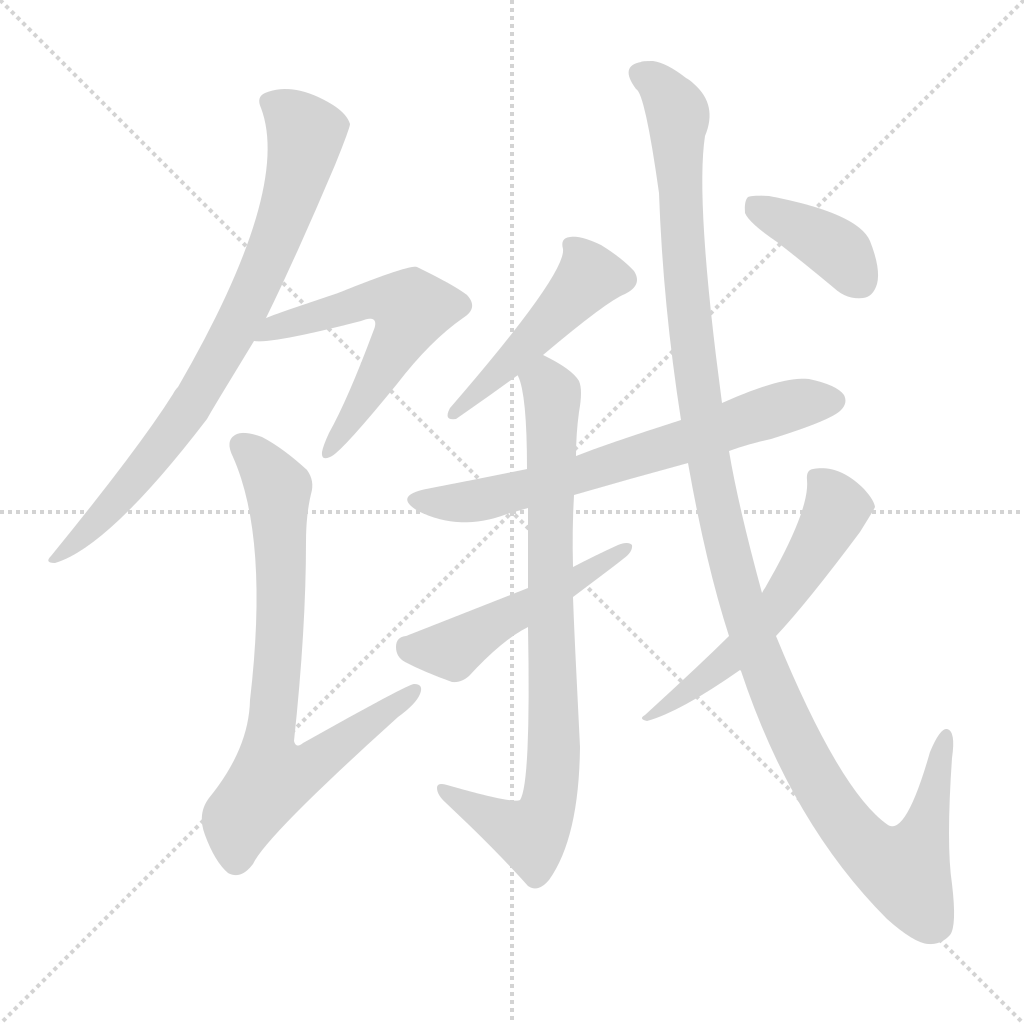
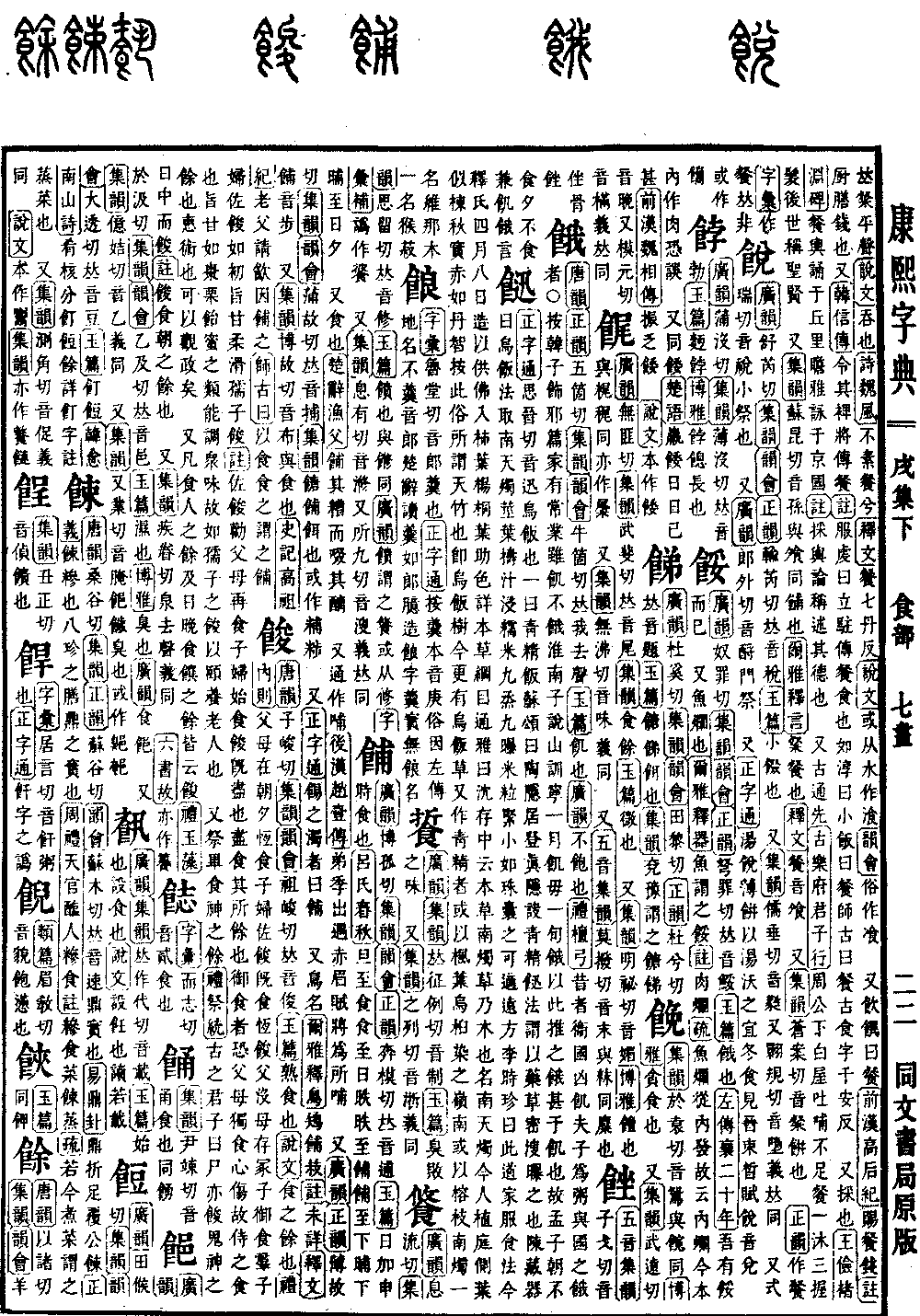
Xu Collection, Lower Volume
Radical: Food (shí)
16 strokes
Page 1420, Entry 01
Pronounced e (falling tone).
In the Tang Rhyme (Tangyun) and Correct Rhymes (Zhengyun), it is pronounced e (falling tone); in the Collected Rhymes (Jiyun) and Rhyme Anthology (Yunhui), it is also pronounced e (falling tone), read as a departing tone.
The Jade Chapters (Yupian) defines it as the state of starvation. The Expanded Rhymes (Guangyun) refers to the inability to eat one's fill.
The Book of Rites (Liji), in the Tan Gong chapter, records that when a great famine occurred in the State of Wei, Confucius boiled porridge and distributed it to the starving people of the state.
According to the section on Adorning Evil in the works of Han Fei (Hanfeizi), if a family has stable property, even if they are hungry, they will not reach the point of starvation. The Huainanzi, in the Discourse on Mountains (Shuoshun), states that it is better to go a month without eating one's fill than to go ten days without food. From this, it can be inferred that starvation is more severe than hunger. This is why Mencius speaks of going without food in the morning and going without food in the evening, as this encompasses both the conditions of hunger and starvation.