Wu Collection, Lower Volume
Radical: Spirit (shì)
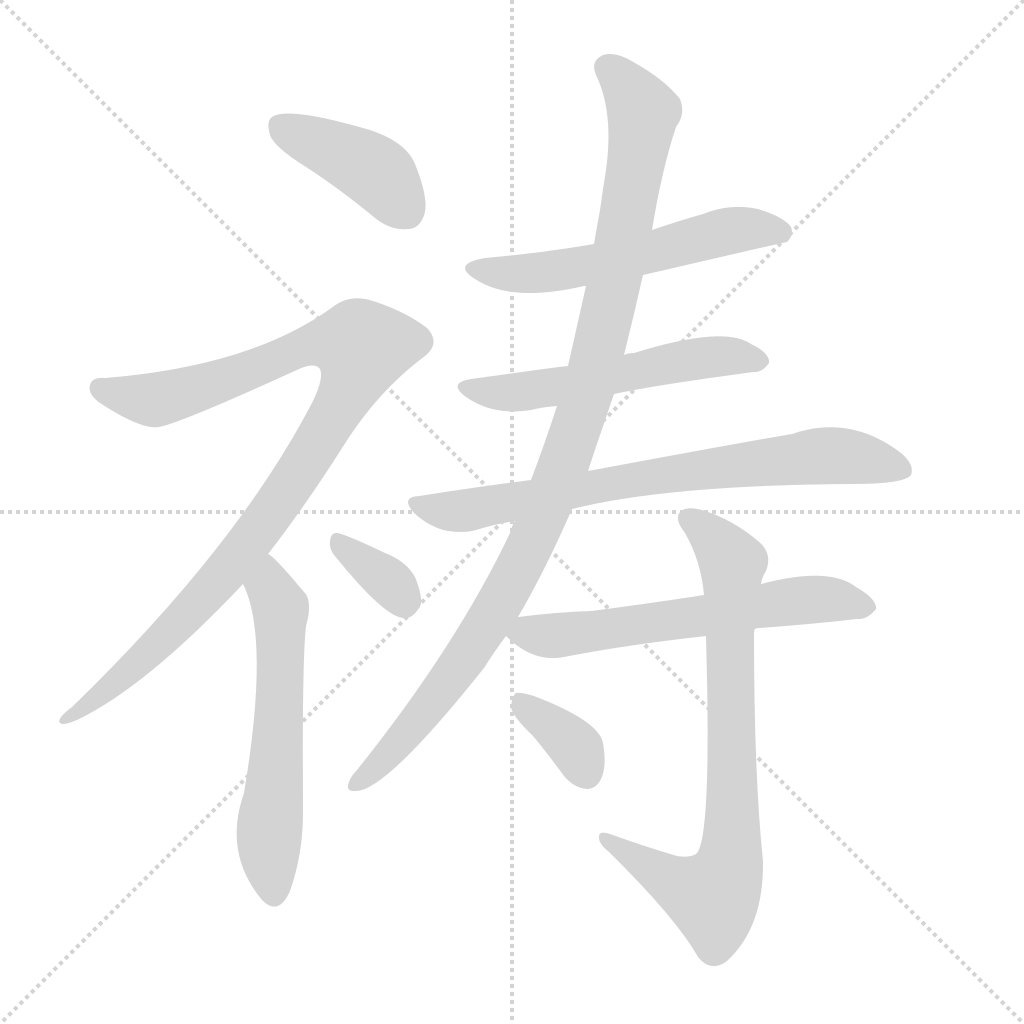
Character: Dao (to pray)
Kangxi Strokes: 19
Page 847, Entry 02
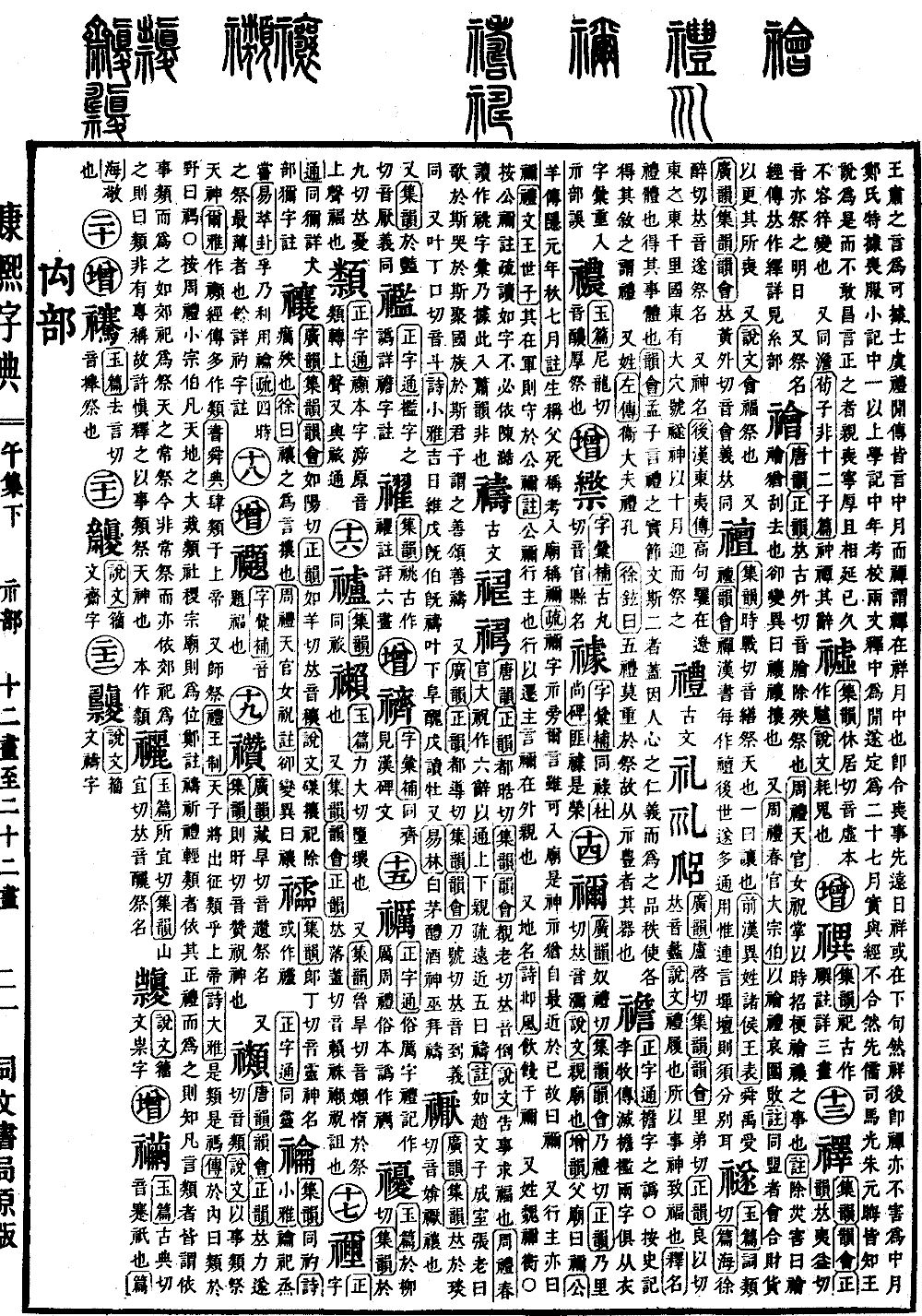
According to Tang Rhymes (Tangyun) and Correct Rhymes (Zhengyun), it is pronounced dao (rising tone). According to Collected Rhymes (Jiyun) and Rhyme Collection (Yunhui), it is also pronounced dao (rising tone). In the Explaining Graphs and Analyzing Characters (Shuowen), it is defined as informing the divine of a matter to seek blessings. In the Rites of Zhou (Zhouli), Spring Officials (Chunguan), the Grand Invoker composes six types of pronouncements to connect those above and below, relatives and those distant; the fifth is prayer. The commentary states: Just as when Zhao Wenzi completed his residence, Zhang Lao said: One sings here, one weeps here, the clans of the state gather here; the gentleman calls this a good eulogy and a good prayer.
Furthermore, according to Extended Rhymes (Guangyun) and Correct Rhymes (Zhengyun), it is pronounced dao (falling tone). According to Collected Rhymes (Jiyun) and Rhyme Collection (Yunhui), it is also pronounced dao (falling tone). The meaning is the same.
It is also phonetically matched to the rhyme group for dou. In the Book of Odes (Shijing), Lesser Odes (Xiaoya): On the auspicious day of Wu, having sacrificed and having prayed. It rhymes with the following character, and Wu is read as mou. Also found in the Yi Lin (Forest of Changes): White cogon grass and sweet wine, the spirit medium bows and prays.