Zi Collection, Page Position: Lower
Radical: Strength (lì)
Kangxi strokes: 11
Page: 148
Archaic form
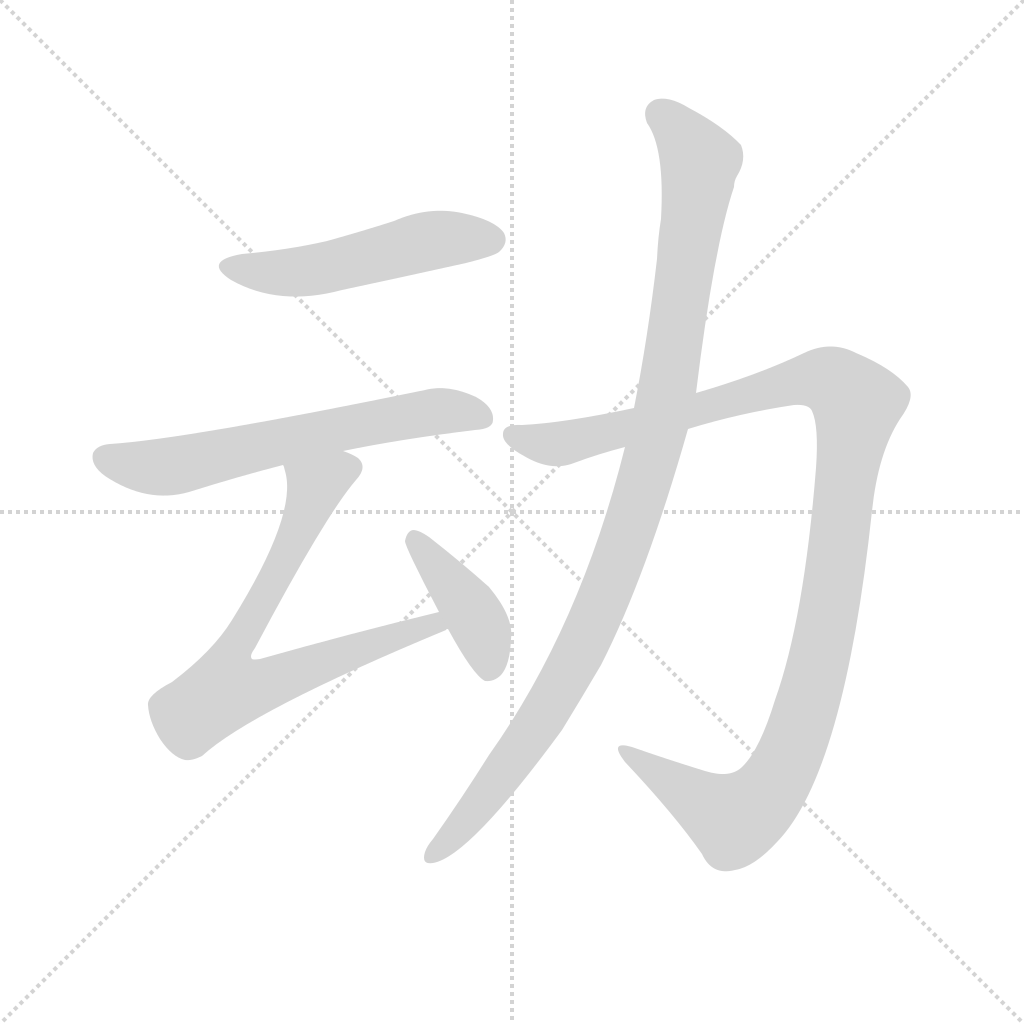
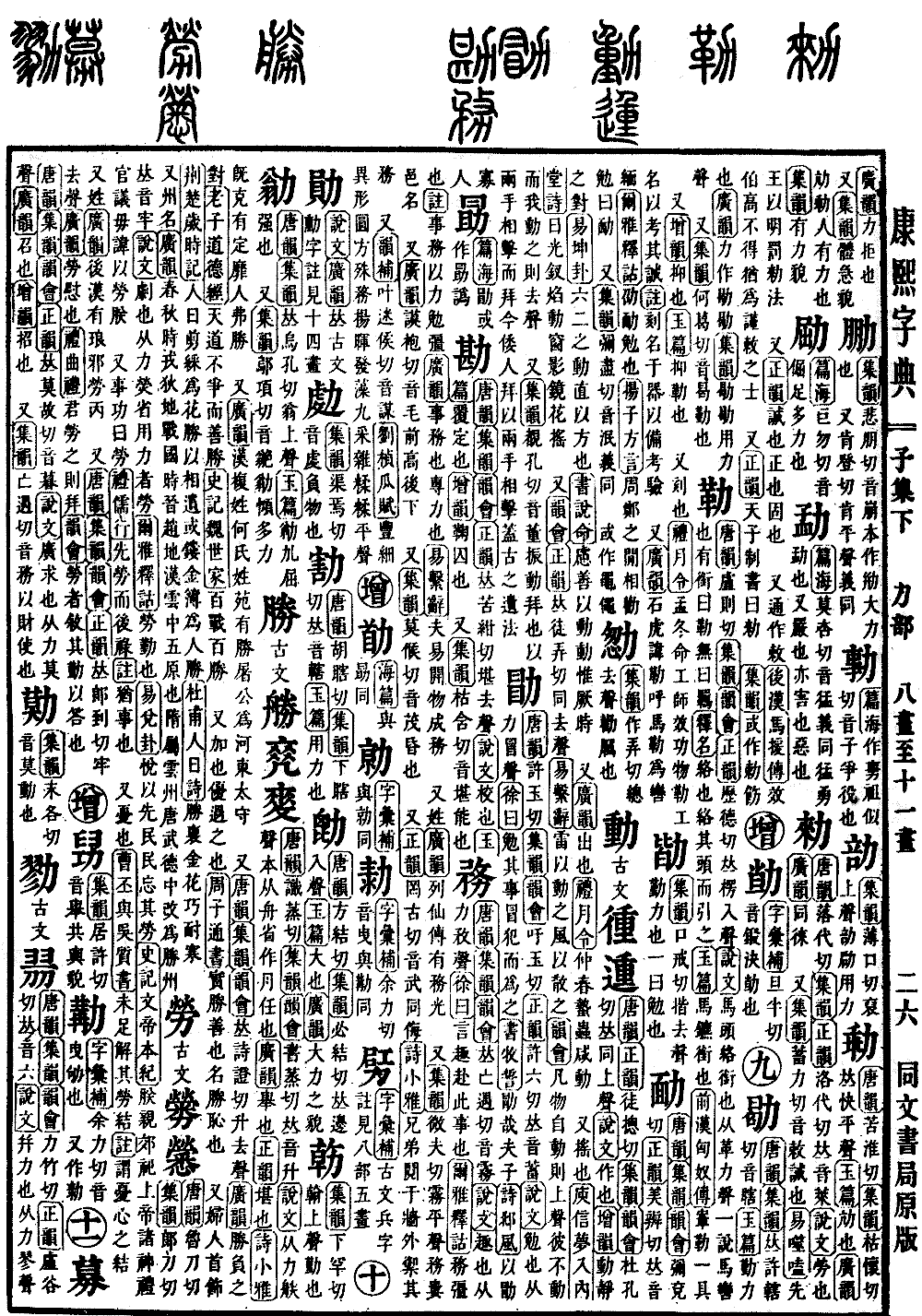
According to Tang Rhyme (Tangyun) and Zheng Rhyme (Zhengyun), pronounced tú zǒng qiè. According to Jiyun (Jiyun) and Yunhui (Yunhui), pronounced dù kǒng qiè, both with a rising tone. According to Shuo Wen (Shuowen), to act, to do. According to Zengyun (Zengyun), dòng is the opposite of jìng (stillness). "The movement of the second line of the hexagram Kun is direct and square" — Book of Changes (Yijing), Kun Hexagram. "Contemplate what is good and then act; act only at the appropriate time" — Book of Documents (Shangshu), Sayings of Yue.
Also, according to Guangyun (Guangyun), to come out. "In mid-spring, hibernating insects all begin to stir" — Book of Rites (Liji), Monthly Ordinances.
Also, to shake, to sway. "Sunlight makes the hairpin's flames flicker, window shadows sway the mirror's flowers" — Yu Xin, "Poem on Dreaming of Entering the Inner Hall".
Also, according to Yunhui and Zheng Rhyme, pronounced tú nòng qiè, with a departing tone. "Thunder stirs them, wind disperses them" — Book of Changes, Appended Remarks. Yunhui says: When a thing moves by itself, it is pronounced with a rising tone; when something else makes it move, it is pronounced with a departing tone.
Also, according to Jiyun, pronounced dǔ kǒng qiè, with the sound of dǒng. Zhèndòng (to vibrate, to shake) also means to bow, by clapping both hands together and bowing. Today, the Japanese (wōrén) bow by clapping both hands together; this is likely a vestige of ancient customs.