You Collection, Upper Volume
Radical: Speech (yán)
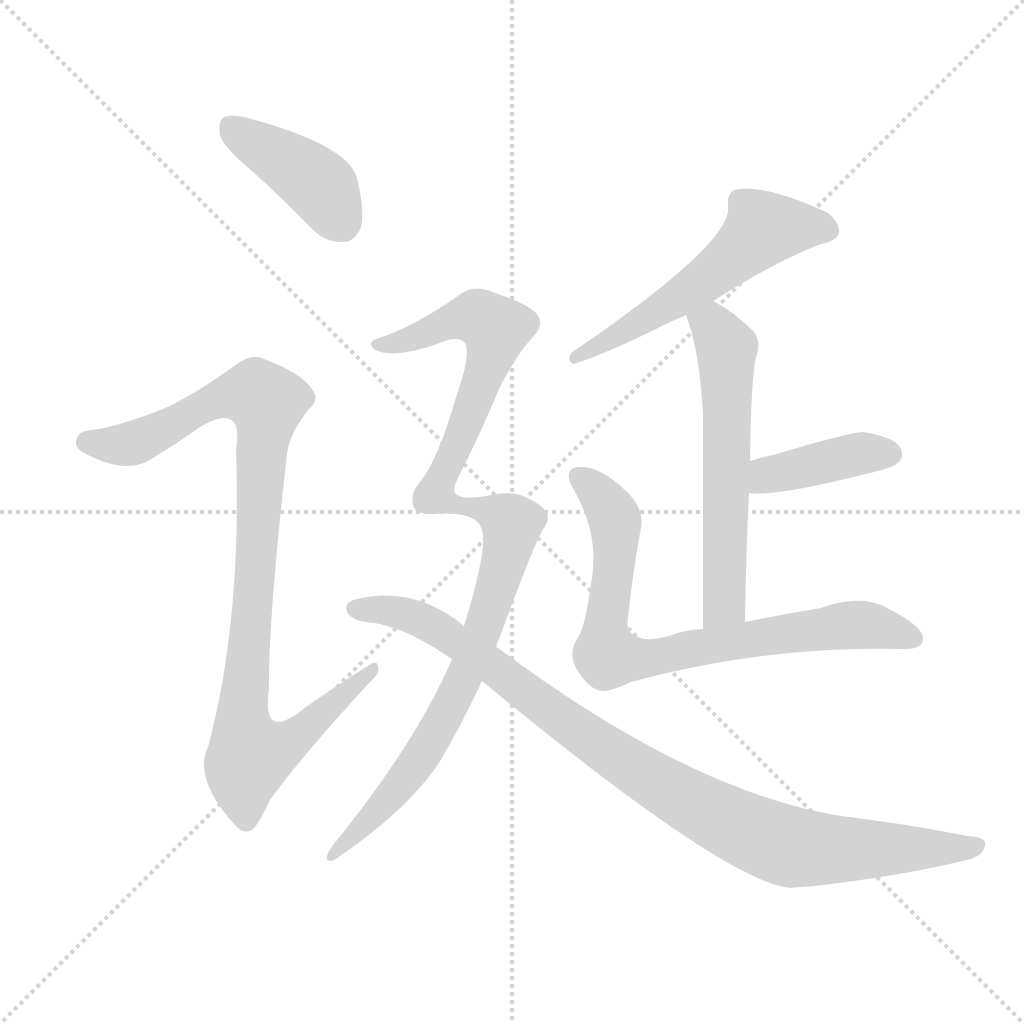
Dan
Kangxi Strokes: 14
Page 1162, Entry 01
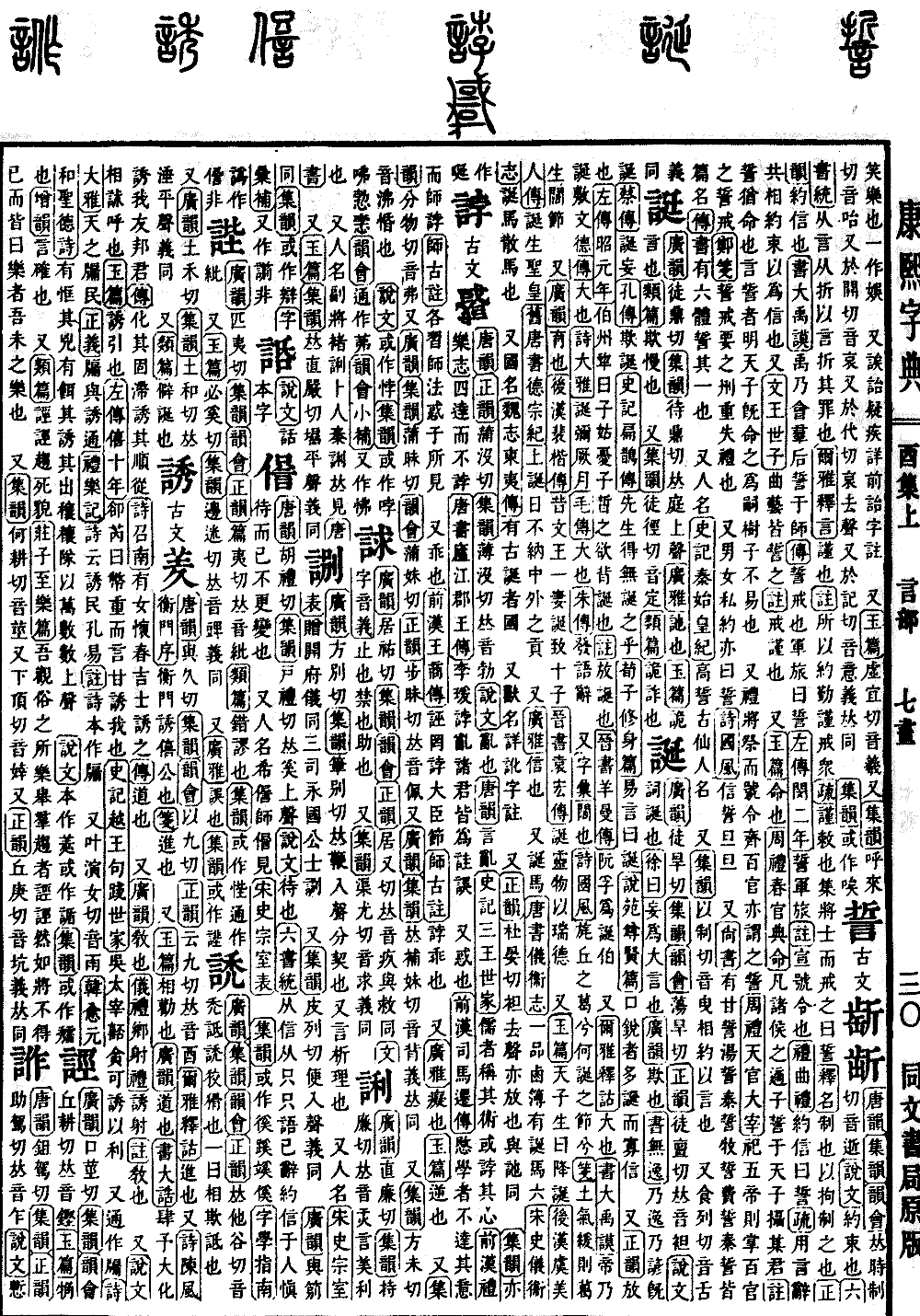
Pronounced tan (falling tone). According to Explanations of Characters (Shuowen), to speak untruths. Xu states this means to speak boastfully. According to Extensive Rhymes (Guangyun), to deceive. In Book of Documents (Shujing), Chapter on No Idle Ease (Wuyi): Then indulge, then speak improperly, then speak falsely. Cai's commentary: False and reckless. Kong's commentary: Deceptive and false. In Records of the Grand Historian (Shiji), Biography of Bian Que: Has the master not been deceiving me? In Xunzi, Chapter on Cultivating the Self (Xiushen): Easy words are called false. In Garden of Stories (Shuoyuan), Chapter on Honoring the Worthy (Zunxian): Those with sharp mouths are often deceptive and lack credibility.
Also, pronounced tan (falling tone), to be unrestrained. In Zuo Tradition (Zuozhuan), First Year of Duke Zhao: Bo Zhouli said: Sir, for now worry about your cousin's desire to betray and be unrestrained. Commentary: To be unrestrained and unconventional. In Book of Jin (Jinshu), Biography of Yang Man: Ruan Fu was the master of unrestraint.
Also, in Approaches to Meaning (Erya), to be great. In Book of Documents (Shujing), Counsels of the Great Yu (Dayu Mo): The Emperor then greatly spread his civil virtues. Commentary: Great. In Book of Odes (Shijing), Greater Odes (Daya): Greatly fulfilled the months of her pregnancy. Mao's commentary: Great. Zhu's commentary: An introductory particle.
Also, according to Comprehensive Collection of Characters (Zihui), to be wide. In Book of Odes (Shijing), Odes of the States (Guofeng): The kudzu on the mound, why is the internode so wide? Jian commentary: When the soil energy is slow, the kudzu grows with wide internodes.
Also, according to Extensive Rhymes (Guangyun), to give birth. In Book of the Later Han (Houhanshu), Biography of Pei Kai: Formerly, King Wen had one wife who gave birth to ten sons. In Book of Jin (Jinshu), Biography of Yuan Hong: Giving birth to spiritual creatures as omens of virtue.
Also, according to Jade Chapters (Yupian), the birth of a Son of Heaven is called the auspicious descent. In Book of the Later Han (Houhanshu), Biography of Empress Yu: Gave birth to a holy emperor. In Old Book of Tang (Jiu Tangshu), Annals of Dezong: On the Emperor's birthday, he did not accept tributes from inside or outside the court.
Also, according to Broad Reference (Guangya), to believe.
Also, Dan horse. In Book of Tang (Tangshu), Treatise on Ceremonial Guards: The grand carriage of the first rank has six Dan horses. In History of Song (Songshi), Treatise on Ceremonial Guards: Dan horses are horses kept loose.
Also, a country name. In Records of Wei (Weizhi), Record of the Eastern Barbarians: There is a country called Gudandan.
Also, a beast name. See the notes on the character E.
Also, pronounced tan (falling tone), a variant of the falling tone. It also means unrestrained. Same as the character yi. In Collected Rhymes (Jiyun), also written as the character dan.