Zi Collection, Page Position: Lower
Radical: Legs (ér)
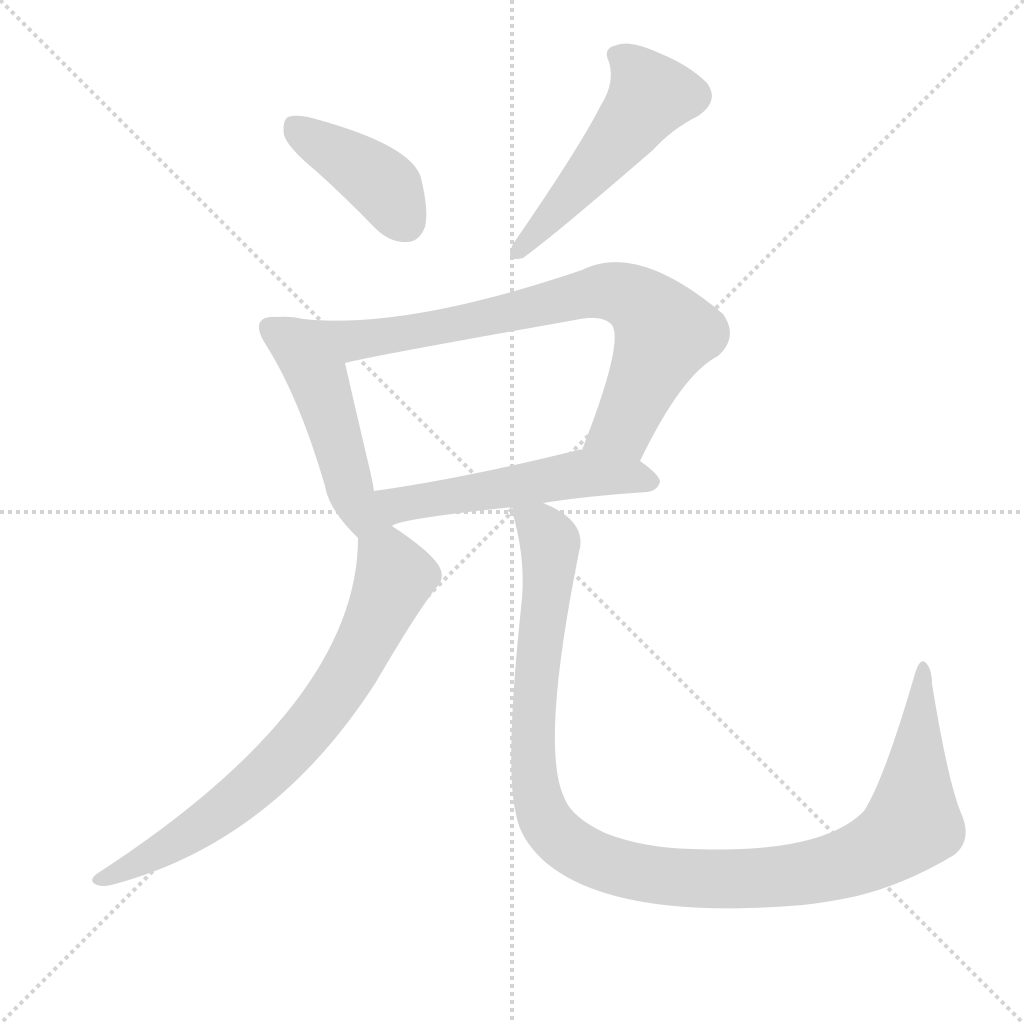
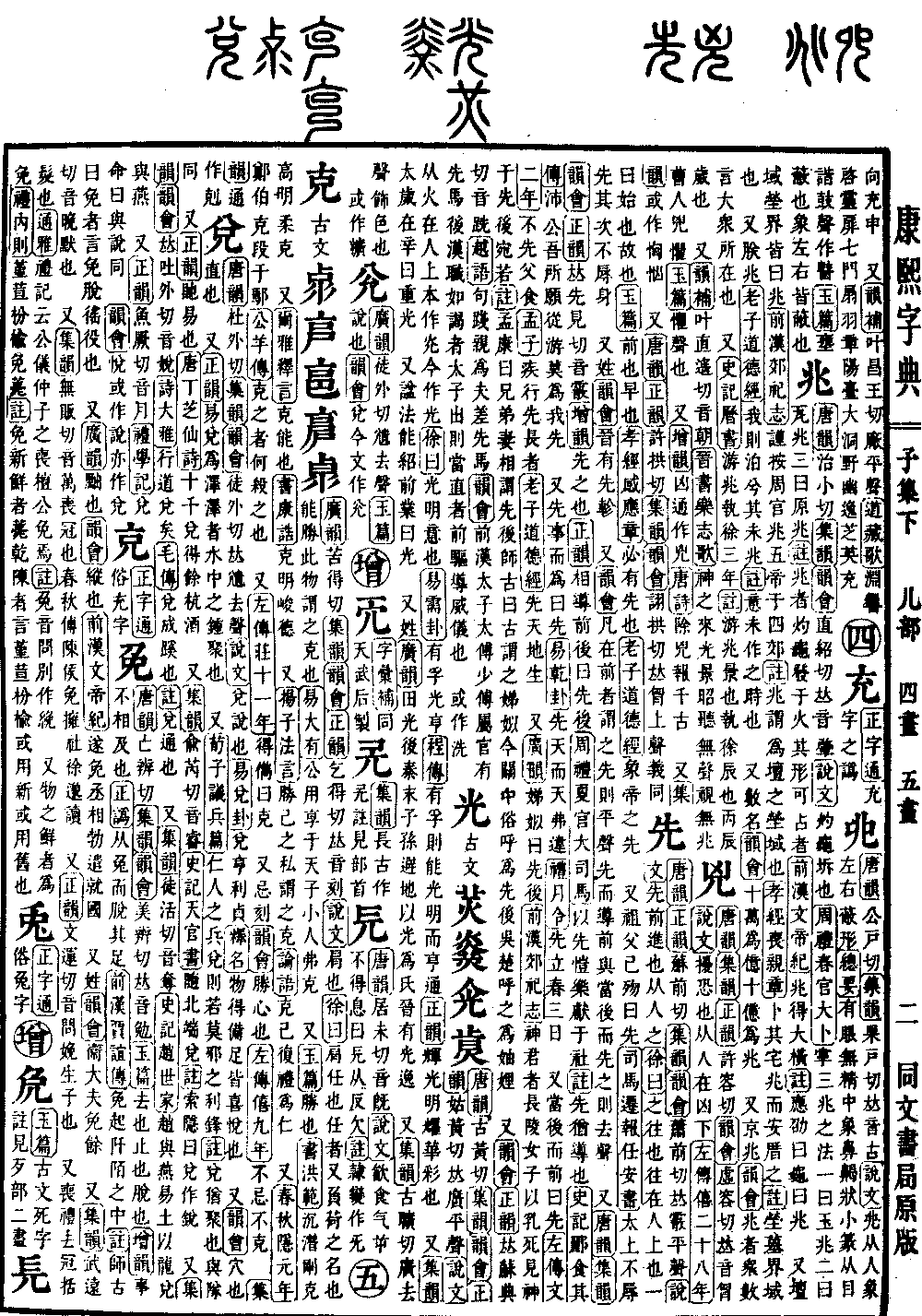
Dui
Kangxi Dictionary Stroke Count: 7
Page 124, Entry 21
Tang Dynasty Rhymes (Tangyun): Pronounced with the initial of dù and the final of wài. Collected Rhymes (Jiyun) and Rhyme Assembly (Yunhui): Pronounced with the initial of tú and the final of wài. Read in the departing tone as the character tuí.
Analytical Dictionary of Characters (Shuowen Jiezi): Dui means to be pleased or joyful.
The Hexagram Dui symbolizes success and smoothness, and it is beneficial to persist in the righteous path — Book of Changes (Yijing).
When things are complete and sufficient, there is a feeling of joy — Explanation of Names (Shiming).
Also, according to the Rhyme Assembly, it means a cavern or being straight.
Also, according to the Correct Rhymes (Zhengyun), in the Book of Changes, Dui represents a marsh. A marsh is a place where waters gather.
The army of a benevolent person, when gathered, is as sharp as the edge of the Moye sword — Xunzi, Chapter on Discussing Military Affairs (Yibingpian). Note: Dui means to gather, the same as the character duì.
Also, according to the Correct Rhymes, it refers to exchange or trade.
Using ten thousand coins to exchange for the wine of Yuhang — Poem by Ding Zhixian of the Tang Dynasty.
Also, according to the Collected Rhymes, pronounced with the initial of yú and the final of ruì, read as the character ruì.
Three stars follow the sharp northern tip — Records of the Grand Historian (Shiji), Treatise on Celestial Offices (Tianguanshu). In the Book of Han (Hanshu), the character is written as ruì.
Also, according to the Collected Rhymes and the Rhyme Assembly, pronounced with the initial of tǔ and the final of wài, read as the character tuì.
The roads are open and unobstructed — Book of Odes (Shijing), Greater Odes (Daya). Mao's Commentary: Dui refers to the formation of a path. Note: Dui means accessible or reaching through.
Also, according to the Collected Rhymes, pronounced with the initial of tú and the final of huó, read as the character duó.
The State of Zhao exchanged land with the State of Yan, giving Longdui to Yan — Records of the Grand Historian, Hereditary House of Zhao (Zhaoshijia).
Also, according to the Correct Rhymes, pronounced with the initial of yú and the final of jué, read as the character yuè.
The Charge to Yue (Yueming) says: it is the same as the character shuō — Book of Rites (Liji), Record of Learning (Xueji). The Rhyme Assembly states that the character for joy is sometimes written as shuō and also as dui.
The character tuí in the original woodblock edition is written with the form tuí.
Textual Research: Regarding the phrase "following the sharp northern tip" in the Records of the Grand Historian, Treatise on Celestial Offices: Note that the original text of the Records of the Grand Historian adds the two words "three stars" before "following the north." The commentary Seeking the Obscure (Suoyin) says dui is written as ruì. However, it is actually the Treatise on Astronomy (Tianwenzhi) in the Book of Han that writes it as ruì, not the Seeking the Obscure. Therefore, the phrase "Note: Seeking the Obscure says" is corrected to "Book of Han."