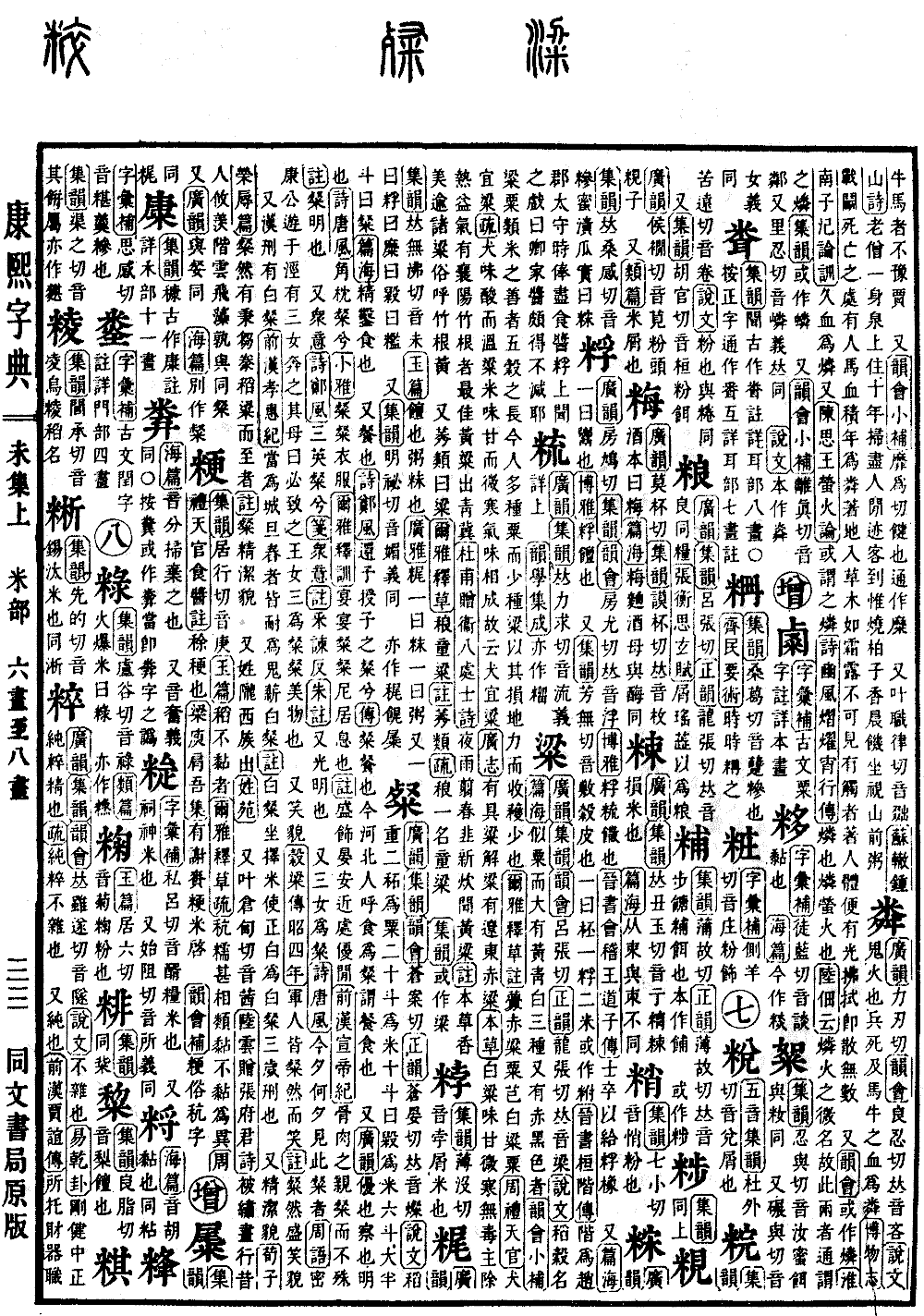
Wei Collection, Upper Volume
Radical: Rice (mǐ)
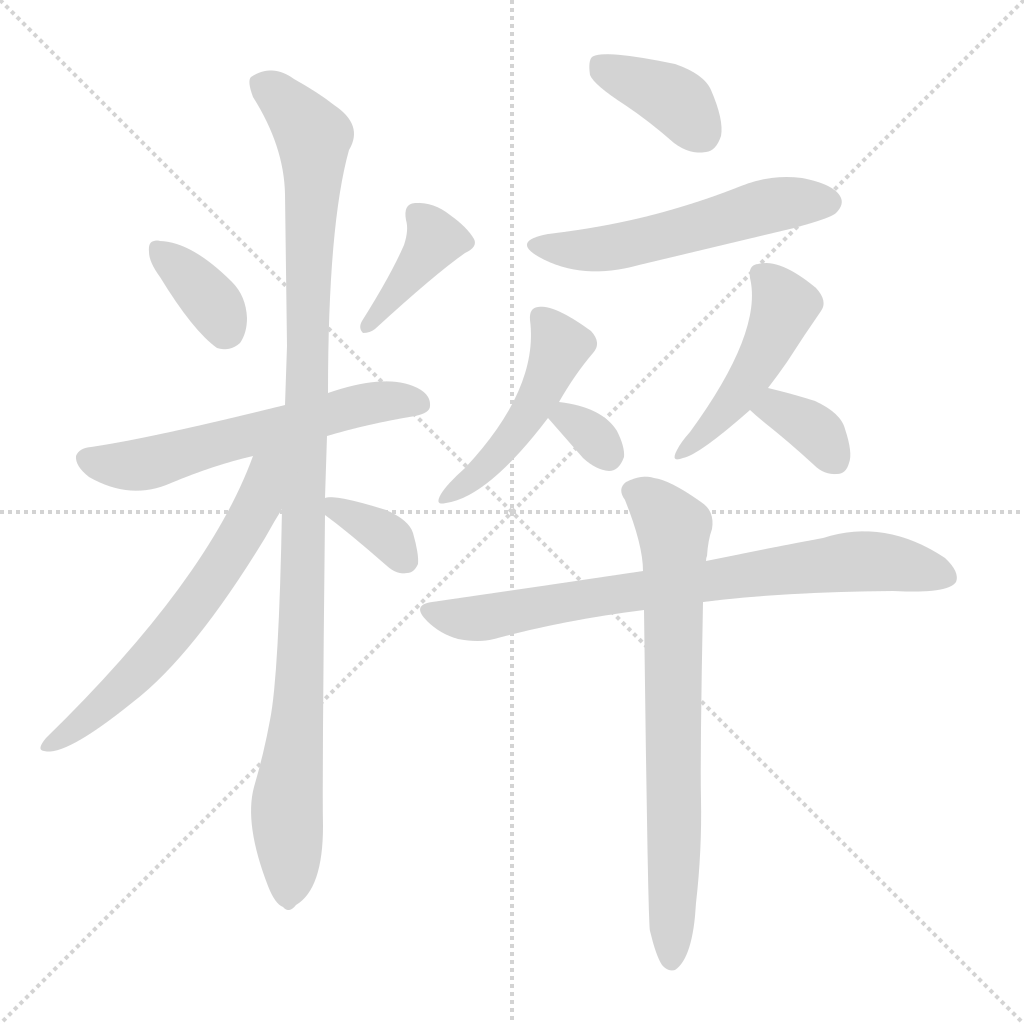
粹
Kangxi strokes: 14
Page 909, Entry 39
According to the Extensive Rhyme (Guangyun), the Collected Rhymes (Jiyun), and the Collection of Rhymes (Yunhui), the pronunciation is sui (falling tone).
According to the Explaining Graphs and Analyzing Characters (Shuowen), it means unmixed.
In the Book of Changes (Yijing), under the Qian hexagram: Strong, firm, central, and correct; pure and refined. The commentary states: Pure and unmixed. Also means pure.
In the History of the Former Han (Qianhan Shu), biography of Jia Yi: Those entrusted with financial resources and professional duties are pure among the subordinates. The commentary states: Cui means pure.
Also means the same.
In the Li Sao: In the past, the three sovereigns were pure and united. The commentary states: To be uniform and identical is called cui.
Also means single-minded.
In the Xunzi, chapter on Criticizing Physiognomy: Single-minded yet able to contain diversity. The commentary states: Cui means single-minded.
Also means complete.
In the Xunzi, chapter on Kings and Hegemons: Those who are complete and whole shall rule as kings, those who are mixed shall rule as hegemons. The commentary states: Cui means complete.
Also, according to the Collected Rhymes (Jiyun) and the Collection of Rhymes (Yunhui), it is the same as the character for broken/fragmented (sui).
In the Xunzi, chapter on the Efficacy of Literati: With little strength but heavy responsibilities, there is nowhere to go but to suffer breakage and collapse. The commentary states: Cui is the same as sui (broken/fragmented).
Textual research: In the History of the Former Han, biography of Jia Yi, concerning the phrase regarding those entrusted with financial resources and professional duties being pure among the subordinates: Note that in accordance with the original text, the character for entrust has been amended.