Mao Collection, Upper Volume
Radical: Heart (xīn)
Strokes: 9
Page 379, Entry 13
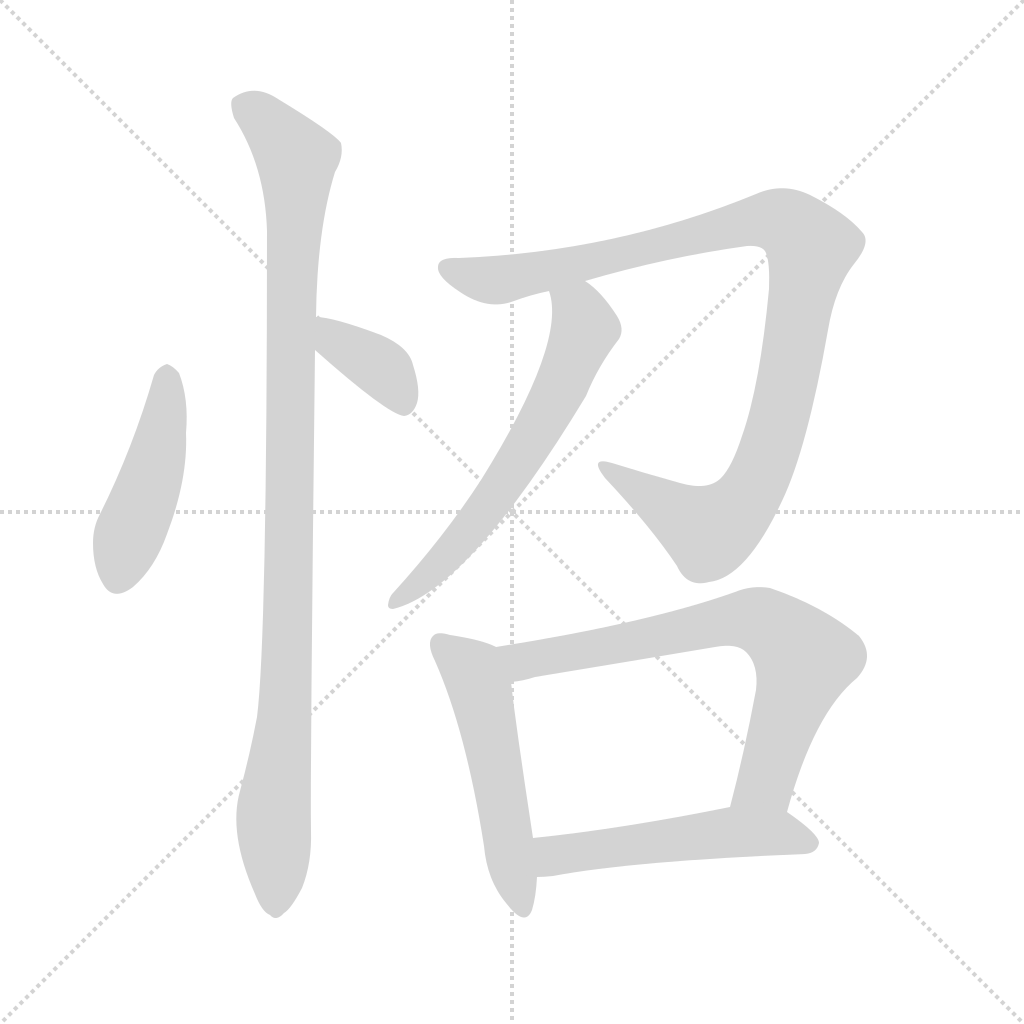
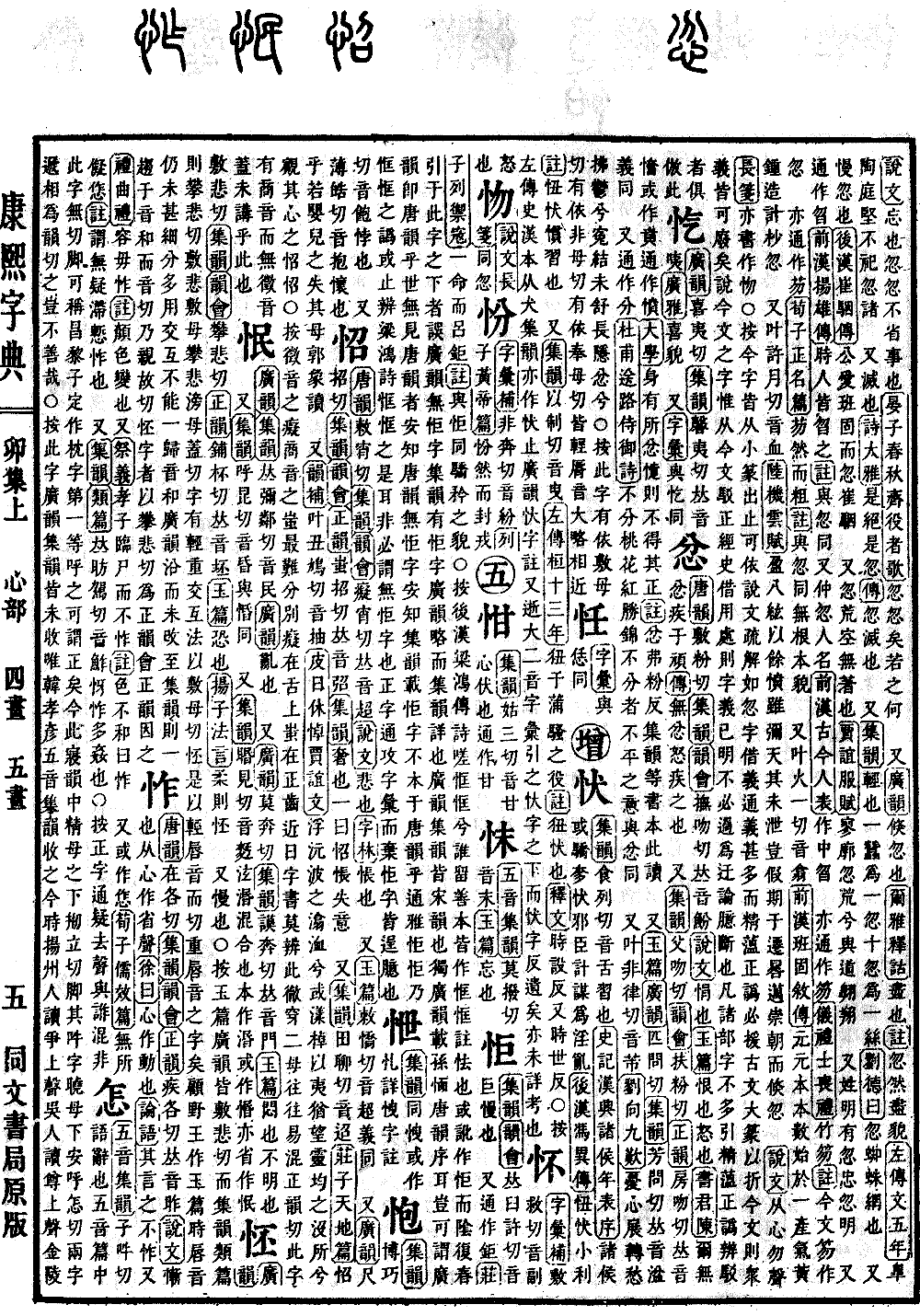
Pronounced chao. In Tang Rhyme (Tangyun), collected in Ji Rhyme (Jiyun) and Rhyme Collection (Yunhui), the pronunciation is the same as chao. Explanations from Explaining Graphs and Analyzing Characters (Shuowen Jiezi) define it as sorrowful. Zilun defines it as melancholy. Also, according to Jade Chapters (Yupian), the pronunciation is the same as chao, with the same meaning.
Also pronounced chao. According to Broad Rhyme (Guangyun), Ji Rhyme (Jiyun), Rhyme Collection (Yunhui), and Correct Rhymes (Zhengyun), the pronunciation is the same as chao. Ji Rhyme (Jiyun) defines it as extravagant. Another meaning is melancholy or frustrated.
Also pronounced tiao. In Zhuangzi, Heaven and Earth Chapter (Zhuangzi, Tiandi pian), it is used in the phrase melancholy like an infant having lost its mother. This is the reading provided by Guo Xiang.
Also, according to Rhyme Supplement (Yunbu), pronounced chou. In Pi Rixiu’s Lament for Jia Yi (Dao Jiayi wen): Floating upon the rapid currents of the Yuan River, sometimes rowing the oars and hesitating. Gazing from afar at the place where Qu Yuan drowned, the heart is filled with melancholy.
Note: The zhi sound for chi and the shang sound for chi are the most difficult to distinguish. Chi is a lingual sound and chi is a dental sound. Recent dictionaries fail to distinguish these, and the initials che and chuan are often confused. Correct Rhymes (Zhengyun) provides the phonetic for this character using the shang sound but omits the zhi sound, likely due to a lack of thorough research on this distinction.