Wei Collection, Middle Volume
Radical: Silk (mì)
Kangxi Strokes: 14
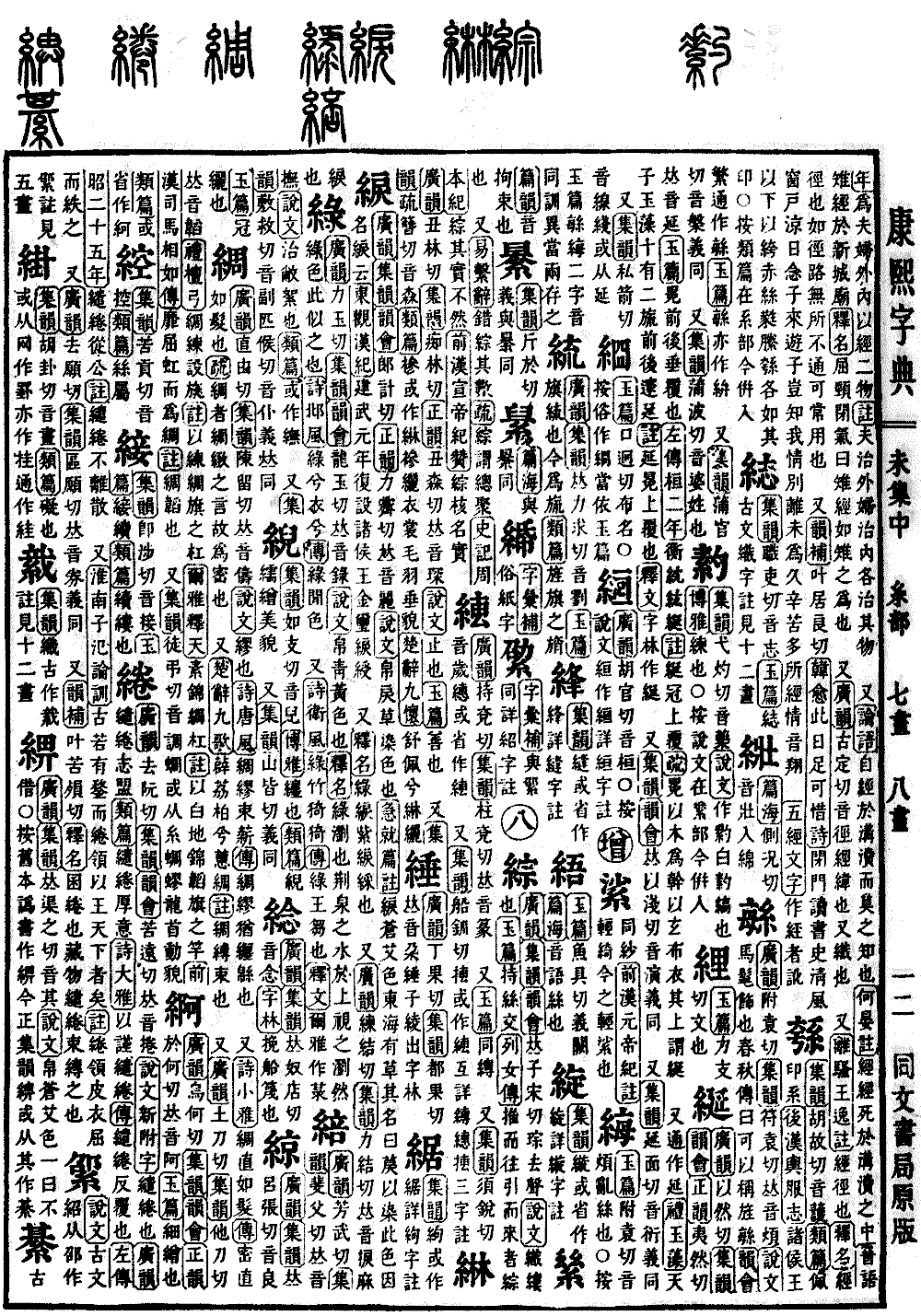
Page 926, Entry 32
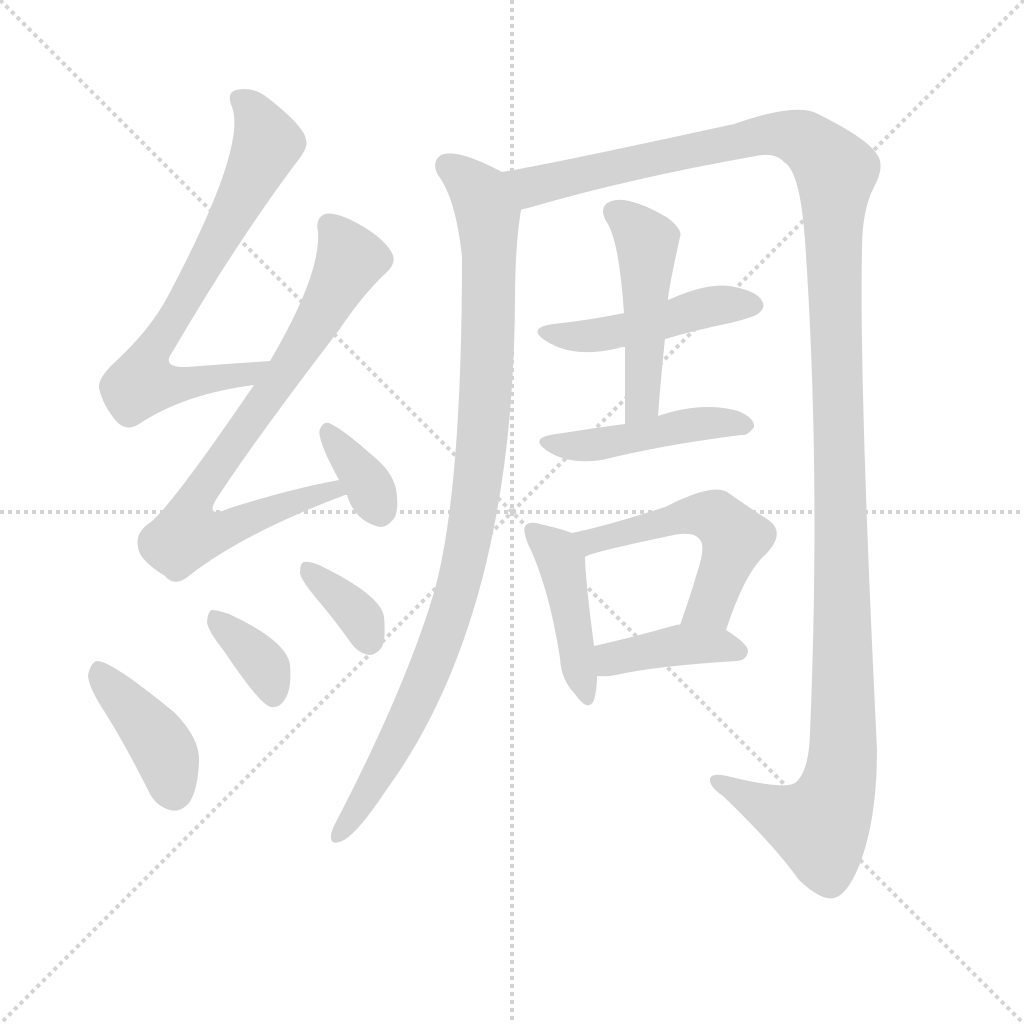
Pronounced chou.
In the Explanation of Characters (Shuowen), it means to bind or tie.
In the Book of Odes (Shijing), it is written: bound in bundles like firewood. The commentary states that the expression implies intertwining.
In the Book of Odes (Shijing), it is written: straight as a hair. The commentary states that this means dense and straight like hair. The sub-commentary states that the term refers to density and closeness, hence it means dense.
In the Songs of Chu (Chucige), it is written: binding the parasitic plants and orchid silks. The commentary states that the term means to tie or bind.
Also pronounced tao.
In the Book of Rites (Liji), it is written: using silk to cover the banner staff. The commentary states that this refers to wrapping the banner staff with white silk.
In the Erya (Er ya), it is written: plain silk covering the staff. The commentary states that this refers to using plain silk to wrap the flag pole.
In the History of the Former Han (Qianhan shu), the biography of Sima Xiangru states: curling the rainbows to use as a covering. The commentary states that the term means to sheath or cover.
Also pronounced tiao.
Sometimes written as a variant of the character for cicada. It refers to the appearance of a dragon head in motion.