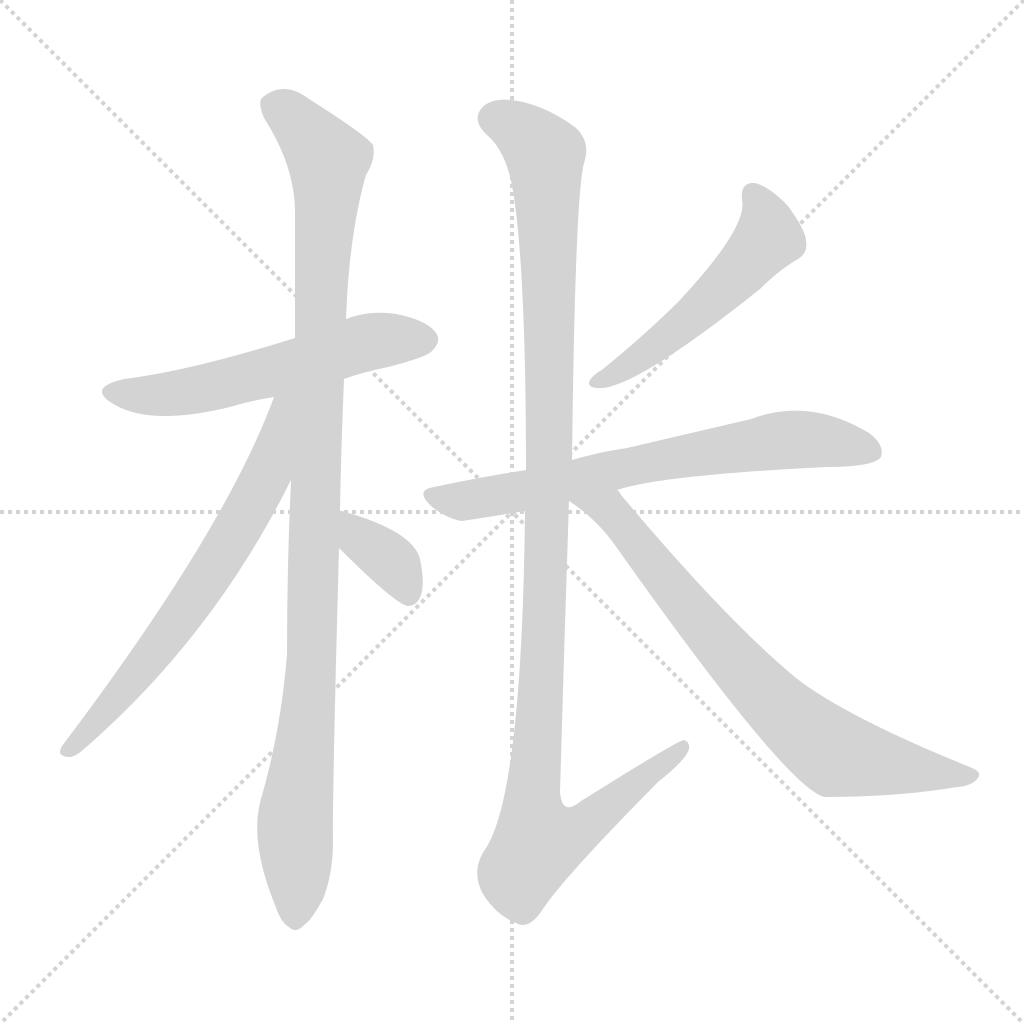
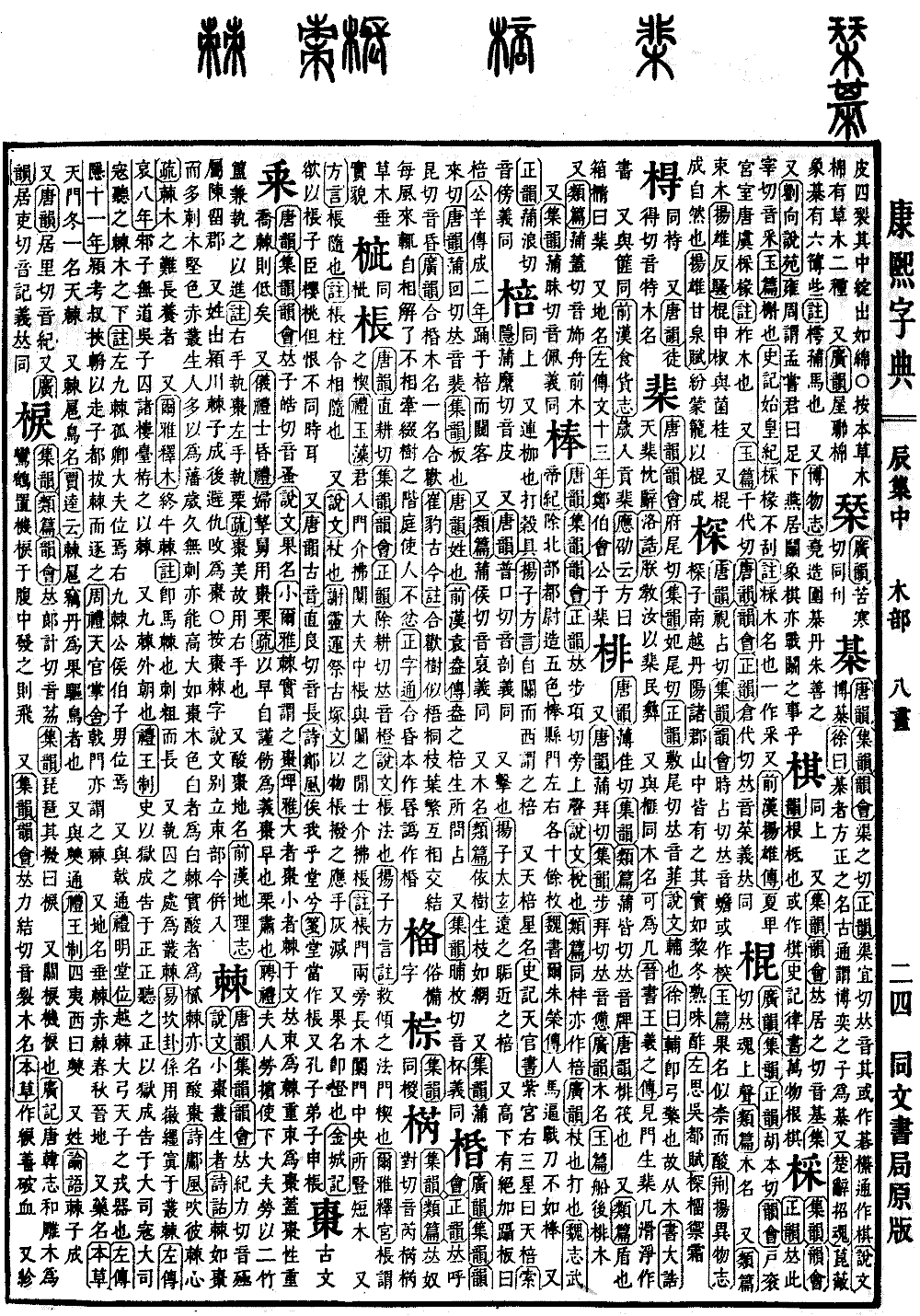
Chen Collection, Middle Volume
Radical: Tree (mù)
Kangxi strokes: 12
Page 532, Entry 01
Pronounced cheng.
According to the Explaining Graphs and Analyzing Characters (Shuowen Jiezi), the term refers to a rule or standard. According to the notes in the Regional Speech (Fangyan) by Yang Zi, it refers to a device for propping up a leaning object, specifically a door wedge.
In the Er-Ya: Explanation of Palaces (Erya), it is stated that a chang is called a wedge. In the Book of Rites (Liji), specifically the section on Jade Ornaments (Yuzao), it is written: The ruler enters the gate brushing against the threshold; the grand master walks between the chang and the threshold; the scholar walks brushing against the chang. The commentary notes that the chang is a long vertical piece of wood on both sides of a gate, while the threshold is the short vertical piece of wood set in the center of the gate.
Also, according to the Regional Speech (Fangyan), it means to follow, with the commentary noting that the chang pillar keeps things aligned.
Furthermore, according to the Explaining Graphs and Analyzing Characters (Shuowen Jiezi), it refers to a staff. In the essay Offering Sacrifices to Ancient Tombs by Xie Lingyun, it says: Using an object to poke and stir it, it turned to ash at the touch.
It is also the name of a fruit, which is the orange. The Record of Jincheng (Jinchengji) mentions: Wishing to present oranges with cherries, only regretting that they do not ripen at the same time.
Additionally, pronounced chang.
In the Book of Odes (Shijing), in the Zheng Airs section: Waiting for me in the hall. The commentary suggests that hall should be read as chang.
Also, the name of a disciple of Confucius, Shen Chang.