Wei Collection, Lower Volume
Radical: Mortar (jiù)
Kangxi stroke count: 11
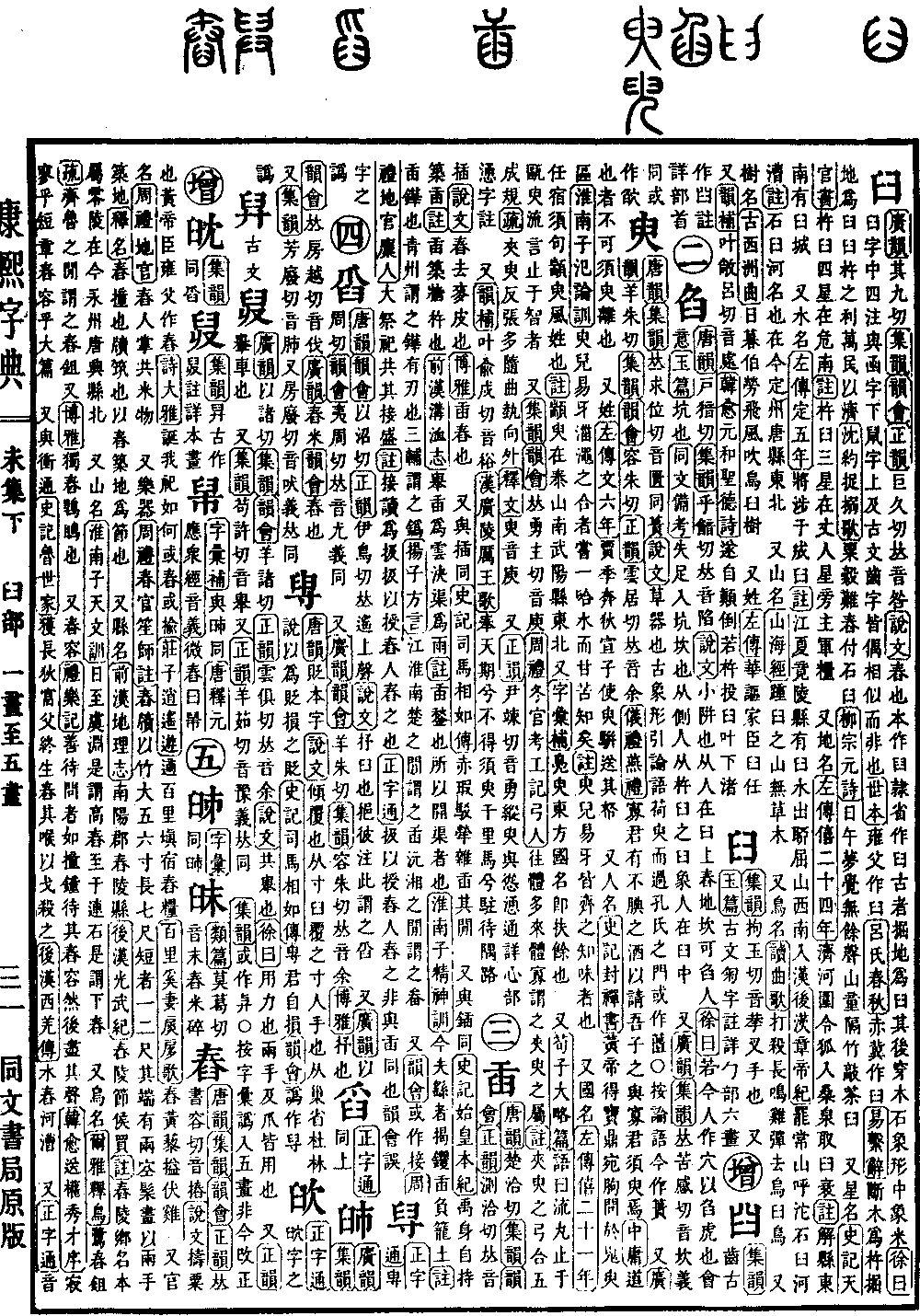
Page 1003, Entry 20
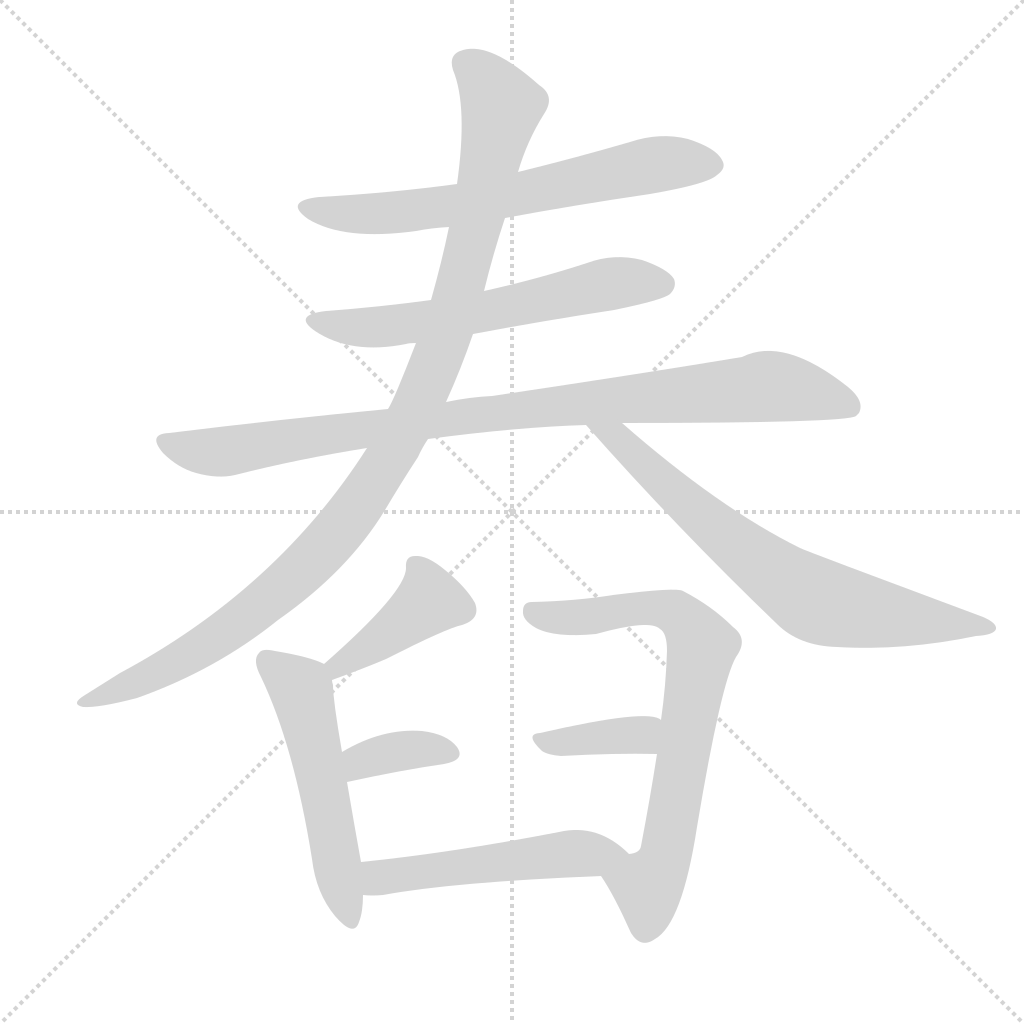
Pronounced chōng.
In the book Explanation of Simple and Compound Characters (Shuowen Jiezi), it means to pound grain. The minister Yongfu of the Yellow Emperor invented this.
In the Book of Odes (Shijing), Great Odes: How to arrange the offerings for our ancestors? Some are pounding grain, some are scooping it.
In the Zhuangzi, Free and Easy Wandering: Those traveling a hundred miles must pound their grain overnight for provisions.
In the Song of the Wife of Baili Xi: Pounding yellow goosefoot, catching the brooding hen.
Also, a government title. In the Rites of Zhou (Zhouli), Earth Officials: The official in charge of pounding grain manages the supply of rice products.
Also, a musical instrument. In the Rites of Zhou, Spring Officials: The master of the sheng pipe describes the chongdu as made of bamboo, five or six inches in diameter and seven feet long, with shorter ones being one or two feet long. Both ends have two holes and are painted; one uses both hands to strike the ground with them. In the Explanation of Names (Shiming): Chong means to strike. Du means to tamp. Striking the ground with the implement serves as a rhythmic beat.
Also, the name of a county. In the History of the Former Han (Qianhan Shu), Treatise on Geography: Chunling County in Nanyang Commandery.
In the History of the Later Han (Houhan Shu), Annals of Emperor Guangwu: Marquis Jie of Chunling, Mai. Note: Chunling is the name of a township, originally belonging to Lingling, located north of Tangxing County in modern Yongzhou.
Also, the name of a mountain. In the Huainanzi, Treatise on Astronomy: When the sun reaches Yu Yuan, it is called High Chong. When it reaches Lianshi, it is called Lower Chong.
Also, the name of a bird. In the Erya, Explanation of Birds: The egret is called chongchu. Commentary: In the regions of Qi and Lu, it is called chongchu.
Also, in the Guangya: Duschong refers to the niao bird.
Also, chongrong. In the Book of Rites (Liji), Record of Music: Those skilled at responding to questions are like striking a bell; wait for the resonating echo to fade, then exhaust the sound. In Han Yu’s Preface to Seeing Off Scholar Quan: Silent in the short pieces, resonant in the great works.
Also, used interchangeably with chong. In the Records of the Grand Historian (Shiji), House of Lu: Captured the giant Di, Fufu Zhongsheng struck its throat with a spear and killed it. In the History of the Later Han, Western Qiang Treatise: Water rushes against the riverbank.
Also, in the Zhengzitong: Pronounced chuang. A type of people among the eight southern tribes. One says pangchong. Found in the Mozi.
Also, in the Jiyun: Pronounced zhong. The name of a different mountain in the Jingshan range. In Zhang Zhengjian’s White Head Ballad: Flicking pearls beside the gold market, striking jade at Mount Chong.